
































































































































































































































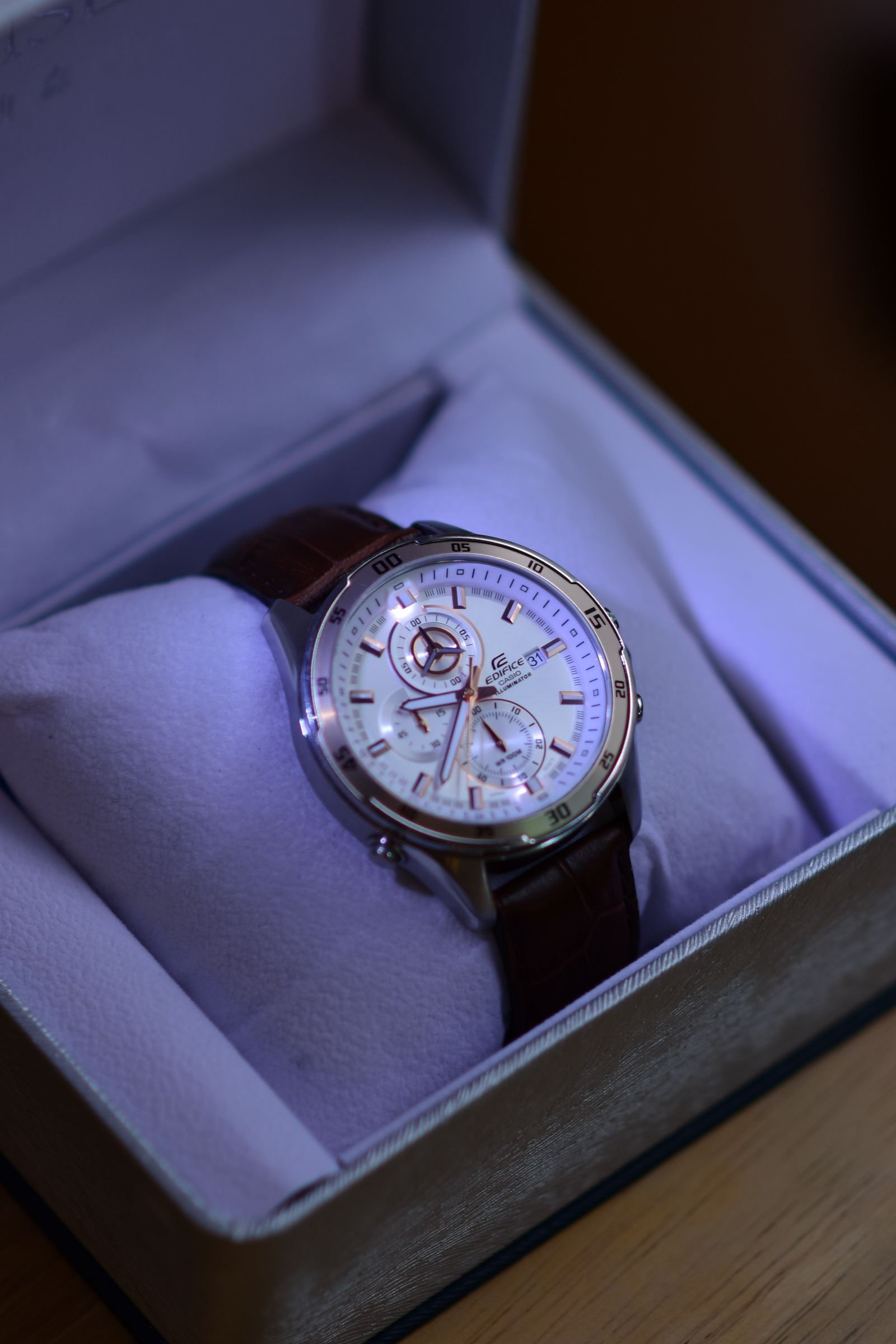
The best starting point for Tudor MT5813 winder settings is 650 turns per day (TPD) in bidirectional mode. If your winder offers 750 or 800 TPD but not 650, either is a reasonable practical preset. Begin with the lowest available setting in that range, place a partly wound watch on the winder, and test whether it maintains time and date over several days.
This is a conservative starting recommendation, not an official Tudor command. Tudor confirms that the MT5813 uses a bidirectional rotor and provides approximately 70 hours of power reserve, but the brand does not publish a universal consumer TPD number. Winder efficiency also varies with holder angle, rotation cycle, watch position, and how accurately the machine delivers its labeled turn count.
Quick Tudor MT5813 Winder Settings
- Starting TPD: 650 turns per day
- Direction: Bidirectional, alternating, or “both”
- Practical preset: 750 or 800 TPD if 650 is unavailable
- Power reserve: Approximately 70 hours when fully wound
- Best method: Hand-wind first, then use the winder to maintain the charge
Do not jump straight to the highest program. A watch winder is most useful as a maintenance device: it replaces some of the motion the watch would receive on the wrist. It is not the fastest or best way to revive a completely stopped chronograph.
What the MT5813 Is—and Why Identification Matters
The MT5813 is Tudor’s self-winding mechanical chronograph calibre used in Black Bay Chrono models. According to Tudor, it combines hours, minutes, seconds, date, and chronograph functions with a column wheel, vertical clutch, silicon balance spring, COSC certification, and roughly 70 hours of power reserve. It is derived from the Breitling 01 architecture and incorporates Tudor-specific regulation and finishing.
For winder setup, the decisive official detail is the bidirectional rotor system listed by Tudor. Because the rotor can add energy while turning in either direction, an alternating program uses both clockwise and counterclockwise motion. There is no need to favor one direction unless a controlled test reveals an unusual problem.
Do not choose settings from the words “Black Bay” alone. Tudor has used several calibres across the family. A Black Bay Chrono can use the MT5813, while three-hand Black Bay models may use MT5602-family movements and smaller models may use MT5402-family calibres. Check the reference on the warranty card, Tudor’s product page, a service document, or a qualified watchmaker’s identification.
Why 650 TPD Is a Sensible Starting Point
Turns per day describes the total number of complete rotations a winder is programmed to deliver during 24 hours. It does not tell you how much usable energy reaches the mainspring. A loose cushion, shallow angle, or poorly timed cycle may make one machine less effective than another even when both display the same TPD.
Independent winder references commonly place the MT5813 around 650–800 TPD with bidirectional rotation. Starting at 650 tests the lowest commonly recommended value first. If the watch remains running and its date advances normally after several days, more turns bring no practical benefit. If it loses reserve, the next preset—750 or 800 TPD—is an orderly adjustment rather than a guess.
Tudor’s 70-hour reserve is also important. A fully charged watch can sit for much of a weekend before stopping, so a one-night test proves little. The remaining reserve may hide an ineffective winder program. A multi-day test gives the watch enough time to show whether the winder is truly replacing the energy it consumes.
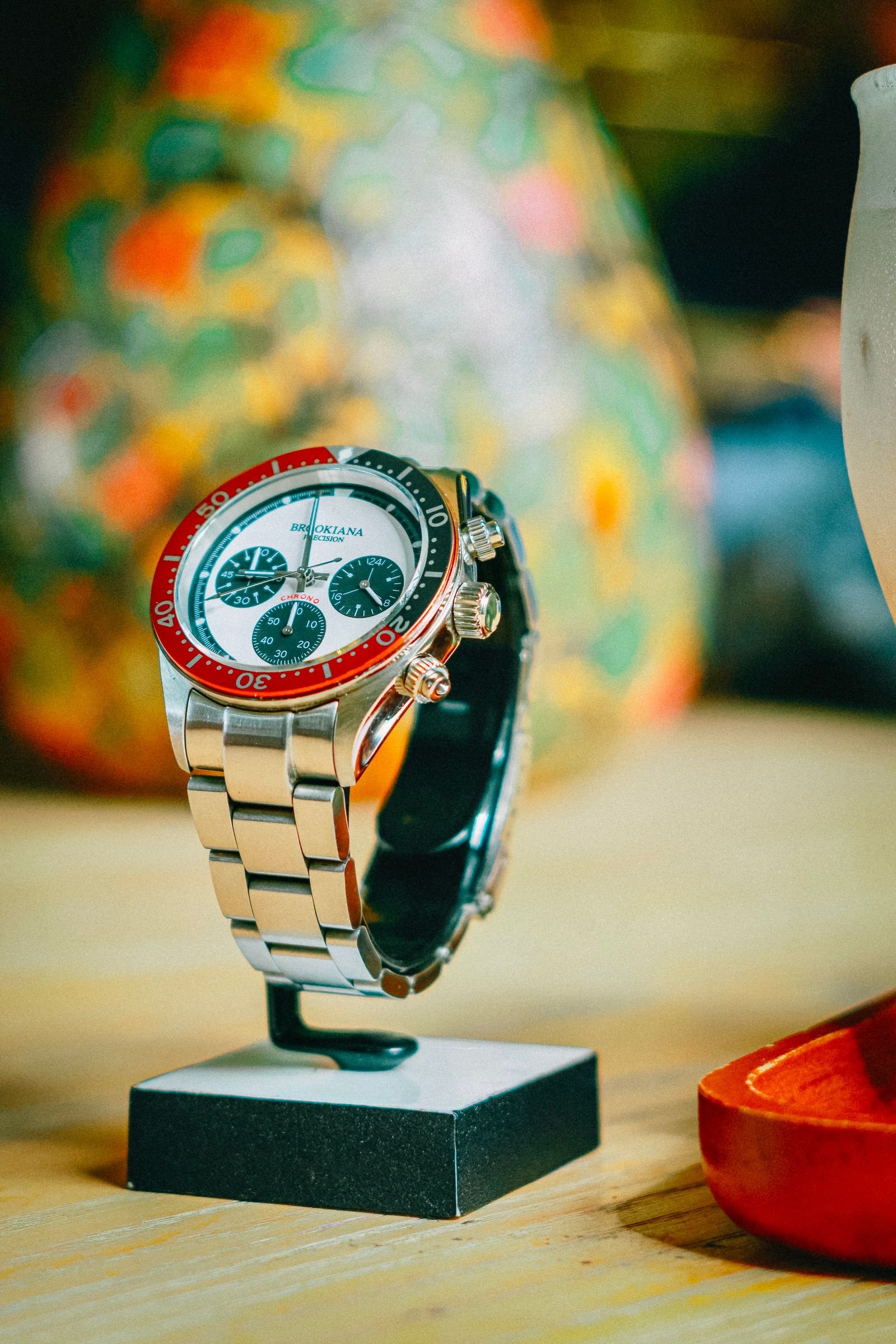
How to Set and Test the Winder Correctly
1. Start with a known charge
Unscrew the crown, if applicable, and hand-wind the watch gently according to the owner’s instructions. About 30 slow crown turns is a practical partial charge for testing; there is no need to force the crown or chase an exact number. Screw the crown down correctly afterward. Starting with some reserve prevents a stopped movement from being mistaken for a failed winder.
2. Select both directions and 650 TPD
Choose “both,” “alternate,” or the equivalent bidirectional mode. Select 650 TPD. If your machine offers only 600 and 750, use 750. If it offers 650 and 800, begin at 650. Galosom’s contextual TPD guide explains how different winder controls count daily turns.
3. Fit the watch securely
The cushion should hold the watch without compressing the bracelet or strap excessively. The watch must not slide, flop, or strike the cabinet. A heavy chronograph needs a holder that remains stable through every cycle. Poor fit can reduce effective rotor movement and create misleading test results.
4. Leave the chronograph stopped
Use the normal time display during the test. A watch winder does not require the stopwatch to run, and leaving the chronograph engaged adds another variable. Reset the chronograph normally, then allow the movement to operate as a time-and-date watch while you evaluate the winding program.
5. Observe for at least three days
Note the start time and date. Check the watch at roughly the same time each day without adding hand winding. If it remains running and advances the date correctly, keep the setting. If it stops, first confirm that the holder stayed secure and the winder completed its cycles. Then raise the setting one step and repeat.
What If Your Winder Lacks 650 TPD?
Preset-only winders are common. Choose the nearest moderate bidirectional option rather than repeatedly switching settings to manufacture an exact average.
- 600 TPD: Safe to test, but possibly marginal; begin with a partial charge.
- 750 TPD: The most straightforward alternative and within the commonly cited range.
- 800 TPD: A reasonable choice when the machine skips 650 and 750.
- 900 TPD: Likely to maintain the watch, but more motion than most owners need for a first trial.
Cycle timing matters too. Quality winders divide turns into short sessions with rest periods instead of rotating continuously. Rest intervals imitate intermittent wrist motion and avoid needless operation. Continuous spinning is not a substitute for a correctly programmed cycle.
Can a Watch Winder Overwind the MT5813?
A functioning automatic movement uses a slipping bridle in the mainspring barrel to manage excess winding once the spring reaches its working limit. A healthy MT5813 therefore should not be “overwound” in the same way as a traditional manual-wind watch can be forced beyond its stop.
That protection is not a reason to use maximum TPD. Extra rotations still add movement to the rotor, reversing system, and winding train while providing no useful reserve once the watch is fully charged. A moderate program is quieter, more efficient, and easier to diagnose. A winder also cannot correct dried lubricant, a weak mainspring, a damaged automatic winding system, magnetism, or poor regulation.
Should the Chronograph Run on the Winder?
No. Leave the chronograph stopped unless you are briefly testing its operation. The winder’s task is to rotate the watch so the automatic system can maintain the mainspring. Chronograph engagement is unrelated to rotor direction and TPD selection.
Running the stopwatch continuously changes the load on the movement and can alter the outcome of a reserve test. The MT5813 uses a vertical clutch and column wheel, but those features do not turn continuous chronograph operation into a winding requirement. Test one variable at a time.

Troubleshooting an MT5813 That Stops on the Winder
- Confirm the calibre. A similar-looking Tudor may contain another movement.
- Give the watch an initial hand wind. A depleted movement may stop before an intermittent program contributes enough energy.
- Verify actual rotation. Count a short cycle and compare it with the manual.
- Check angle and cushion. A slipping watch or nearly horizontal rotor path can reduce winding efficiency.
- Increase one step. Move from 650 to 750 or 800 TPD while keeping the direction and test period unchanged.
- Compare with wrist wear. Poor reserve after active wear and a proper initial wind may indicate a watch fault.
Stop troubleshooting with the winder if the crown feels rough, the rotor makes a new scraping sound, the watch stops unpredictably on the wrist, or its reserve falls far short after a full wind. Those symptoms call for inspection by Tudor or a qualified watchmaker, not a higher setting.
When a Winder Makes Sense
The MT5813 has time, date, and chronograph functions, but it is not a perpetual calendar. Resetting it after 70 hours is relatively simple. A winder is therefore a convenience rather than a necessity.
It can be useful when you rotate among several watches and want the Tudor ready with the correct date, have limited dexterity for repeated crown operation, or prefer to keep it running during a regular rotation. It is less useful when the watch is worn most days, stored for long periods, or easy for you to reset. Clean, dry storage away from magnetic fields remains perfectly acceptable.
Frequently Asked Questions
What is the best TPD for the Tudor MT5813?
Start at 650 TPD bidirectionally. If that does not maintain the watch after a proper initial wind and multi-day test, try 750 or 800 TPD.
Does the MT5813 wind clockwise or counterclockwise?
Both. Tudor identifies it as having a bidirectional rotor system.
Can I use 800 TPD?
Yes. An 800 TPD bidirectional preset is practical when your winder does not offer 650 or 750.
How long should I test the setting?
Test for at least three days, preferably long enough to exceed the watch’s initial reserve.
Will a winder damage the chronograph?
A correctly fitted, properly programmed winder should not damage a healthy MT5813. Avoid continuous rotation, loose mounting, and excessive TPD.
Is a watch winder required?
No. The movement can be hand-wound and reset normally. A winder is optional convenience.
Conclusion
For Tudor MT5813 winder settings, begin with 650 TPD and bidirectional rotation. Use 750 or 800 TPD when those are the nearest available presets, secure the heavy chronograph properly, and test for several days. Tudor’s official specifications support the direction choice; the exact TPD remains a practical starting point to confirm on your own watch and winder.
The best setting is not the highest number. It is the lowest moderate program that keeps a correctly identified, healthy MT5813 running without unnecessary motion.
Related Reading
- Use Galosom’s watch winder TPD guide to understand turn counts, rest cycles, and direction controls.
- Compare this setup with Watch Winder Mall’s TPD settings by brand and movement.