
TPD Guide
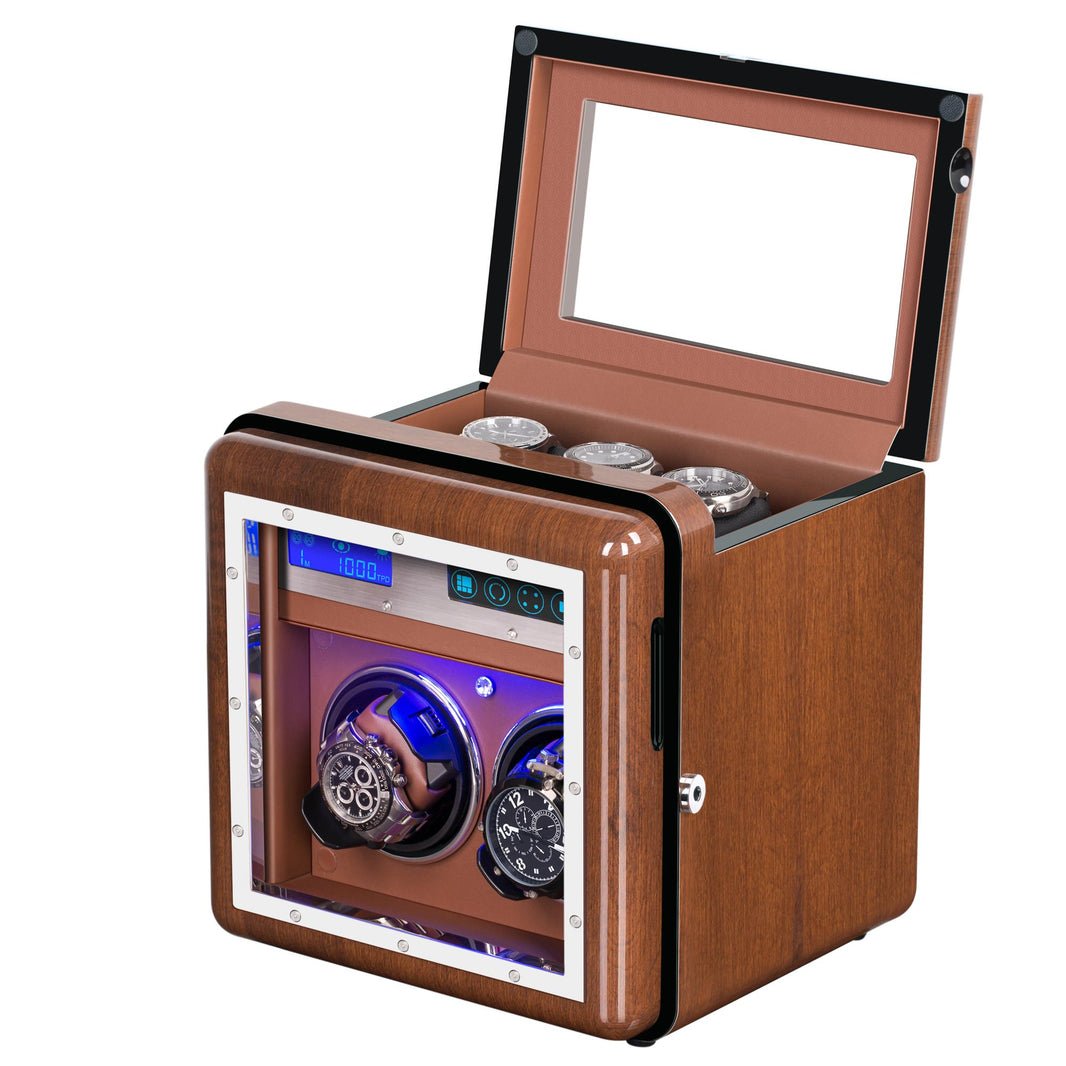
TPD means turns per day. In watch winder language, it describes how many full rotations a winder gives an automatic watch over a 24-hour program. It is one of the most searched settings in watch winder ownership, and also one of the most misunderstood.
A TPD number is not a magic number, a movement certificate, or a measure of luxury by itself. It is a practical starting point for keeping an automatic watch near its usable power reserve while it is not on the wrist. For collectors, TPD is valuable because it turns uncertainty into a repeatable setting. It gives the owner a way to say: this watch is resting, but it is still being treated with intention.
This guide explains where TPD recommendations come from, why different charts sometimes disagree, how to use the commonly cited reference tables, and why a little extra rotation is usually less dramatic than people fear.
What TPD Actually Measures
An automatic watch winds because a rotor moves with the wearer’s wrist. That motion transfers energy through the winding system and stores it in the mainspring. A watch winder imitates part of that motion by rotating the watch in controlled cycles.
TPD counts the winder’s rotations, not the exact amount of energy entering the mainspring. Two watches can receive the same TPD and gain different amounts of usable reserve because their rotors, reverser wheels, gear ratios, mainspring design, lubrication condition, and winding direction are different. This is the first reason TPD should be treated as a setting, not a law.
Where TPD Recommendations Come From
Most public TPD recommendations come from four sources. The strongest source is direct watch manufacturer guidance, when it exists. The second is winder manufacturer testing, where brands such as WOLF, Orbita, Barrington, SwissKubik, and others publish settings or searchable databases. The third is movement architecture: experts know that some calibers wind both ways while others wind most efficiently in one direction. The fourth is collector experience, where owners compare whether a watch stays wound over several days of use.
This mixed origin explains why two charts may not always match. A database may list a conservative setting; another may choose a more generous setting to prevent under-winding complaints. A brand may update its chart after more testing. A movement family may include variations that look similar in the watch name but behave differently inside.
How to Read a TPD Chart
A good TPD chart should show at least two things: turns per day and rotation direction. Direction may be clockwise, counterclockwise, or bidirectional. If a chart gives only TPD but no direction, it is incomplete for many movements.
Use the chart as a starting point. If your exact reference, caliber, or movement generation is listed, follow that line first. If only the brand is listed, be careful. The same brand can use many different calibers, and those calibers may not share the same winding behavior.
Commonly Cited TPD Ranges
The table below is a practical collector reference, not a substitute for checking the exact movement. It reflects ranges commonly seen across public winder databases, manufacturer guidance, and collector setup discussions.
| Common Reference Range | Typical Use Case | Direction Notes | How to Treat It |
|---|---|---|---|
| 600-700 TPD | Many efficient modern automatic three-hand or date movements | Often bidirectional, but not always | A sensible low starting range when the exact chart is unknown |
| 700-850 TPD | General everyday automatic watches and many mainstream Swiss / Japanese movements | Check whether the movement winds both ways or one way | The most common practical range for mixed collections |
| 850-1000 TPD | Some chronographs, complicated watches, or movements that need more help on a winder | Direction becomes more important | Use when a lower setting fails to maintain reserve |
| 1000-1200+ TPD | Less efficient winding systems, heavy complications, or conservative database recommendations | Usually needs exact movement confirmation | Useful, but avoid treating it as a better or more protective setting |
| 1500+ TPD | Uncommon high-rotation recommendations or special cases | Verify carefully | Do not use as a default merely because the winder offers it |
Many programmable winders use familiar steps such as 650, 750, 850, 1000, and higher settings. If your exact recommendation falls between two options, choose the closest practical program and observe whether the watch remains ready after several days.
Brand Starting-Point Table
The brand table below is adapted as a practical starting-point reference from commonly cited public TPD setting pages, including Watch Winder Mall’s brand-by-brand guide, WOLF, Orbita, 1010 Boutique, and other winder setting resources. It is intentionally presented as a starting point rather than a final answer. A brand can use several automatic movements, and the exact caliber should always win over the logo on the dial.
| Brand / Movement Family | Practical Starting TPD | Common Direction Starting Point | Collector Note |
|---|---|---|---|
| Rolex automatic | 650-800 | Bidirectional | Often efficient, but verify the exact caliber generation. |
| Omega automatic / Co-Axial | 650-950 | Bidirectional for many, model-specific for some | Co-Axial models vary by caliber and power reserve. |
| Tudor automatic | 650-800 | Bidirectional for many modern calibers | ETA-based and manufacture calibers may differ. |
| Patek Philippe automatic | 650-800 | Often bidirectional, but caliber-specific | Complicated calendars deserve exact verification. |
| Audemars Piguet automatic | 650-950 | Model-specific | Royal Oak, Offshore, and complications should not be grouped casually. |
| Cartier automatic | 650-800 | Usually bidirectional or model-specific | Check the movement behind the case shape. |
| IWC automatic | 650-950 | Model-specific | Pellaton-style systems and chronographs need careful checking. |
| Breitling automatic | 650-950 | Often bidirectional, but movement-specific | Chronographs may need more than simple three-hand models. |
| TAG Heuer automatic | 650-800 | Usually bidirectional or model-specific | ETA, Sellita, and in-house movements should be separated. |
| Panerai automatic | 650-800 | Model-specific | Long power reserve models may not need aggressive winding. |
| Jaeger-LeCoultre automatic | 650-950 | Caliber-specific | Complications and ultra-thin movements deserve exact settings. |
| Grand Seiko automatic / Spring Drive automatic | 650-800 | Often bidirectional, but verify | Do not assume all Seiko-family movements share the same behavior. |
| Seiko automatic | 650-950 | Movement-specific | Entry, Prospex, Presage, and vintage movements can differ. |
| Orient automatic | 650-950 | Usually model-specific | Useful to test over several days because public charts vary. |
| Nomos automatic | 650-800 | Often bidirectional, verify DUW caliber | Thin automatic movements reward conservative settings. |
| ETA / Sellita three-hand automatics | 650-800 | Often bidirectional | A common baseline for many mainstream Swiss watches. |
| Valjoux / ETA 7750 chronograph family | 800-1000+ | Often clockwise | A classic example of why direction matters as much as TPD. |
| Miyota 8 / 9 series automatics | 650-950 | Movement-specific | Check the exact caliber; some wind efficiently in one direction. |
This table is deliberately less precise than a full movement database because precision without the exact caliber can be misleading. If a public chart lists your exact movement, use that number first. If only the brand is known, choose a conservative setting from the table, set the closest available program on the winder, and observe the watch for several days.
Why the Same Brand Can Need Different TPD
A brand name is not a movement. Rolex, Omega, Cartier, IWC, Breitling, Seiko, Grand Seiko, Tudor, and many others have used different automatic calibers across models and generations. A dress watch, a diver, a chronograph, and an annual calendar from the same brand may not share the same winding system.
Even within one model line, production changes matter. A watch may move from one caliber generation to another, change power reserve, change rotor efficiency, or use revised components. Public TPD tables may update slowly, and retail pages may simplify the recommendation by brand. That is why the exact caliber matters more than the logo on the dial.
Why the Same Watch Can Need Different Settings Over Time
TPD recommendations can also change in real life. A freshly serviced movement may wind more efficiently than one with older lubricant. A watch worn for several hours before being placed in the winder may need less help than a fully stopped watch. A collector who opens the safe once a week has different needs from someone who rotates watches every morning. Even the winder’s programming style matters: one brand’s 800 TPD program may spread rotations across the day differently from another brand’s 800 TPD program.
This does not mean the charts are useless. It means the chart gives you a starting point, and the watch tells you whether the starting point is enough. If the watch is still running accurately and has usable reserve when you pick it up, the setting is doing its job.
TPD and Winding Direction
Direction can matter as much as TPD. Some automatic movements wind efficiently in both directions. Others wind primarily clockwise or counterclockwise. If the direction is wrong, a high TPD number may still fail to wind the watch efficiently. This is why a quality winder should offer clockwise, counterclockwise, and bidirectional programs, especially for a mixed collection.
When in doubt, start with the exact manufacturer or database direction. If you cannot find it, bidirectional is often a practical first attempt for modern everyday watches, but it is not universal. If the watch loses reserve on bidirectional or a low setting, verify the movement and adjust the direction before simply jumping to the highest TPD.
Will Too Much TPD Damage a Watch?
Modern automatic watches are designed with a slipping clutch or bridle system that helps prevent the mainspring from being wound tighter and tighter without limit. This is why normal wrist movement does not “overwind” a modern automatic watch. Wearing a watch while walking quickly, playing with your children, traveling through an airport, or going for a run does not usually over-wind it in the simple way people imagine.
That said, more rotation is not automatically better. Excessive TPD may add unnecessary movement, noise, and mechanical activity in the winder. The concern is usually not instant damage from one higher setting. The concern is whether the watch is being moved more than necessary for no benefit. A good setting is enough, not maximal.
Why Low TPD Can Be a Good Sign
A watch that stays ready with a lower TPD often has an efficient automatic winding system, healthy power reserve behavior, and enough mechanical margin for normal ownership. In that sense, a low TPD requirement can be a reassuring sign of good engineering.
But it should not be exaggerated into a single ranking system. Some excellent watches require higher settings because of chronograph architecture, calendar complications, rotor design, or movement age. A lower TPD is a useful clue, not a final verdict. The better collector’s question is not “which watch has the smallest number?” but “which setting keeps this exact watch ready with the least unnecessary rotation?”
A Practical Setup Method
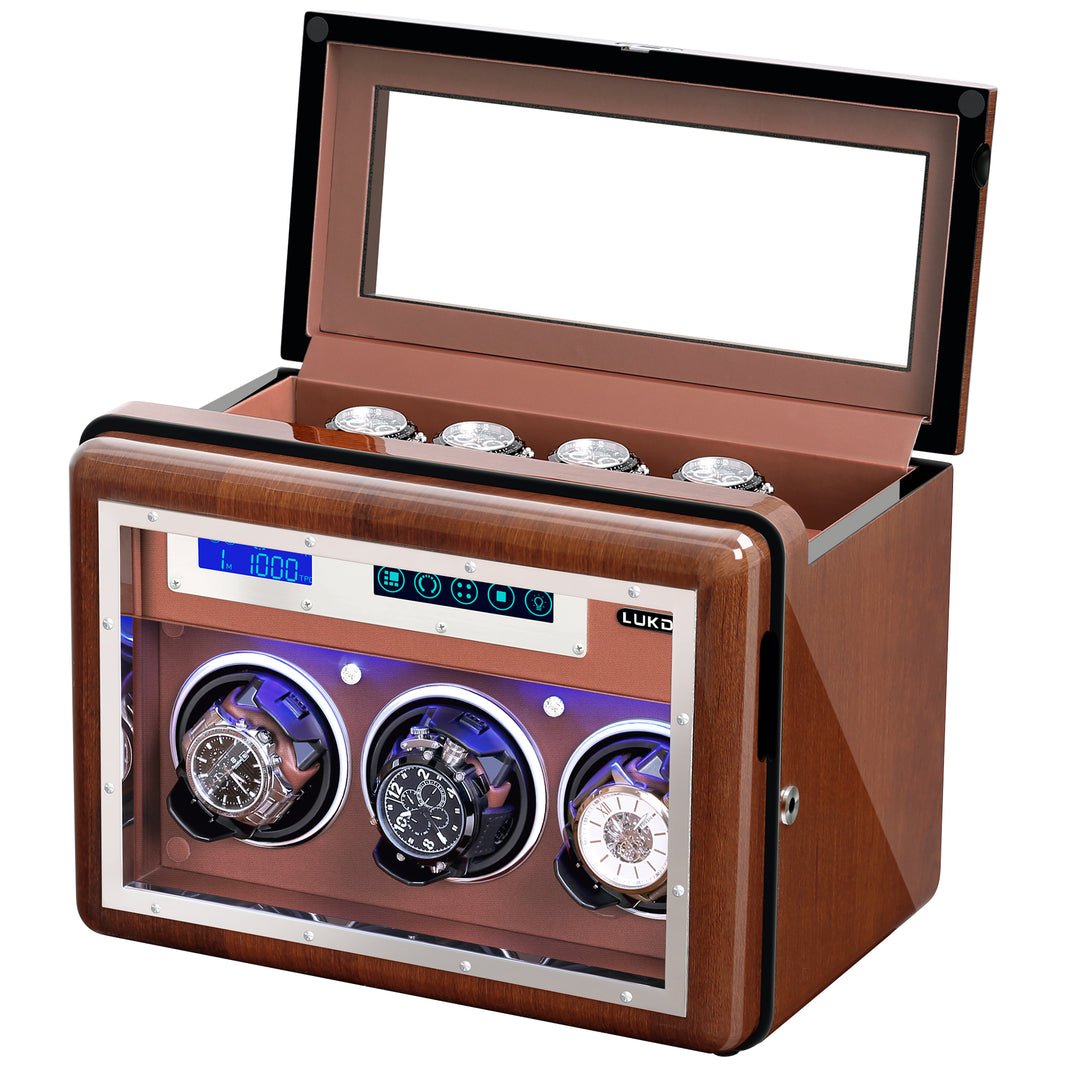
- Identify the exact watch reference and movement caliber if possible.
- Check the watch maker’s guidance first, then a reputable TPD database.
- Set both TPD and direction; do not ignore direction.
- Use the lowest reasonable setting that keeps the watch ready.
- Observe the watch over three to seven days rather than judging from one night.
- If the watch loses reserve, adjust direction first, then increase TPD gradually.
- If the watch remains ready, resist the urge to increase TPD just because the winder can.
TPD Is for Collectors
The deepest truth about TPD is that it is a collector’s tool. It was not created because every automatic watch is fragile and helpless off the wrist. It exists because collectors own more watches than they can wear at once, and because resetting date, moonphase, GMT, annual calendar, or perpetual calendar functions can become a small but repeated burden.
In that sense, TPD has both practical and emotional value. Practically, it helps keep a watch ready. Emotionally, it gives order to a collection. It lets a collector feel that the watch is resting in a controlled environment, not forgotten in a drawer. If the setting is reasonable and the watch is maintained, that comfort is not foolish. It is part of the ritual of ownership.
Common TPD Questions
Is 650 TPD enough for most watches?
It is enough for many efficient modern automatics, but not for all. Treat 650 TPD as a common low starting point, then verify the movement and observe whether the watch keeps reserve.
Should I use the highest TPD setting?
No. The highest setting is not the safest or most premium setting. Use enough TPD to maintain the watch, then stop there.
What if two TPD charts disagree?
Check whether both charts refer to the same exact caliber. If they do, choose the more conservative setting first and observe. If the watch loses reserve, increase gradually.
Can I use bidirectional rotation for every watch?
No. Bidirectional works well for many watches, but some movements wind most efficiently in one direction. Direction should be checked along with TPD.
Does a high TPD requirement mean the watch is bad?
Not necessarily. It may reflect movement architecture, complications, rotor design, or age. Low TPD can be a sign of efficient winding, but TPD alone does not judge watch quality.
Can running while wearing an automatic watch overwind it?
Modern automatic watches are designed to handle normal wrist motion and include protection against simple overwinding. Running or active movement is not the same as forcing the mainspring beyond its design limit.
Should a stopped watch go straight into the winder?
Many collectors prefer to wind and set the watch manually first, then place it in the winder to maintain reserve. A winder is best at maintenance, not emergency charging.
How long should I test a TPD setting?
Three to seven days is a practical window. One night may not tell you much, especially if the watch entered the winder partially wound.
Does service condition affect TPD?
Yes. Lubrication, wear, and overall movement health can affect winding efficiency. If a watch suddenly needs much more help than before, the answer may be service, not simply more TPD.
References Used for This Guide
This guide was written by comparing commonly cited public setting resources, including Watch Winder Mall’s brand-based TPD settings guide, WOLF’s TPD settings guidance, Orbita’s watch winder database, 1010 Boutique’s watch winder settings lookup, and published guidance from programmable winder brands and collector discussions. Because public charts may differ, always verify the exact watch reference and movement when possible.
Continue Learning
- Watch Winder Basics – understand how winders work, what parts they include, and why TPD exists.
- How to Choose a Watch Winder – compare capacity, independent controls, motor quality, cushion fit, cabinet style, and security.
- FAQS – read common questions about watch winders, ordering, warranty, and support.
- BLOG – explore future collector notes, ownership tips, and Galosom updates.
- Shop Galosom Watch Winders – compare single, double, and multi-watch winders.