
































































































































































































































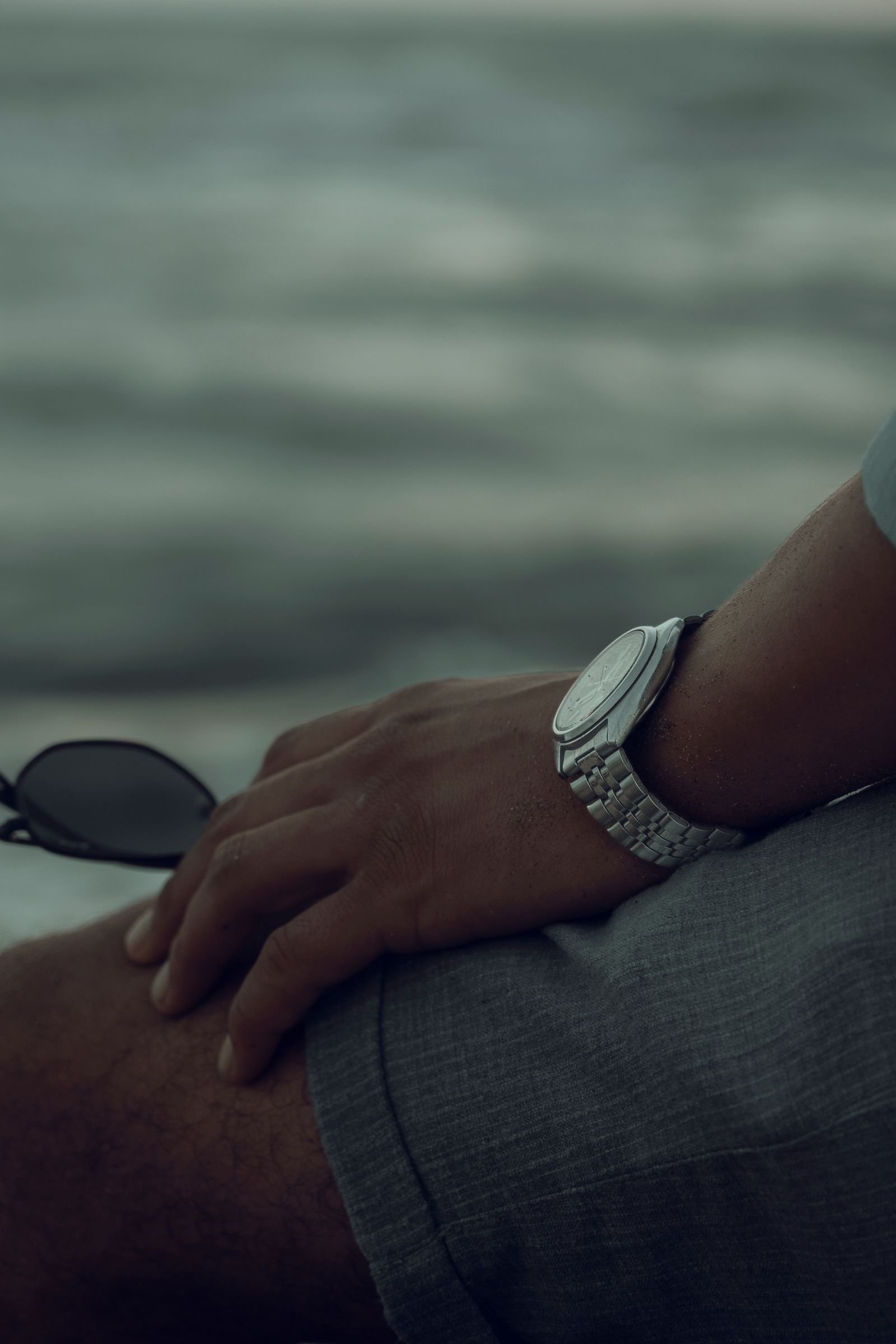
A watch pressure test checks whether a closed watch case resists air or water at a specified pressure without leaking. It is the practical bridge between the depth rating printed on a dial or caseback and the condition of the watch today. A new watch may have passed factory testing, yet gaskets age, crowns get knocked, crystals are replaced, and casebacks are opened. None of those changes is visible from the depth rating alone.
The useful question is not simply whether a watch is labeled 50, 100, or 200 meters. It is whether its current sealing system can still meet an appropriate test. This guide explains dry and wet testing, what a pass actually means, why a test is not a permanent guarantee, and when owners should book one.
What a Watch Pressure Test Actually Measures
A watch case is sealed at several junctions: typically the crystal, caseback, crown and crown tube, plus pushers or valves on more complicated models. Gaskets help close those paths, but the entire assembly has to work together. A pressure test looks for case deformation or pressure loss that indicates air is moving across the boundary.
The test does not measure movement accuracy, power reserve, magnetism, lubrication, or general mechanical health. It also does not make a leaking watch water resistant. Think of it as a diagnostic and verification step. If a watch fails, a technician still has to inspect the seals, sealing surfaces, crystal, crown, tube, pushers, and caseback to find the cause. After repair, the case should be tested again.
This distinction matters because the words water resistant describe performance under defined test conditions. Casio notes that meter markings represent test pressure rather than permission to use a watch continuously at the stated depth. Breitling likewise explains that a depth rating reflects pressure in a static environment, while real use introduces movement and flowing water. The rating remains valuable, but it is not a live sensor reporting the condition of an older case.
Dry Testing Versus Wet Testing
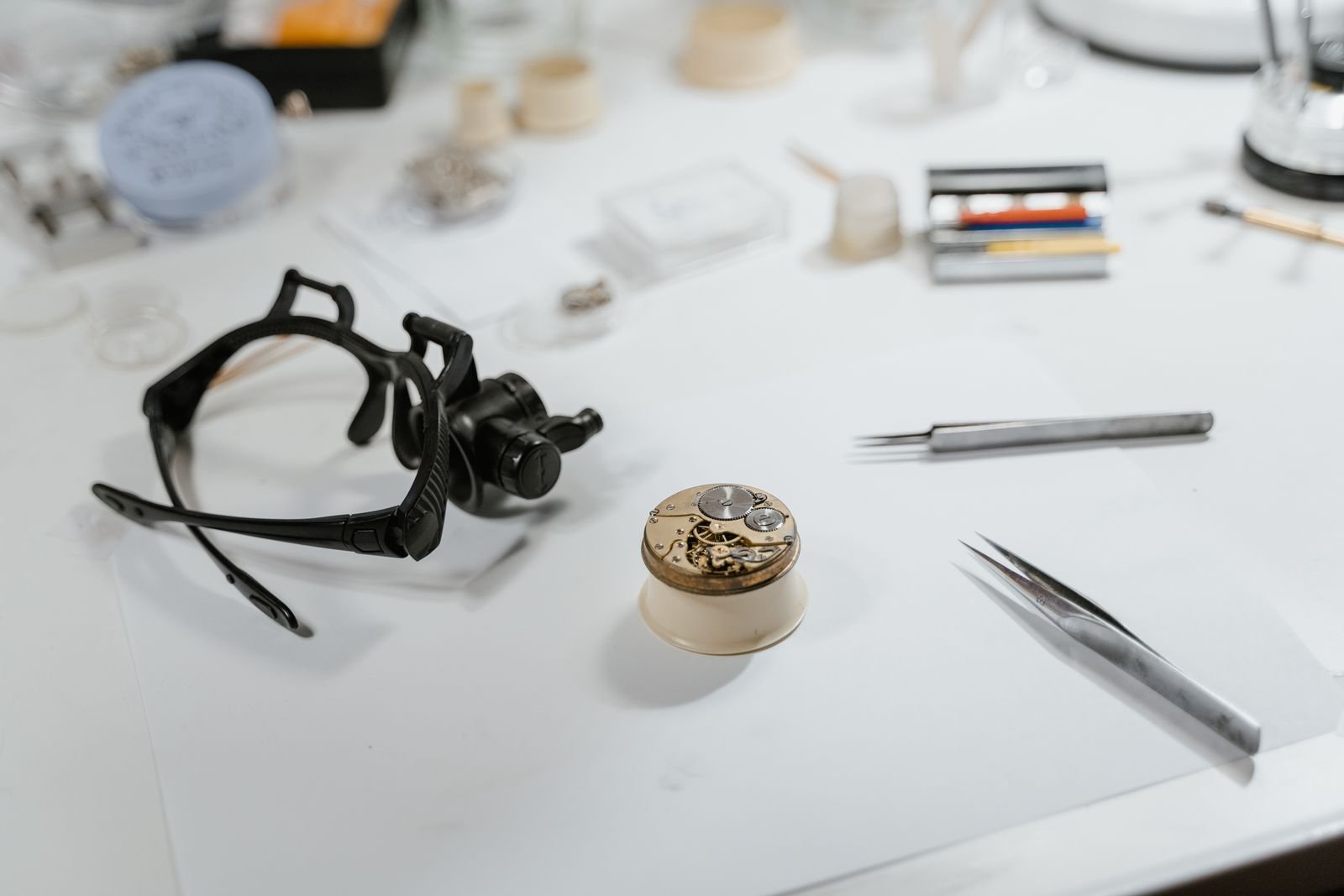
Dry pressure and vacuum tests
A modern dry tester places the complete watch in a sealed chamber. The machine changes the air pressure around the watch and uses a sensitive probe to measure tiny changes in case thickness. A sealed case flexes in a predictable way and holds that deformation during the measurement. If air crosses a leaking seal, the deformation changes differently and the machine records a failure.
The obvious advantage is that the watch never touches water. The movement can usually remain inside the case, and a failed test does not deliberately expose it to liquid. Depending on the equipment, a technician may run positive-pressure and vacuum phases because different seal problems can reveal themselves under different conditions.
A dry result is only as meaningful as the selected program and the equipment’s range. Passing a low-pressure screening test does not prove that a dive watch meets its full rated pressure. Ask what pressure was applied, whether vacuum was included, and whether the test matched the intended use of the watch.
Wet testing and bubble testing
Traditional wet testers use compressed air above a water reservoir. The case is pressurized while it remains out of the water, then submerged before the chamber pressure is released. If air entered the case through a leak, escaping bubbles can reveal the location as pressure returns toward normal. The sequence matters: simply pressurizing a leaking watch underwater would risk forcing water into it.
Service centers may also use hydrostatic equipment for higher-pressure validation. The exact method and limit should suit the model. A vintage dress watch, a modern chronograph, and an ISO-rated diver do not automatically belong on the same program. High pressure is not inherently better when it exceeds the design or condition of the case.
What a Passing Watch Pressure Test Proves
A pass shows that the assembled watch met the chosen test conditions at that moment. It is evidence that the case was not leaking beyond the machine’s tolerance during that cycle. When the test pressure is appropriate for the model, this is the best practical basis for trusting its water resistance.
A pass does not certify every future activity. It cannot predict a crown left open tomorrow, a pusher operated underwater, a new impact, or a gasket damaged by heat and chemicals. It also cannot convert a 30-meter dress watch into a dive watch. Use still has to remain within the manufacturer’s instructions.
That time-limited nature is why official advice focuses on periodic checks. Rado recommends an annual water-resistance test. Breitling also advises annual testing because case gaskets dry over time. Victorinox recommends testing at least every 18 months and whenever the case is opened. The intervals differ, but the underlying principle is consistent: sealing performance can change after the factory test.
What a Failed Test Means
A failed result means the case did not maintain the selected test condition. It does not, by itself, name the defective part. Common causes include a flattened caseback gasket, a dry or damaged crown seal, a worn crown tube, a poorly seated crystal gasket, pusher-seal wear, dirt on a sealing surface, corrosion, or a case component that has been distorted by impact.
Do not solve a failure by tightening the caseback or crown harder without diagnosis. Excess force can damage fine threads or distort parts. The sensible process is inspection, replacement or correction of the defective component, correct lubrication where specified, careful reassembly, and a repeat test.
If there is already mist or droplets beneath the crystal, stop treating the issue as routine testing. Moisture has crossed the case boundary and the movement, dial, and hands may need prompt inspection. This guide to watch crystal fogging and moisture response explains the immediate steps and why heating the watch is not a repair.
When Should You Get a Watch Pressure Test?
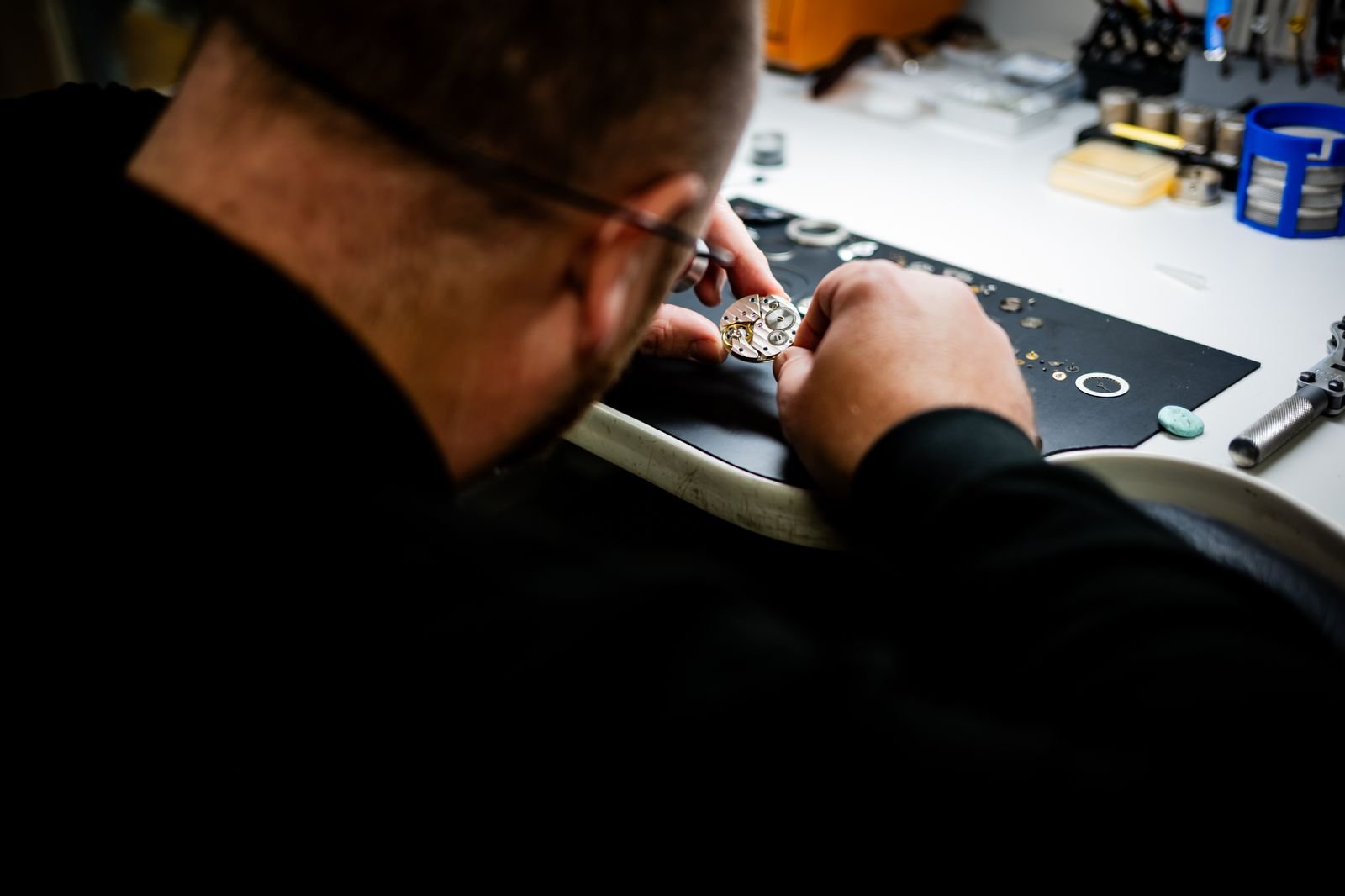
After the case has been opened
A battery change, movement service, regulation, dial work, or inspection breaks the sealed assembly. Even when the old gasket looks acceptable, it can be pinched, displaced, contaminated, or compressed differently during closure. Victorinox specifically recommends testing whenever the case has been opened, and TAG Heuer describes pressure testing as part of renewing water resistance during maintenance.
Before relying on a pre-owned or vintage watch in water
Documents and appearance cannot establish current sealing performance. A seller may honestly say a watch was serviced, yet the scope may not have included pressure testing. Vintage pieces deserve particular care because replacement crystals, worn tubes, polished case surfaces, and scarce seals can complicate restoration. Unless there is a recent, relevant result, assume the water resistance is unknown.
Before a swimming or diving season
If a watch will be used regularly in water, testing before exposure is cheaper than investigating moisture afterward. Many brands recommend annual checks for water-used watches. A professional diver should follow the exact manufacturer and operational requirements for the specific instrument, not a general consumer schedule.
After an impact or a change in crown or pusher feel
A blow to the crystal, crown, or case can compromise sealing without stopping the movement. A crown that suddenly feels loose, gritty, crooked, or unwilling to screw down is a reason to keep the watch dry. The same applies to a pusher that sticks or fails to return cleanly. Repair the mechanical issue and verify the seal before returning the watch to wet use.
When the service history is uncertain
If you cannot remember the last test and routinely swim with the watch, schedule one. Annual testing is a conservative, brand-supported habit for frequent water exposure. A dry dress watch that never approaches water may justify a different risk-based interval, but it should still be tested after opening and before any planned wet use.
How to Read the Result Like an Owner
Ask for more than the words it passed. A useful result identifies the test pressure, the method, and whether the watch passed positive pressure, vacuum, or both. Confirm that the test was performed on the complete watch after all work was finished. If the shop tested only the empty case or used a lower screening pressure, that can still be useful, but it should not be confused with full verification.
Also ask whether the requested pressure fits the reference. A technician should not guess from appearance. The caseback, manufacturer instructions, and model documentation establish the intended rating and permitted activities. The Casio explanation of water-resistance standards is a helpful reminder that the meter figure relates to standardized static testing, not a literal all-purpose operating depth.
If a watch fails, request a diagnosis before authorizing a broad overhaul. A pressure-test failure may require only seal or crown work, while corrosion or a damaged tube may be more involved. Conversely, a quick gasket change without a final retest leaves the central question unanswered.
Pressure Testing Is Not the Same as Waterproofing
The word waterproof invites false certainty. Watches are normally described as water resistant because performance is limited by construction, depth, condition, and use. A technician can restore seals and verify a test result, but no service makes a watch permanently immune to water.
Be cautious with vague offers to “waterproof” a watch without naming the parts, test method, and achieved pressure. A credible service should be able to explain what was inspected or replaced and provide a result appropriate to the model. For a valuable watch under warranty, an authorized service center may also be important for parts, documentation, and warranty compliance.
Common Owner Mistakes After a Passing Test
- Leaving the crown unsecured: A good case test cannot protect a watch whose screw-down crown is left open.
- Operating ordinary pushers underwater: Unless the manufacturer explicitly permits it, do not use chronograph buttons or correctors while submerged.
- Assuming hot water is harmless: Saunas, hot tubs, steam, and abrupt temperature changes can challenge seals and introduce soaps or chemicals that were not part of a laboratory pressure test.
- Trusting a rating after a hard knock: Testing describes the case before the new event. Impact creates a reason to reassess it.
- Ignoring salt and residue: Follow the maker’s instructions for rinsing a suitable watch after seawater exposure, with the crown secured.
Watch Pressure Test FAQ
Can a pressure test damage a watch?
An appropriate test performed with suitable equipment is a normal service procedure. Risk increases when an operator applies pressure beyond the model’s specification or uses an unsuitable method on a fragile or compromised case. Vintage and damaged watches require judgment before testing.
Can a watch pass a dry test and still leak later?
Yes. A pass is valid for the conditions and moment tested. Later impact, crown misuse, temperature exposure, chemical damage, or continued gasket aging can change the result. That is why testing is periodic rather than permanent.
Should a new battery always be followed by testing?
If you intend to rely on the watch’s water resistance, yes. Opening the case interrupts the sealing system. Inspection, correct closure, and a post-service test provide evidence that protection was restored.
Is 3 bar enough for swimming?
Do not infer activity solely from the number. Follow the instructions for the exact watch. Many manufacturers treat low ratings as suitable for incidental splashes rather than swimming, and a current test cannot upgrade the original design.
How often should a dive watch be pressure-tested?
Many manufacturers recommend annual water-resistance checks, especially for watches regularly used in water. Test after any case opening, repair, or significant impact as well. Professional use may require stricter model-specific procedures.
Conclusion
A watch pressure test answers a narrow but important question: does this assembled case resist the chosen pressure today? It does not replace maintenance, identify every defect automatically, or promise permanent protection. Used correctly, however, it turns water resistance from an assumption into evidence.
For a watch used in water, arrange testing periodically, after the case is opened, and after any impact or sealing concern. Ask what method and pressure were used, keep the result in context, and follow the manufacturer’s activity guidance even after a pass.
Related Reading
Learn how to respond if you notice fogging beneath a watch crystal, then review when aging watch gaskets should be replaced.