






























































































































































































































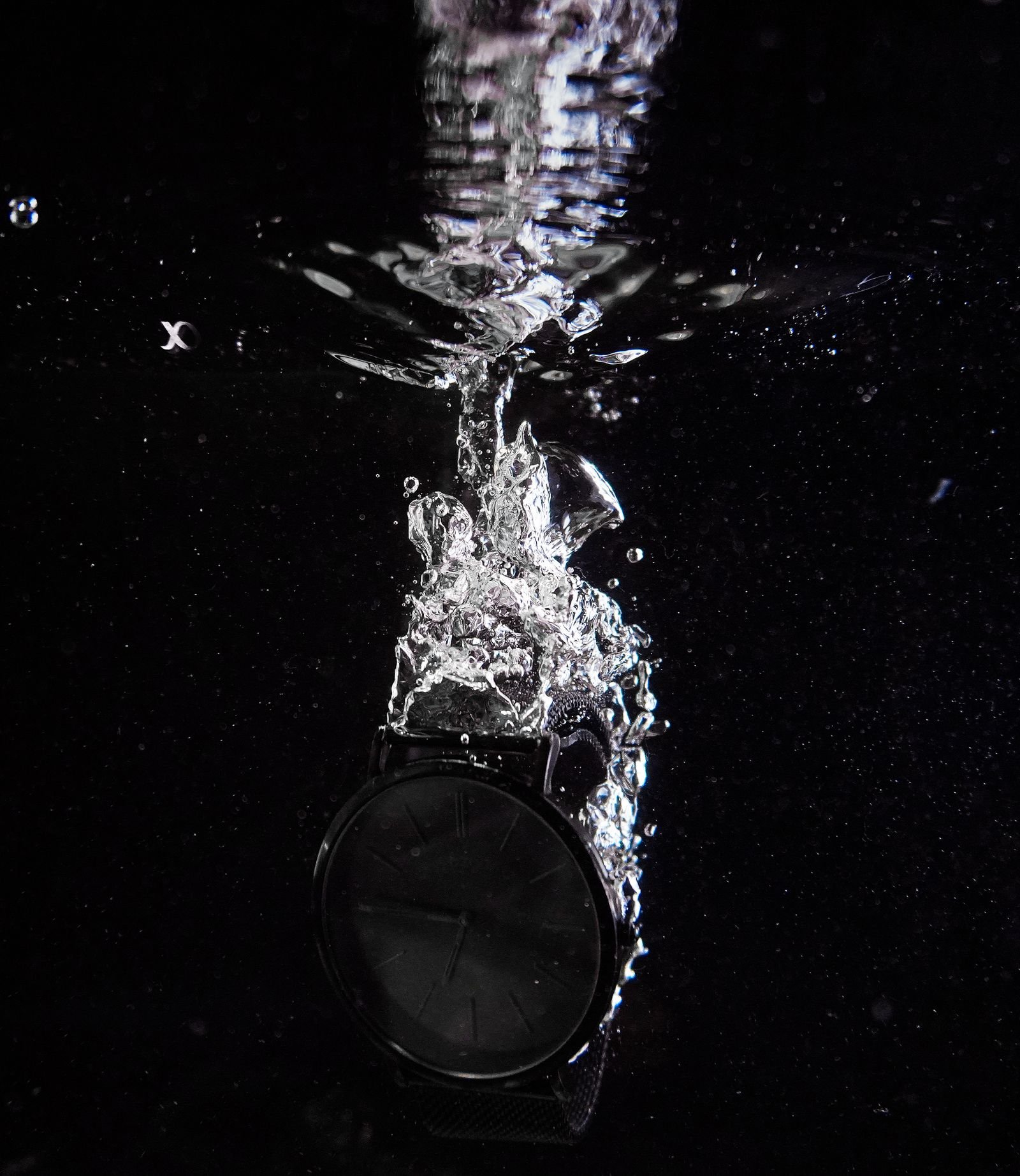
Watch crystal fogging can be as slight as a haze that disappears in minutes or as obvious as droplets clinging to the inside of the glass. Those two situations do not carry exactly the same level of urgency, but both tell you that moisture is present inside the case. A quick mist after an abrupt temperature change may clear as the watch stabilizes. Persistent fog, repeated episodes, visible drops, or dried water marks are warning signs that should not be dismissed.
The safest response is simple: keep the watch away from more water, stop operating the crown and pushers, avoid home-heating tricks, and arrange an inspection if the moisture does not clear quickly or returns. A watchmaker can open and dry the case correctly, inspect the dial and movement, replace compromised seals, and pressure-test the assembled watch. A bowl of rice cannot do any of that.
Why Watch Crystal Fogging Happens
A watch case contains air, and air contains water vapor. When the crystal becomes much colder than the air inside, some vapor can condense on its inner surface. Casio’s official care guidance notes that a sudden temperature drop can produce temporary fogging and that no fault is necessarily indicated if it clears relatively quickly. The important word is temporary.
There still has to be enough moisture inside the case for condensation to form. It may have been trapped when the watch was assembled or last opened, especially in a humid environment. It may also have entered through a weakened seal, an unsecured crown, a damaged crystal, or a poorly closed caseback. Temperature change reveals the moisture; it does not necessarily explain how the moisture got there.
Common routes include:
- An incompletely secured crown. A screw-down crown that is cross-threaded, left partly open, or no longer seating correctly can compromise the sealing system.
- Aged or damaged gaskets. Crown, caseback, crystal, and pusher seals flatten, harden, or become damaged over time.
- A recent case opening. Battery replacement, regulation, or movement work can disturb seals. Water resistance should be verified after reassembly.
- Impact damage. A knock can affect a crystal, crown tube, pusher, or caseback even when the damage is not obvious from the outside.
- Heat and rapid temperature change. A hot shower, sauna, or sudden move between warm and cold environments can stress seals and make existing internal humidity visible.
- Operating controls while wet. Using a crown or chronograph pusher in water can create a path for moisture unless the manufacturer explicitly designed and approved that function.
Rolex emphasizes that its screw-down crowns must be fully secured to maintain the intended seal, while Piaget warns that extreme temperature changes and hot, humid environments can affect water resistance. The lesson applies beyond those brands: the rating engraved on a caseback describes a tested configuration, not an eternal condition.
Brief Mist Versus Actual Water Ingress
A thin, uniform haze that appears immediately after a sharp temperature change and vanishes within a short time is different from droplets that remain for hours. Casio says to stop using the watch and seek authorized service if fogging does not clear or moisture is visible inside. Citizen likewise treats condensation as a possible sign of water damage. CHANEL’s care guidance is more conservative: mist beneath the crystal is treated as water infiltration requiring workshop assessment.
You do not need to choose which brand’s threshold is “correct” for every watch. Use the visible evidence and the value of the object. The following signs justify prompt professional attention:
- beads or drops of water rather than a faint haze;
- fog that remains after the watch reaches room temperature;
- fogging that returns repeatedly during ordinary wear;
- dried spots, streaks, discoloration, or a cloudy ring beneath the crystal;
- a recent swim, shower, heavy rain exposure, or crown operation while wet;
- new rate problems, stopping, a stiff crown, or an unusual rotor sound;
- saltwater, chlorinated water, or another contaminated liquid inside the case.
Saltwater is especially urgent because deposits remain after the water evaporates and corrosion can continue. Do not wait for the watch to stop. A movement can keep running while moisture begins attacking steel parts, dial furniture, luminous material, hands, and lubricants.
What to Do Immediately
- Remove the watch from water and humid conditions. Dry the exterior gently with a clean, lint-free cloth.
- Do not operate the controls. Avoid winding, setting, changing the date, or pressing chronograph pushers. Moving controls can disturb seals and spread moisture.
- Keep it at a stable room temperature. A dry indoor location is appropriate while arranging service. Do not put the watch on a radiator, in an oven, under a strong lamp, or in direct hot sunlight.
- Record what happened. Photograph the fog or droplets, note the liquid involved, and write down when the exposure occurred. Condensation may disappear before the technician sees it.
- Contact a qualified watchmaker or authorized service center. Mention visible moisture when booking so the shop can judge urgency.
If the watch is valuable, vintage, recently serviced, or under warranty, use the brand’s authorized route unless a trusted specialist is clearly more appropriate. Opening the case yourself can contaminate the movement, damage a gasket, complicate warranty coverage, and erase evidence of the original leak path.
Why Rice, Hair Dryers, and Crown Tricks Are Poor Repairs
Internet advice often focuses on making the visible fog disappear. That is not the same as restoring the watch. Rice is a weak and uncontrolled desiccant, and dust can enter around an open crown. Silica gel is more effective at absorbing ambient moisture, but placing a closed watch beside it cannot reliably dry the movement, remove deposits, replace damaged seals, or verify water resistance.
Heat is riskier. A hair dryer or radiator can damage lubricants, adhesives, dial finishes, gaskets, and acrylic components. Heating also increases internal pressure and may drive moisture to a different part of the case rather than removing it. A cold crystal may look clear afterward while water remains elsewhere.
Some guides advise pulling out or unscrewing the crown to help moisture escape. That may create a larger opening, but it also creates a path for dust and does nothing to diagnose the failed seal. Unless the manufacturer or the watchmaker handling your specific case tells you otherwise, leave the controls alone and deliver the watch in its observed condition.
What a Watchmaker Should Check
A competent moisture inspection is more than wiping the crystal. The technician should identify how far the water traveled and why the case admitted it. Depending on the watch and exposure, the work may include:
- opening the case and documenting visible moisture or corrosion;
- drying the case, movement, dial, and hands using appropriate workshop methods;
- checking the crown, crown tube, crystal, caseback, pushers, and sealing surfaces;
- replacing affected gaskets and any corroded or damaged components;
- evaluating movement condition, lubrication, amplitude, rate, and functions;
- reassembling to the correct specification and performing an appropriate pressure test.
The repair scope depends on timing. A quick response after a small amount of fresh water may require drying, inspection, resealing, and testing. A delayed saltwater incident can require extensive movement work and replacement of stained cosmetic parts. This is why visible fog should be treated as evidence, not merely an annoyance.
If you want more context on warning sounds and when to stop operating a movement, Galosom’s guide to abnormal clicking while winding an automatic watch explains how gentle observation can help without turning a symptom into further damage.
How to Reduce the Chance of Fogging
Prevention starts with realistic expectations. Water resistance can deteriorate through age, wear, impact, and service work. Rolex’s official watch-care guidance tells owners to secure the crown fully and rinse suitable watches with fresh water after sea use. The exact care instructions for your own model take priority, especially for vintage watches and unusual crown or pusher systems.
- Have water resistance checked periodically if you swim with the watch.
- Request a pressure test after any case opening, crystal work, crown repair, or battery change.
- Keep crowns and pushers in their correct positions before water exposure.
- Avoid hot showers and saunas; heat, steam, soap, and rapid temperature change are a poor combination for seals.
- Rinse an approved water-resistant watch with fresh water after saltwater use, following the manufacturer’s directions.
- Do not assume a vintage depth rating remains valid without recent testing.
- Replace worn seals and damaged crown components based on inspection and test results.
A pressure test is narrower than a full movement service. A healthy watch may need its case sealing checked before it needs a complete overhaul. Conversely, a watch that passes a dry pressure test can still need movement service for an unrelated problem. Ask what was tested and what the result means for actual use.
FAQ
Is a little fog inside a watch normal?
A brief, light haze after an abrupt temperature change can disappear as the watch stabilizes, and some manufacturers say this does not necessarily indicate a fault. Persistent, repeated, or droplet-like moisture is not normal and should be inspected.
Can watch crystal fogging disappear without damage?
Yes, visible fog can disappear, but that does not prove the case is dry or the seals are sound. If the fog lasts, returns, follows water exposure, or leaves marks, arrange professional inspection.
Should I put a fogged watch in rice?
No. Rice cannot inspect corrosion, clean deposits, replace seals, or pressure-test the case. It may make owners wait while internal damage progresses.
Can I use a hair dryer to remove moisture?
No. Concentrated heat can harm finishes, adhesives, oils, and gaskets, and it may merely move moisture within the case. Keep the watch dry at a stable room temperature and seek service.
Does fogging mean the watch is no longer water resistant?
It means the watch should not be trusted around water until it has been inspected and tested. The cause may be internal humidity revealed by temperature change or an active sealing failure; either way, a successful pressure test is better evidence than assumption.
How quickly should a wet watch be serviced?
Visible drops, saltwater exposure, or persistent condensation deserve urgent attention. Even with mild fogging, contact a service provider promptly rather than waiting days to see whether the movement stops.
Conclusion
Fog beneath a watch crystal is a clue, not a cosmetic defect to erase. A fleeting haze after a sharp temperature shift may clear without lasting harm, but persistent fog, droplets, water spots, or repeated episodes point to moisture that needs professional attention. Stop exposing the watch to water, avoid operating it or heating it, document the symptom, and have the case opened, inspected, resealed, and tested as appropriate.
The best outcome comes from acting before corrosion becomes visible. Water resistance must be maintained and verified; it cannot be inferred forever from the number printed on the dial or caseback.
Related Reading
Continue with Galosom’s guide to automatic watch clicking and repair warning signs, then learn when watch gaskets should be replaced at Watch Winder Mall.