




























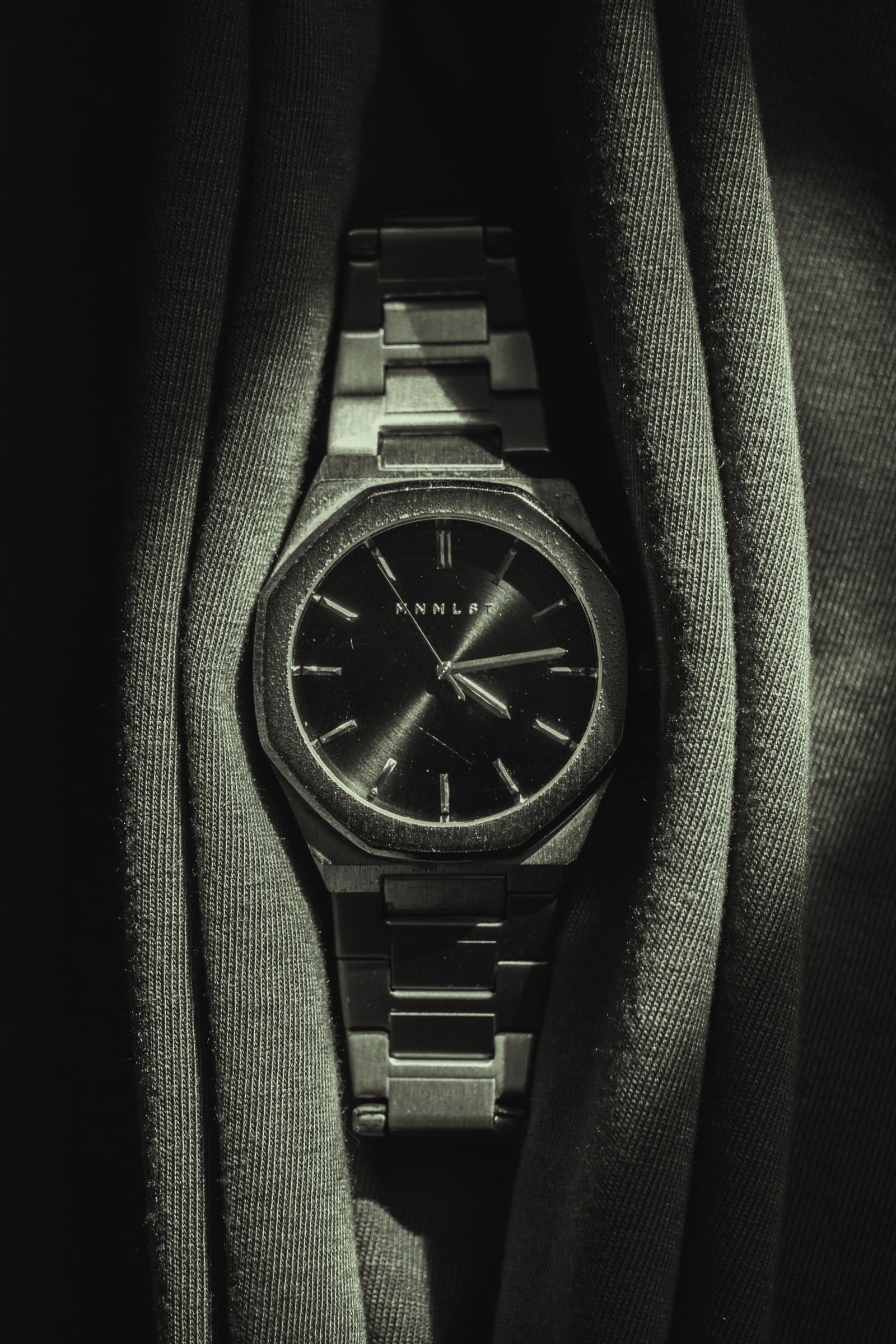
An automatic watch clicking when winding can sound alarming, especially if you have only just noticed it. Yet a mechanical watch is not silent machinery. Its winding system contains gears, ratchets, pawls, springs, and—in most modern automatics—a mechanism that allows the mainspring to slip when the watch is fully wound. Some clicks are therefore expected. Others, particularly when paired with grinding, skipping, a loose crown, or poor power reserve, deserve attention.
The useful question is not simply, “Does it click?” It is: when does the sound occur, what does the crown feel like, and does the watch actually store and deliver energy normally? This guide explains the main sources of winding clicks, a safe test you can do without opening the case, and the signs that should end the experiment and send the watch to a qualified watchmaker.
Why a Mechanical Watch Can Click During Winding
When you turn the crown in the winding direction, the stem and keyless works drive a series of wheels that rotate the mainspring barrel arbor. A click, pawl, or comparable one-way component prevents stored spring force from immediately driving the winding train backward. As teeth pass that restraint, the mechanism may produce a fine, regular ratcheting sound. Seiko technical documentation shows this function explicitly: the click mechanism prevents the ratchet wheel from turning backward and releasing the wound mainspring.
The exact sound varies by caliber and case construction. One watch may make a crisp series of tiny ticks; another may be almost silent. A large metal case can amplify a sound that is barely audible in a smaller or better-insulated case. Crown diameter, gasket friction, winding-gear design, and whether the automatic works remain coupled during hand winding also affect what you hear and feel.
That is why comparisons between different watches are unreliable. The best baseline is the same watch when it was known to be healthy.
Four Clicking Patterns That May Be Normal
1. Fine, Even Clicks in the Winding Direction
A steady sequence of light clicks with smooth, consistent resistance is often the click or pawl passing over ratchet teeth. If the watch starts, builds a normal reserve, and the crown remains stable, the sound alone is not a fault. The cadence should follow your crown rotation rather than occur randomly after you stop turning.
2. Soft Clicks in the Non-Winding Direction
Many watches wind in only one crown direction. Turning the crown the other way may do no useful winding and can produce soft clicks as parts freewheel. A. Lange & Söhne, for example, tells owners that turning a manual-wind crown counterclockwise does nothing except create soft clicks. Your watch may use a different layout, so check its manual instead of assuming that clockwise and counterclockwise behavior is universal.
3. A Periodic Slip Near Full Wind
Most automatic watches do not end at the firm stop associated with a traditional hand-wound movement. Their mainspring uses a slipping bridle or friction clutch. When the spring approaches full wind, its outer bridle slides along the inside of the barrel rather than allowing the rotor to keep increasing tension. Lange notes that an automatic watch does not develop a noticeable hard stop at full wind because of this friction clutch.
Depending on the movement, that slip may be inaudible, feel like a faint release, or produce a periodic click or low scrape after several crown turns. The American Watchmakers-Clockmakers Institute describes correct bridle operation as a controlled slip just before full wind. A regular slip at high reserve can therefore be normal; a violent snap followed by a major loss of reserve is not.
4. A Brief Rotor or Reverser Sound
On some automatic movements, manual winding can make the automatic works or rotor move slightly. The result may be a short whir, buzz, or secondary click. Movement architecture matters: a sound that is characteristic of one caliber may signal a fault in another. Treat a familiar, consistent noise differently from a new sound that appeared suddenly.

Clicking Sounds That Are More Concerning
Sound is most useful when combined with feel and performance. Stop winding if any of these symptoms appear:
- A loud snap and sudden loss of resistance: This may indicate that the mainspring, bridle, barrel, or part of the winding train is no longer holding as intended.
- Grinding or gritty clicks: Roughness can come from dirt, corrosion, damaged teeth, dry components, a failing crown or tube, or trouble in the keyless works. Continuing to turn can spread damage.
- The crown skips under light pressure: A click paired with a momentary jump or disengagement can point to worn or poorly engaged winding parts.
- The crown moves in or out while winding: Unstable crown positions suggest a stem, setting-lever, or keyless-works problem.
- The sound began after a drop or impact: A shock can displace or damage parts even when the watch still runs.
- Clicking is paired with very short reserve: The crown may be turning without transferring enough energy, or the bridle may be slipping too early.
A new sound after water exposure is also a reason to stop. Do not keep winding in an attempt to “dry out” the movement. Moisture can damage steel components and lubricants quickly, and opening or operating the crown can worsen the situation.
Automatic and Manual-Wind Watches Do Not Behave the Same
The slipping-bridle explanation applies to automatic movements designed to protect the spring during continuous rotor winding. A hand-wound-only watch commonly reaches a clear stop when fully wound. Once that resistance appears, forcing the crown can damage the mainspring or winding train.
There are also automatics that do not support hand winding, especially some older or entry-level calibers. On those movements, turning the crown in its normal position may not charge the mainspring at all. Before using crown behavior as a diagnosis, identify the caliber and read the correct instructions.
Never assume that “an automatic cannot be overwound” means the entire winding system is impossible to damage. The slipping bridle limits mainspring tension during normal operation; it does not protect crown threads, the stem, gear teeth, or damaged components from excessive force.
A Safe Five-Minute Test
You can collect useful evidence without shaking the watch, opening the case, or winding it repeatedly.
- Confirm the model and instructions. Check whether the caliber supports hand winding, which crown position winds it, and the correct direction.
- Start from a known state. If the watch has stopped naturally, note that fact. Do not deliberately run it down if it is already showing roughness or impact damage.
- Wind slowly. Give only the manufacturer-recommended starting turns. Patek Philippe advises a few gentle turns to restart a stopped automatic; Lange gives about 20 turns for initial reserve on its automatics. Your watch may require a different number.
- Record the pattern. Note whether the click is regular or intermittent, present from the first turn or only after reserve builds, and accompanied by smooth, gritty, tight, or skipping resistance. A short audio or video recording can help a watchmaker.
- Check the result. Set the time and leave the watch safely dial-up. Record how long it runs. Compare the result with the model’s stated reserve only after following its proper winding method.
Do not repeat the test dozens of times. If the watch will not start after correct winding, Citizen advises consulting a retailer or authorized service center. Repetition is not a repair.
How Power Reserve Helps Diagnose the Sound
A clicking watch that reaches its expected reserve is less worrying than one that stops after a few hours. Reserve provides evidence that the crown, winding train, mainspring, and going train are at least transferring and using energy.
Suppose a watch is rated for about 40 hours. After correct winding it runs for roughly that period, keeps reasonable time, and produces only a light, repeatable tick. That pattern is compatible with ordinary winding noise. If it runs for six hours, clicks loudly from the first turn, and the crown occasionally jumps, the combined evidence supports inspection.
Do not diagnose the slipping bridle solely by counting crown turns. A partially wound watch begins from an unknown state, and different movements have different gear ratios. Published reserve is also measured from a properly wound movement in suitable condition, not from a casual handful of turns.
What a Watchmaker Will Inspect
A watchmaker can examine the crown and case tube, stem, winding pinion, sliding pinion, crown wheel, ratchet wheel, click, automatic reversers, barrel, arbor, mainspring, and bridle. They can also measure amplitude and rate, test automatic winding efficiency, and compare actual reserve with the movement specification.
If the bridle slips too early, the watch may never achieve full reserve. If it sticks too strongly and releases abruptly, winding can feel jerky. AWCI technical material notes that barrel condition, bridle shape, correct parts, and movement-specific lubrication all affect controlled slipping. This is not a sensible do-it-yourself lubrication job: the wrong product or amount can create a new fault.
For a watch that is otherwise healthy, the answer may simply be “normal for this caliber.” That professional baseline is still valuable, especially if you document it before the sound changes.

Frequently Asked Questions
Is it normal for an automatic watch to click when I wind it?
Often, yes. Fine regular clicks can come from the ratchet or one-way winding mechanism, while a periodic sound near full reserve may come from the automatic mainspring’s slipping bridle. Smooth feel and normal reserve are reassuring.
Does clicking mean my automatic watch is fully wound?
Not necessarily. Some clicks occur from the first turn because they come from the ratchet mechanism. A change in sound or periodic slip near high reserve may indicate full-wind protection, but the behavior is caliber-specific.
Should an automatic crown stop when fully wound?
Most modern automatics do not reach a hard stop because the mainspring bridle slips inside the barrel. Hand-wound-only watches often do reach a firm stop and should never be forced beyond it.
Why does the crown click when I turn it backward?
The non-winding direction may allow part of the mechanism to freewheel over ratchet teeth. This can be normal, but consult the model instructions because winding direction and construction vary.
When should I stop winding immediately?
Stop if you feel grinding, severe resistance, skipping, a loose or unstable crown, a sharp snap, or a sudden change after impact or moisture exposure. Also seek inspection if the watch cannot build a normal reserve.
Conclusion
An automatic watch clicking when winding is not automatically broken. A smooth, regular ratchet sound, soft reverse-direction clicks, or a controlled periodic slip near full reserve can all be normal. The warning signs are changes in character: grinding, jumping, sudden loss of resistance, unstable crown positions, impact history, moisture, or reserve that falls far short of specification.
Use the correct manual, wind gently, document the pattern, and measure the outcome once. If sound, feel, and reserve disagree, stop before a minor winding fault becomes an expensive repair.
Related Reading
For another crown-feel diagnosis, read Galosom’s guide to gritty watch winding, then use Watch Winder Mall’s automatic watch power-reserve test to check whether the movement is storing energy normally.