
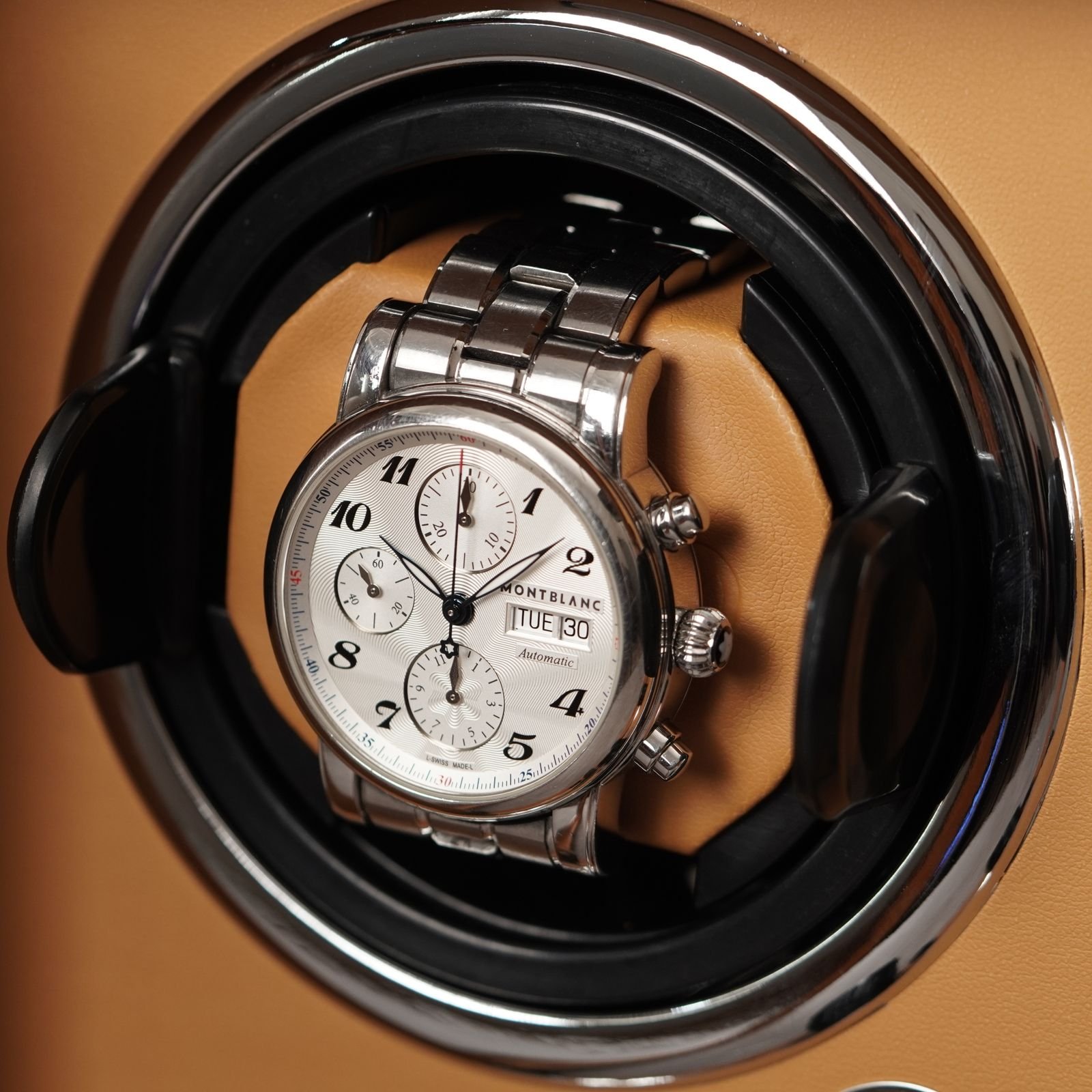
Grand Seiko 9R65 winder settings are best approached as a measured starting point, not a magic number: begin with about 650 turns per day (TPD) in bidirectional mode, place a properly hand-wound watch on the winder, and check the power-reserve indicator over several days. The 9R65 is an automatic Spring Drive movement with manual winding and an approximately 72-hour reserve. Because Grand Seiko does not publish a universal consumer TPD prescription, 650 TPD both ways should be treated as a conservative field setting to test, not an official factory specification.
That distinction matters. Online setting tables often present one number with false precision, while winder brands count rotations differently and individual watches encounter different mounting angles, cycle timing, and mechanical condition. The useful question is not whether your display says exactly 650. It is whether the watch maintains reserve reliably without spending all day in motion.
Quick Answer: A Practical 9R65 Starting Setting
- Starting TPD: 650 turns per day
- Direction: Bidirectional, or alternating clockwise and counterclockwise
- Test period: Three to five days
- Adjustment: Increase one step at a time only if the reserve trends downward
- Upper trial range: About 800 TPD is a reasonable troubleshooting ceiling for most owners before investigating fit, counting, or watch condition
This is a practical baseline assembled from the movement’s automatic architecture and commonly published programmable-winder guidance. It is deliberately modest. If your winder offers 600 rather than 650 TPD, start there; if its first useful step is 700, that is also a sensible trial. A healthy watch does not need the setting chased to the nearest ten turns.
What the Grand Seiko 9R65 Actually Is
The 9R65 is Spring Drive, but it is still powered by a conventional mainspring. There is no battery driving the hands. Energy stored in the mainspring passes through a gear train, while the Tri-Synchro Regulator controls the release of that energy using mechanical, electrical, and electromagnetic elements. The seconds hand therefore glides continuously instead of advancing in conventional ticks.
According to Grand Seiko’s official Calibre 9R65 specifications, the movement has automatic and manual winding, a power-reserve indicator, a date display, hacking seconds, 30 jewels, and approximately 72 hours of running time when fully wound. Grand Seiko rates the standard 9R65 at an average monthly accuracy of ±15 seconds, equivalent to about ±1 second per day under the stated conditions.
The automatic system uses Seiko’s Magic Lever mechanism. Grand Seiko describes the 9R65 generation as having an efficient automatic winding system intended to replenish energy through normal wrist motion. That is why a moderate winder program is usually enough: the goal is to replace energy the watch consumes, not to force it to maximum reserve repeatedly.
Why 650 TPD Bidirectional Is a Sensible Baseline
TPD means the number of complete rotations a winder performs in a 24-hour program. It is a useful shorthand, but it does not describe the whole cycle. Two machines set to 650 TPD may deliver that motion in different blocks, use different rest periods, or count bidirectional operation differently.
A 650-TPD bidirectional program is a good first test because it sits near the lower end of the range commonly used for efficient modern automatic movements. Alternating direction also avoids making the setup depend on a single rotation direction. For readers new to the terminology, Galosom’s watch winder TPD guide explains how turns, direction, and rest cycles work together.
Do not confuse the suggested program with a Grand Seiko guarantee. The official 9R65 manual identifies the winding system and operating reserve but does not prescribe a specific winder brand, TPD number, or daily cycle. A responsible setup therefore begins conservatively and uses the watch’s own power-reserve indicator as feedback.
How to Set and Test a 9R65 on a Watch Winder
1. Confirm the caliber and the watch’s condition
Check the caliber printed on the case back or in the watch documentation. Similar-looking Grand Seiko models may use a manual-wind Spring Drive caliber, a different automatic 9R caliber, or a mechanical 9S movement. A manual-wind watch receives no useful energy from a winder.
Before testing, make sure the crown operates normally and the watch runs consistently off the wrist. A winder cannot cure dried lubrication, a damaged winding train, a slipping rotor, or an overdue service.
2. Give the watch an initial manual wind
Do not place a fully stopped watch on the machine and use the result as your first test. The official instructions allow manual winding. With the crown in its normal position, wind slowly and follow the model manual. Use the power-reserve indicator: starting around half to full reserve gives the experiment a known baseline.
A winder is designed primarily to maintain reserve between wears. Asking a low-TPD program to revive a depleted watch may make a perfectly suitable setting look inadequate.
3. Mount the watch securely
The cushion should hold the watch without crushing the bracelet or allowing the case to flop as the holder turns. The watch should sit close to the intended axis, and the bracelet should not strike the enclosure. Poor fit wastes motion and can mark the case or bracelet.
4. Select 650 TPD and bidirectional operation
If the winder provides clockwise, counterclockwise, and alternating modes, choose alternating. If it offers only fixed steps, use the closest setting between roughly 600 and 700 TPD. Check the manual to learn whether its bidirectional number is a daily total or a number delivered in each direction. This counting difference is one reason copying a display number between brands can fail.
5. Observe the reserve for several days
Note the power-reserve indication at the same time each day. Do not keep removing the watch, wearing it, or manually winding it during the test. After three to five days, a stable or rising indication means the program is replacing the energy used. If the indication falls steadily, move to the next TPD step and repeat.
How to Fine-Tune Without Overthinking It
If 650 TPD maintains the watch, stop adjusting. More turns do not improve Spring Drive accuracy, make the glide motion smoother, or increase the rated reserve beyond its mechanical capacity. The most useful setting is the lowest reliable program that matches your storage routine.
If reserve declines, try roughly 700 to 750 TPD, then up to about 800 TPD if needed. Change only one variable at a time. Keep the direction, mounting position, and test duration consistent so the result tells you something. A watch that still loses reserve at a moderate-to-high program needs a closer look before you simply select the maximum setting.
Also test reality against the label. Count holder rotations for ten minutes during an active block, then compare the observed rate with the manual’s schedule. Some machines advertise a daily total but pause for long periods; others count one clockwise plus one counterclockwise revolution as a pair. A timer-controlled outlet is not a reliable substitute unless you understand how the winder resumes after power interruption.
Can a Watch Winder Overwind a Grand Seiko 9R65?
A healthy automatic movement is designed so the mainspring can slip within the barrel once it reaches its working maximum, preventing the rigid lock-up associated with overwinding a traditional hand-wound spring. That does not make unlimited motion beneficial. Excessive TPD adds unnecessary cycles to the automatic winding components and to the winder itself, while providing no practical gain after reserve is maintained.
Use scheduled rest periods and avoid continuous rotation. The 72-hour reserve gives the 9R65 ample buffer through overnight pauses and normal gaps in the program. If the watch will sit unused for weeks and has no calendar inconvenience that matters to you, allowing it to stop is also a valid choice. A winder is a convenience device, not a maintenance requirement.
When a Winder Problem May Actually Be a Watch Problem
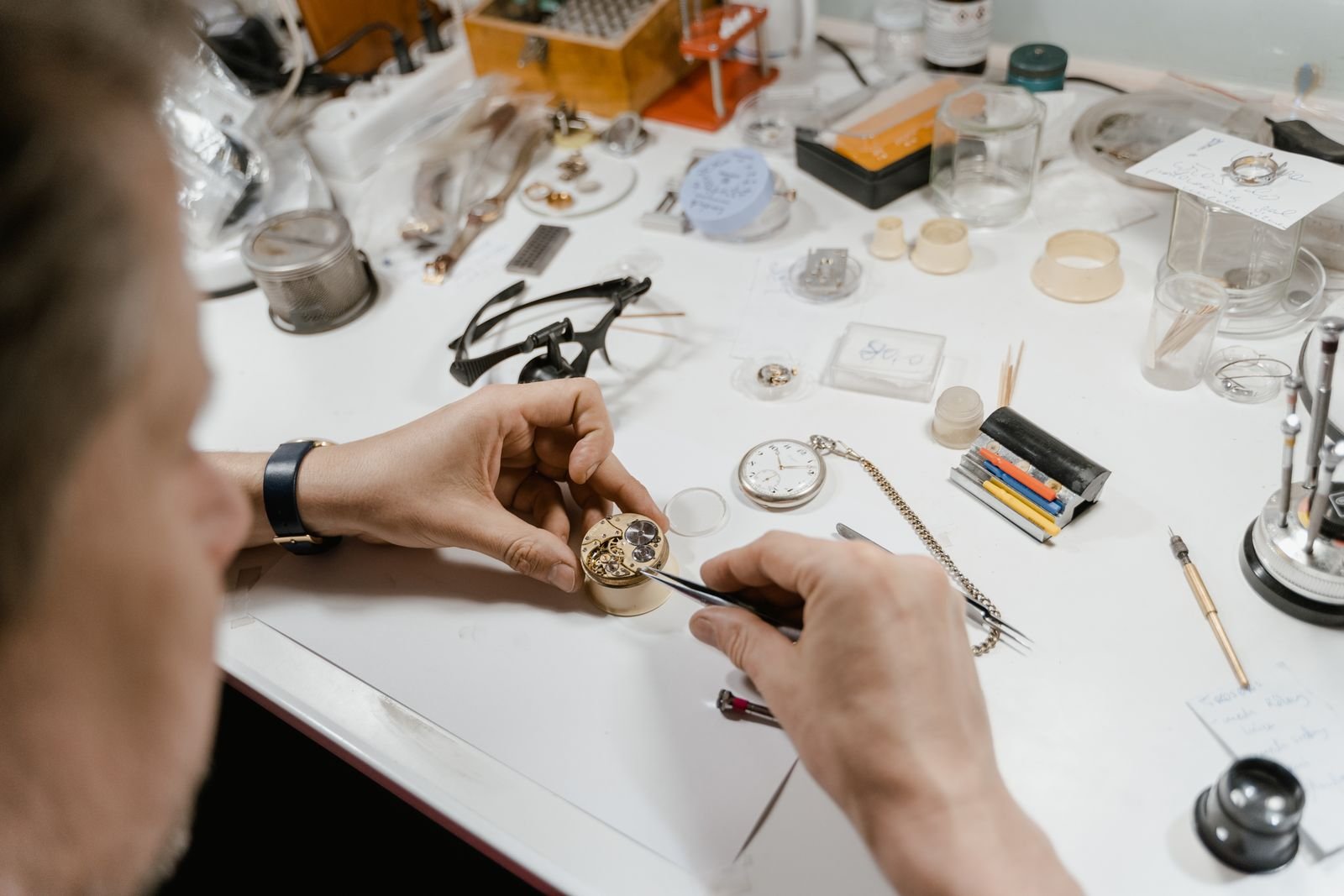
Remove the watch from the winder and investigate if you notice grinding, scraping, a suddenly noisy rotor, an irregular crown feel, moisture, or a reserve that collapses after a proper manual wind. The reserve indicator is especially useful here: if a fully wound watch runs far short of its expected duration while stationary, increasing TPD only masks the symptom.
Separate timing from winding performance. A winder maintains mainspring energy; it does not regulate the movement. If a 9R65 shows a persistent accuracy change outside its expected performance, record the error against a reliable reference for several days and consult Grand Seiko service. Do not assume the winder can correct it.
First rule out simple equipment issues: loose cushions, a tilted holder, low batteries, missed cycles, or a program that resets after a power cut. Then perform a controlled manual-wind and reserve test. This sequence helps a service center distinguish a storage-device problem from a winding or movement fault.
Common Setup Mistakes
- Using a setting for the 9S65: The 9S65 is a conventional mechanical caliber, not the 9R65 Spring Drive. Similar names do not make specifications interchangeable.
- Starting from empty: A maintenance program may not quickly build reserve in a stopped watch.
- Assuming all bidirectional modes count alike: Read the winder manual before comparing TPD numbers.
- Choosing maximum TPD immediately: This hides whether a lower, quieter, less active program already works.
- Ignoring the reserve indicator: It is more informative than guessing from whether the seconds hand is still moving.
- Putting a manual-wind Spring Drive on a winder: Confirm the caliber before expecting rotor winding.
Grand Seiko 9R65 Winder Settings FAQ
What TPD should I use for Grand Seiko 9R65?
Start at approximately 650 TPD in bidirectional mode. Test for three to five days from a known reserve level. If the indicator trends downward, increase one program step at a time rather than jumping directly to the maximum.
Which direction winds the 9R65?
For a programmable consumer winder, alternating or bidirectional operation is the most practical baseline. It reduces dependence on one direction and matches commonly published guidance for the movement. Grand Seiko’s public 9R65 specifications do not provide a consumer TPD-and-direction chart, so verify performance with the reserve indicator.
Does Spring Drive need a special winder?
No special Spring Drive motor is required. Choose a quiet, programmable winder with secure cushions, selectable direction, moderate TPD options, and rest periods. The 9R65 is powered by a mainspring and wound automatically through its rotor despite its electronic regulation.
Will a winder improve 9R65 accuracy?
No. It may prevent the watch from stopping and save you from resetting the date, but it does not regulate the movement or improve its rated accuracy. A meaningful timing change should be documented and evaluated separately.
Should I keep my 9R65 running all the time?
Only if the convenience is valuable to you. Letting a healthy watch stop is not inherently harmful. Owners who rotate among several watches may prefer a winder, while someone who wears the watch frequently may gain little from one.
Conclusion
The safest way to set a winder for Calibre 9R65 is to treat the display as a starting point and the power-reserve indicator as the evidence. Begin near 650 TPD with alternating rotation, start from a known reserve level, and observe the same indicator for several days. Increase motion only when the reserve genuinely declines. That measured approach respects the movement’s efficient automatic winding system, avoids needless rotation, and catches problems that a high setting might otherwise conceal.
Related Reading
For broader setup decisions, read Galosom’s guide to choosing a watch winder for an automatic watch.
To compare Spring Drive with a conventional Grand Seiko automatic, see this Grand Seiko 9S65 winder settings guide.
Collector’s Pick
A practical watch-storage option selected for readers of this guide.

A piano black double watch winder for two automatic watches, with high-gloss lacquer finish, knob control, quiet motor and multiple rotation modes.