
How to Choose a Watch Winder
The right watch winder is not the one with the most lights, the tallest cabinet, or the most dramatic display. It is the one that matches the watches you actually own, protects their cases and bracelets, runs quietly where you plan to keep it, and gives you enough control over turns per day and rotation direction to avoid guesswork.
For most collectors, choosing well comes down to ten practical questions: how many automatic watches need winding, whether each watch needs its own program, what TPD and direction settings are required, how securely the cushion holds the watch, how quiet the motor is, how the cabinet is built, whether you need locking storage, where the winder will sit, how easy it is to operate, and whether the brand can support the product after purchase.
This guide focuses on the buying decision. If you want the foundation first, start with Watch Winder Basics. If you already know the watch model and only need settings, use the TPD Guide.
Start With the Watches, Not the Cabinet
A watch winder is only useful for automatic watches. It will not wind a quartz watch, and it will not help a hand-wound mechanical watch. Before comparing cabinets, make a short list of the watches that may live in the winder and note four details for each one: whether it is automatic, how often you wear it, whether it has calendar or travel-time complications, and whether its movement has a recommended TPD and direction.
This simple audit prevents two common mistakes. The first is buying more rotation than the collection needs. The second is buying a beautiful cabinet that cannot be programmed accurately for the movements inside it. A winder should make ownership easier; it should not add another layer of daily adjustment.
Choose Capacity With the Next Two Years in Mind
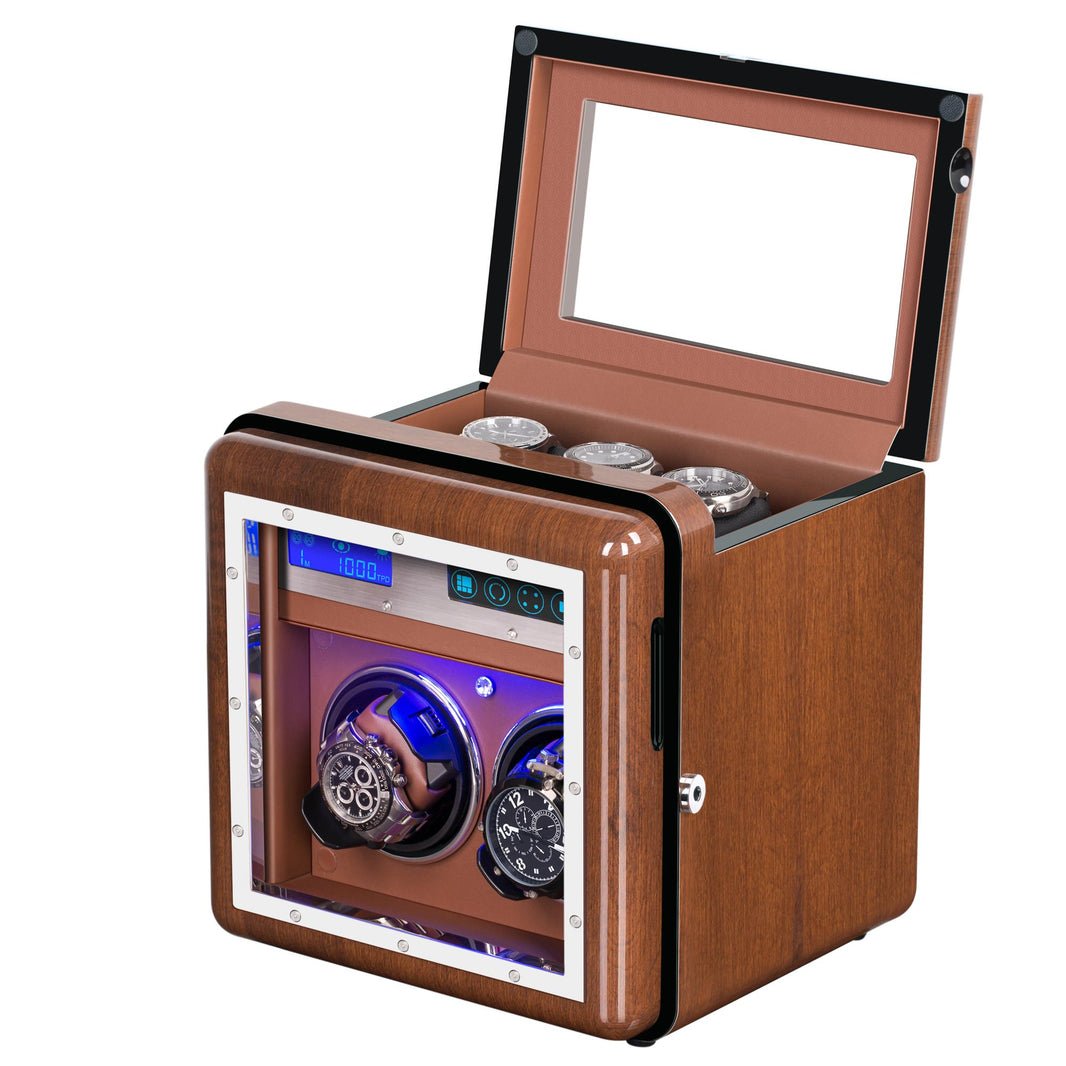
Slot count is the first visible decision, but it should not be the only one. A single winder is clean and focused for one daily automatic watch. A double winder suits a small rotation or a couple sharing one cabinet. A four-slot or larger winder makes more sense when watches are worn in rotation and resetting them becomes a repeated inconvenience.
Do not fill every slot on day one if your collection is still growing. Leaving one open position can be more useful than buying the smallest possible unit now and replacing it later. At the same time, avoid buying a very large display cabinet only because it looks impressive. Bigger cabinets need more space, more power planning, and better noise control.
Look for Independent Controls
Independent control means each winding position can be set separately. This matters when one watch prefers clockwise rotation, another prefers counterclockwise, and a third winds in both directions. It also matters when one movement needs a modest daily program while another needs a higher TPD count.
For a single-brand collection with similar movements, shared controls may be acceptable. For a mixed collection, independent controls are one of the most important upgrades. They reduce compromise and make the winder useful for the collection you may own later, not only the watch sitting in it today.
Check TPD Range and Rotation Direction
TPD means turns per day. It is the number of full rotations a winder gives the watch over a 24-hour cycle. Direction refers to clockwise, counterclockwise, or bidirectional rotation. These two settings are not decorative features; they are how the winder communicates with the movement’s winding system.
Many modern automatic watches work comfortably around moderate TPD settings, but not all movements are identical. Some wind efficiently in both directions, while others wind best in one direction. Complicated watches, vintage pieces, and less common calibers deserve more care. When available, follow the watch maker’s recommendation. If that is not available, use a reliable TPD database or begin with a conservative setting and adjust only if the watch is losing reserve.
A practical buying rule: choose a winder with a broad TPD range, clear direction options, and a rest cycle. The ability to set 650, 750, 850, 1000, or higher TPD is more valuable than a vague “daily wind” mode that gives no real information.
Do Not Ignore the Cushion
The cushion is the part of the winder that physically holds the watch, so it deserves more attention than many buyers give it. A good cushion should hold the watch firmly without forcing the bracelet, stretching a strap, or letting the case lean forward during rotation.
Bracelet watches, smaller wrists, heavy sports watches, and leather straps all behave differently on a pillow. If the cushion is too large, a bracelet may not close naturally. If it is too soft or too small, the watch may shift during winding. For valuable watches, secure fit is not a comfort feature; it is case protection.
Listen for Motor Quality
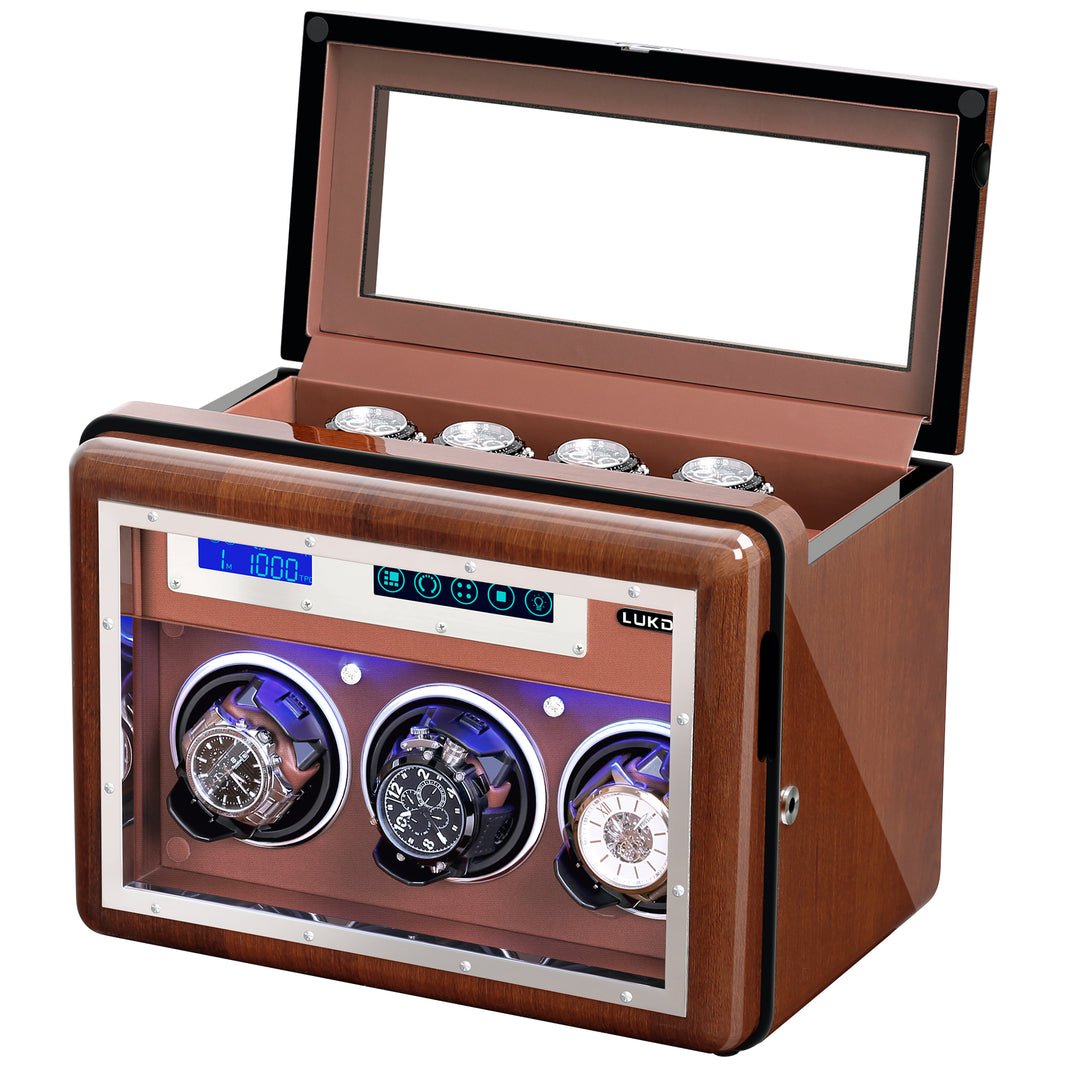
A watch winder often lives in a bedroom, dressing room, office, or closet. Noise that seems minor during a daytime product demo can become irritating at night. Look for quiet motor design, smooth rotation, and a program that includes rest periods rather than constant movement.
Brushless motors are generally preferred for long-term quiet operation and smoother control. Also pay attention to vibration. A winder does not need to be powerful in a dramatic way; it needs to rotate consistently, stop cleanly, and avoid shaking the watch.
Match the Cabinet to the Room
Cabinet quality affects more than appearance. Solid construction helps the winder feel stable, keeps the motor assembly better isolated, and protects watches from dust and casual contact. Glass, hinges, drawer slides, lining, and finishing should feel controlled rather than ornamental.
If the winder will sit on a desk, size and noise matter most. If it will sit in a closet, power access and viewing angle matter. If it will be part of a dressing room or watch room, finish, lighting, and storage layout become more important. A luxury winder should look considered, but it should never trade reliability for theater.
Decide Whether Security Matters
Some collectors want a display piece. Others want discreet storage. If the watches are high value, or if the winder will sit in a visible room, consider locking doors, fingerprint access, enclosed storage, or a safe-compatible solution. Security features should be judged by the use case: a lock on a display cabinet is useful for everyday control, while a true safe is a different level of protection.
Check Power, Placement, and Daily Use
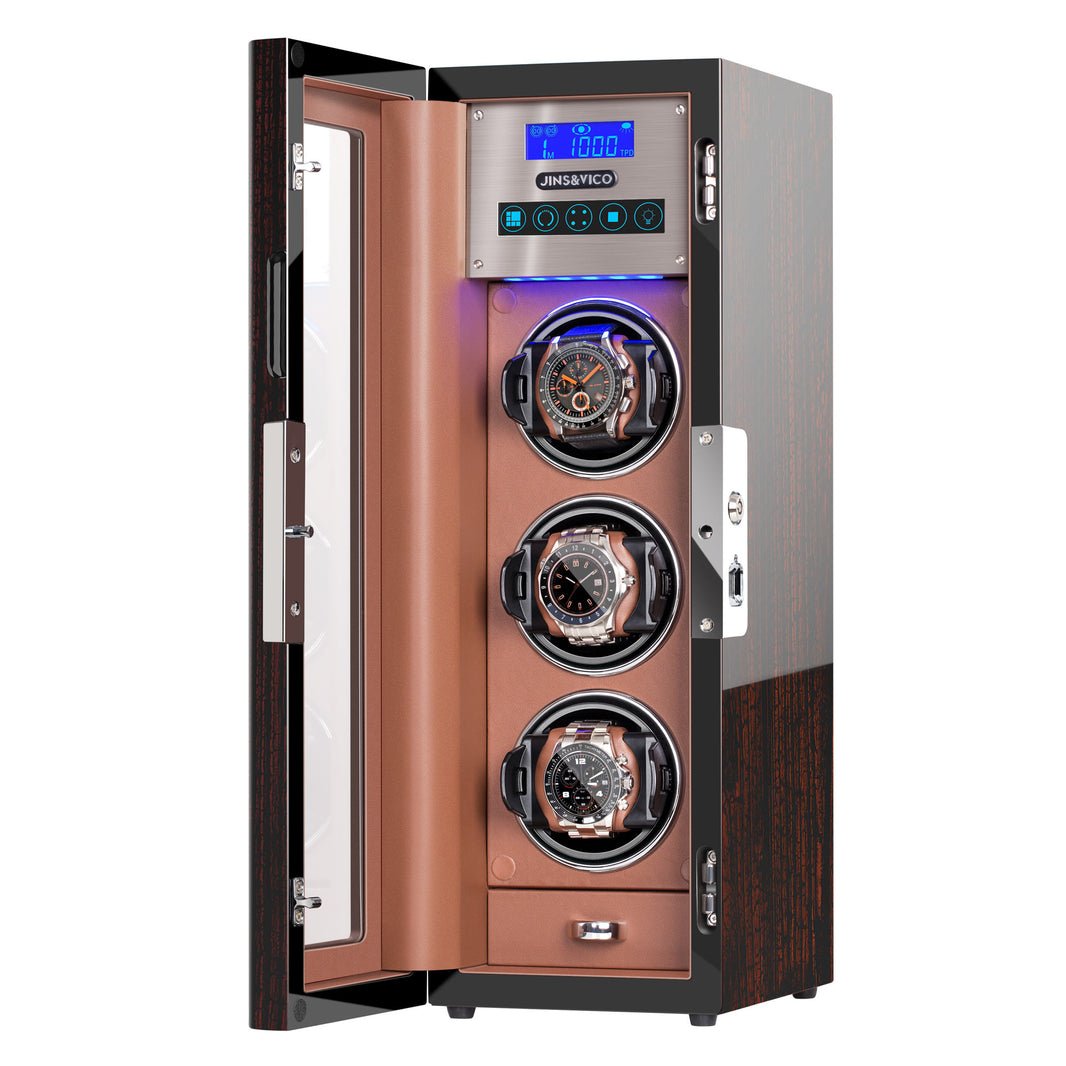
A winder should fit naturally into the room where it will be used. Check the power cord position, plug type, cabinet depth, door swing, and clearance above the lid or glass. If the unit has battery operation, confirm whether battery mode is intended for regular use or occasional flexibility.
Keep the winder away from heat, damp conditions, direct sun, and strong magnetic sources. The best location is stable, clean, level, and easy to access. If changing a setting requires moving the whole cabinet, the interface will become annoying over time.
Choose Controls You Will Actually Use
Controls should be clear enough that you can set a watch without rereading the manual every time. Touch panels, knobs, buttons, and LCD screens can all work well if they show TPD and direction clearly. Memory after power interruption is also useful, especially for multi-watch cabinets.
A simple interface is often better than an impressive one. What matters is whether each slot can be set accurately, whether the display is readable, and whether the control system makes mistakes unlikely.
Understand Budget and Value
Very inexpensive winders often save money in the places collectors eventually notice: noisy motors, loose pillows, limited programs, light cabinets, weak hinges, poor finishing, or uncertain support. That does not mean every collector needs the most expensive cabinet. It means the budget should follow the value of the watches and the importance of daily reliability.
For one frequently worn watch, a compact well-built single winder can be enough. For a mixed collection, pay more attention to independent settings, cushion fit, and quiet operation. For high-value watches, cabinet quality, locking storage, and brand support become part of the purchase, not extras.
Decision Matrix
| Collector Type | Best Fit | Prioritize | Avoid |
|---|---|---|---|
| One automatic daily watch | Single watch winder | Quiet motor, secure cushion, simple TPD settings | Oversized cabinet with limited controls |
| Two or three watches in rotation | Double or three-slot winder | Independent programs, flexible pillows, compact footprint | Shared settings that force every watch into one program |
| Growing mixed collection | Four-slot or modular winder | Per-slot TPD and direction, stable cabinet, service support | Buying only for today’s slot count |
| High-value display collection | Locking cabinet or safe-style winder | Security, solid construction, lining, controlled access | Decorative lighting with weak storage protection |
| Bedroom or office use | Quiet compact winder | Brushless motor, rest cycles, low vibration | Noisy low-cost motors and constant rotation |
Common Mistakes to Avoid
- Buying by slot count before checking TPD and direction compatibility.
- Assuming every automatic watch winds the same way.
- Choosing a cabinet that cannot hold smaller bracelets securely.
- Putting a noisy winder in a bedroom without testing sound expectations.
- Using the highest TPD setting because it feels more protective.
- Forgetting door clearance, cord position, and where the winder will actually sit.
- Paying for lighting and display before checking motor quality and support.
- Buying a shared-control unit for a mixed collection that needs independent settings.
Final Buying Checklist
- Confirm every watch you plan to wind is automatic.
- List each watch’s recommended TPD and direction when available.
- Choose enough capacity for the next stage of your collection.
- Prefer independent slot controls for mixed collections.
- Check cushion fit for bracelets, straps, heavy cases, and smaller wrists.
- Choose quiet motor design and rest-cycle programming for living spaces.
- Match cabinet size, finish, and door clearance to the room.
- Decide whether locking storage or fingerprint access matters.
- Confirm power access, warranty terms, and long-term support.
- Choose reliability first, then display presence.
FAQs
How many watch winder slots should I buy?
Buy enough slots for the watches you rotate regularly, plus one reasonable growth position if your collection is expanding. Do not buy a large cabinet only for appearance if most watches are worn often enough to stay wound naturally.
Are independent controls worth it?
Yes, for mixed collections. Independent controls let each watch use its own TPD and direction setting. Shared controls are acceptable only when the watches have similar winding needs.
What TPD range should a good winder offer?
A useful winder should offer several clear TPD levels rather than one vague program. Common settings around the mid hundreds and higher ranges give you room to match more movements accurately.
Do I need clockwise and counterclockwise settings?
For a collection with different movements, yes. Some watches wind best clockwise, some counterclockwise, and many can use bidirectional rotation. Direction flexibility makes the winder more future-proof.
Can a watch winder overwind my watch?
Modern automatic watches normally include slipping clutch protection, but that does not mean maximum rotation is wise. Use an appropriate TPD setting and rest cycle so the winder maintains reserve without unnecessary activity.
Is a cheap watch winder risky?
The main risks are usually noise, weak cushions, poor cabinet stability, limited settings, and uncertain service support. The winder does not need to be extravagant, but it should be mechanically consistent and gentle with the watch.
Should I choose a battery-powered winder?
Battery power can be useful for flexible placement, but many collectors prefer AC power for regular use. Check how long battery mode lasts and whether the winder remembers settings after power changes.
What matters most for bedroom use?
Noise and vibration. Choose a quiet motor, stable cabinet, and program with rest periods. A beautiful cabinet becomes frustrating if you can hear it at night.
Do luxury watches always need a winder?
No. A winder is most useful when a watch is not worn daily and resetting it is inconvenient. Simple time-only watches are easy to reset; complicated calendars, GMT watches, and frequently rotated automatics benefit more.
What is the best first watch winder?
The best first winder is quiet, stable, easy to set, and sized to your real collection. For many collectors, that means a single or double winder with clear TPD and direction options rather than a large display cabinet.
Continue Learning
- Watch Winder Basics – learn how winders work, what parts they include, and why TPD exists.
- TPD Guide – match turns per day and rotation direction to your movement.
- FAQS – read common questions about watch winders, ordering, warranty, and support.
- BLOG – explore future collector notes, ownership tips, and Galosom updates.
- Shop Galosom Watch Winders – compare single, double, and multi-watch winders.