
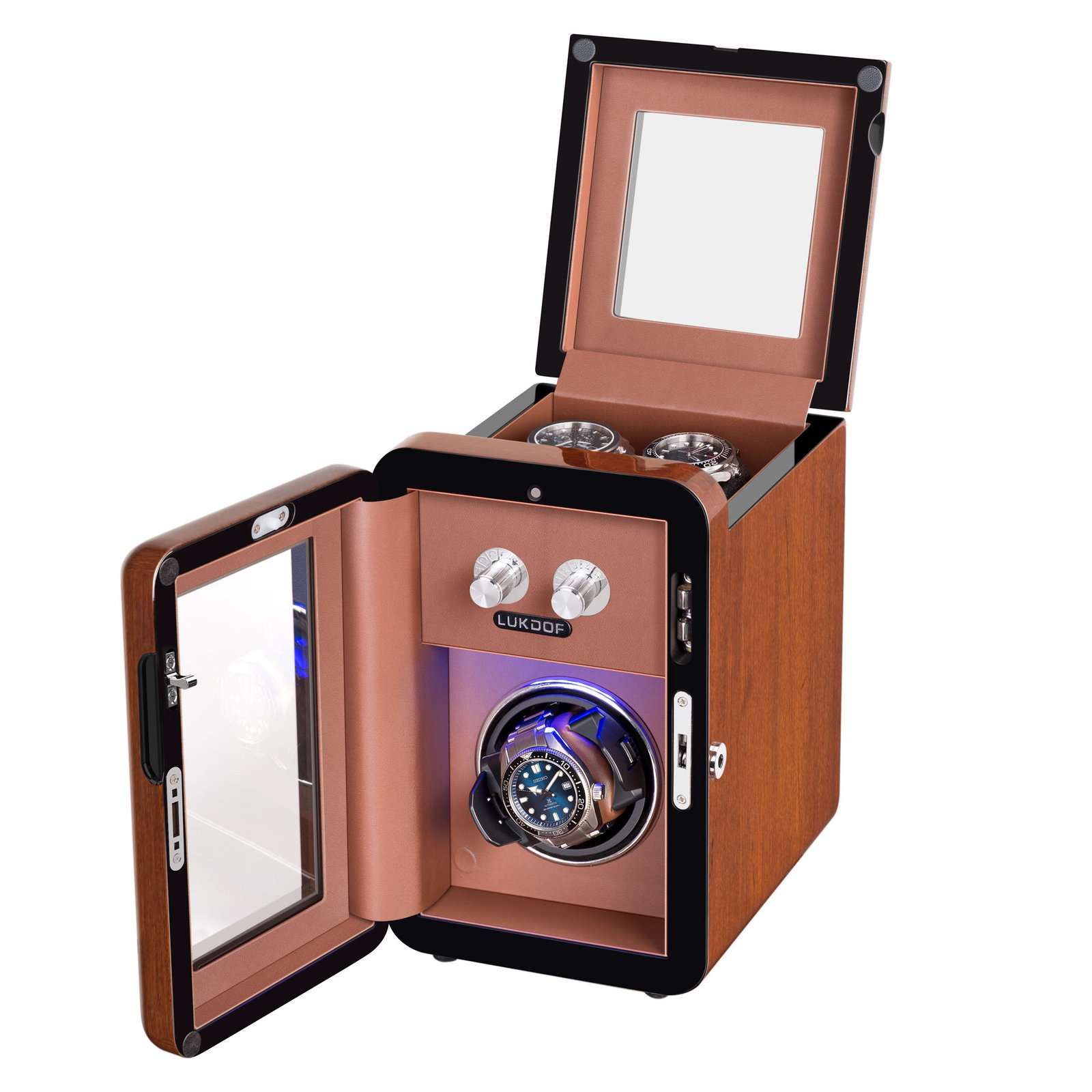
Does watch winder direction matter? For some automatic watches, absolutely. For others, it makes little practical difference. The answer depends on the winding system inside the movement, not the logo on the dial or the shape of the watch case.
An automatic movement uses a weighted rotor that swings as the watch moves. A train of wheels transfers useful rotor motion to the mainspring. Some mechanisms harvest energy when the rotor turns in either direction. Others wind only when it turns clockwise or only when it turns counterclockwise. A programmable watch winder imitates this motion, so its rotation direction needs to match the movement it is trying to keep running.
This guide explains what clockwise, counterclockwise, and bidirectional settings actually mean, how direction interacts with turns per day, and how to find a safe starting program without guessing. It also covers a simple reserve test that can reveal whether your chosen setting is doing useful work.
Why Watch Winder Direction Matters
Inside an automatic watch, the rotor can usually rotate both ways, but that does not necessarily mean both directions wind the mainspring. The automatic winding module determines which motion is productive.
In a bidirectional system, reversing wheels or a comparable mechanism redirect clockwise and counterclockwise rotor motion so both can wind the mainspring in the required direction. In a unidirectional system, only one direction drives the winding train. When the rotor travels the other way, it freewheels. That free motion is normal; it is not evidence that the watch is broken.
A watch winder direction setting describes the apparent rotation of the watch as viewed from the front:
- Clockwise (CW): the watch rotates in the same direction as its hands.
- Counterclockwise (CCW): the watch rotates opposite the direction of its hands.
- Bidirectional or alternating: the winder uses both directions, normally in separate cycles with pauses between them.
Manufacturers may describe direction from a different viewing position, so consult the winder manual as well as the watch-setting database. A setting described from behind the movement would appear reversed from the front. Reputable consumer winder databases generally use the front-of-watch convention, but checking the documentation removes ambiguity.
If a movement winds in both directions, CW, CCW, or an alternating program can all contribute energy. If it winds in one direction only, the wrong single-direction setting may add almost no reserve. The watch can then stop even though the winder has completed hundreds of turns.
Direction and TPD Are Separate Settings
Direction tells the winder which way to rotate. Turns per day, or TPD, tells it approximately how many rotations to perform over 24 hours. A useful setup needs both values.
Consider a hypothetical unidirectional movement that needs 800 productive turns per day in the clockwise direction. A winder set to 800 TPD clockwise provides about 800 useful turns. If it is set to 800 TPD counterclockwise, the movement may receive none. On some winders, an 800 TPD bidirectional program divides the total between the two directions. In that case, the watch may receive only about 400 productive clockwise turns—too little to maintain its reserve.
This is why a bidirectional setting is not automatically equivalent to delivering the full stated TPD in each direction. Winder programming varies. One machine may count 800 total rotations across both directions, while another may run a complete programmed count in each direction. Read the operating instructions before adjusting the number upward.

More TPD is not a substitute for the correct direction. Increasing an ineffective CCW program from 650 to 1,300 TPD will not reliably charge a CW-only movement. It merely makes the rotor spend more time freewheeling. Start with the movement’s specified direction, then tune TPD only if reserve testing shows that the watch is losing energy.
How to Find the Correct Watch Winder Direction
The most reliable route begins with the exact caliber, not merely the watch brand. A single manufacturer may use in-house movements, third-party calibers, and several generations of the same model. Their winding requirements can differ.
- Identify the exact reference and movement. Check the watch manual, warranty card, caseback, manufacturer specifications, or a service receipt. If the model has changed movements during production, the reference number and approximate production period matter.
- Check the watch manufacturer’s documentation. A manual may state a recommended direction or explain whether the movement winds in one or both directions. Technical documents sometimes illustrate the automatic module even when they do not provide a consumer winder setting.
- Compare a specialist winder database. Databases from established winder manufacturers can provide a practical direction and TPD starting point. Cross-check more than one source if possible, especially for an uncommon caliber.
- Confirm how your winder counts turns. Learn whether a bidirectional program divides the advertised TPD, repeats it in each direction, or uses a fixed alternating cycle.
- Test reserve rather than assuming success. A watch that remains running is not necessarily gaining enough energy. A controlled test offers better evidence.
Brand-level rules are convenient but imperfect. For example, many common Swiss automatic calibers wind bidirectionally, while the well-known Valjoux/ETA 7750 architecture winds in one direction. Watches from the same brand can contain either type. Likewise, a database entry for a movement family may not cover a brand-modified version with a different rotor or winding train.
If you cannot identify the movement, contact the watch manufacturer or an authorized service center with the full case reference and serial information. Avoid opening the case solely to discover the caliber; doing so can compromise gaskets, water resistance, and warranty coverage.
A Practical Reserve Test for Your Winder Setting
A short observation test can tell you whether the selected watch winder direction is maintaining usable reserve. It will not replace a watchmaker’s diagnosis, but it is more informative than checking whether the seconds hand is still moving.
- Let the watch run down completely away from the winder.
- Give it the manufacturer-recommended manual start. If no instruction is available and the watch supports hand winding, roughly 20 to 30 gentle crown turns is a common starting procedure, not a universal specification.
- Set the correct time and place the watch securely on the winder.
- Run the manufacturer- or database-recommended direction and TPD program for at least 24 to 48 hours.
- Remove the watch at a consistent time and leave it stationary, noting how long it continues to run.
- Repeat only after changing one variable—direction or TPD, not both.
If the watch repeatedly stops on the winder but runs for a healthy period after a full manual wind, the winder program or mounting angle may be inadequate. Try the verified productive direction. If direction is correct, move to the next modest TPD setting rather than selecting the maximum immediately.
If the watch has poor reserve even after a proper manual wind, the winder is unlikely to be the root problem. Dried lubricant, a slipping or tired mainspring, inefficient automatic winding components, or a worn reversing mechanism may require professional attention.
Also check fit. The watch should be closed around a cushion that holds it firmly without forcing the bracelet or strap. A loose watch can shift instead of following the winder’s intended path. Some rotor systems also respond differently to axis and angle, so an underperforming decorative winder may have a mechanical limitation rather than a menu-setting problem.
Can the Wrong Direction Damage an Automatic Watch?
Using the wrong direction briefly is unlikely to cause immediate damage to a healthy automatic movement. In a unidirectional system, the non-winding direction is designed to freewheel because normal wrist motion makes the rotor travel both ways throughout the day.
The more realistic consequence is inefficiency: the watch fails to build or maintain sufficient reserve. Running an unnecessary high-TPD program can also add avoidable operating time to the rotor bearings, reversers, pivots, and the winder motor. That does not mean a correctly programmed winder is inherently harmful. It means there is little benefit in making any mechanism operate more than needed.
Automatic mainsprings typically use a slipping bridle that allows the spring to slip inside the barrel once it reaches its intended state of wind. This protects a healthy automatic watch from conventional overwinding. It should not be treated as permission to choose the maximum TPD without evidence. Matching direction and using the lowest setting that reliably maintains reserve is the more measured approach.
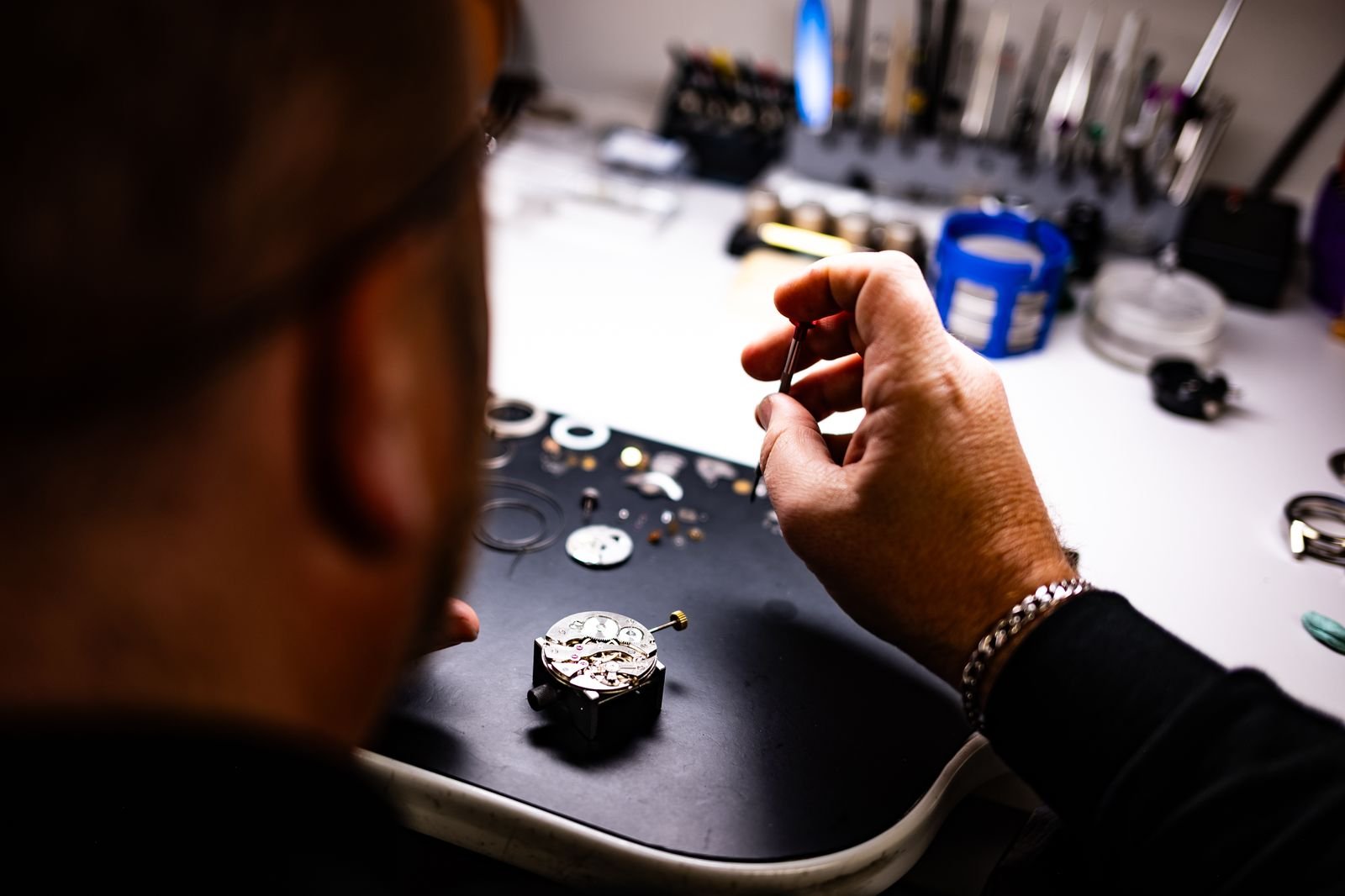
Stop the test and seek professional advice if the rotor scrapes, the case produces a new grinding noise, the watch becomes unusually warm, or reserve remains poor after both correct winder use and a full manual wind. These signs point beyond simple programming.
Common Watch Winder Direction Mistakes
- Using the brand name instead of the caliber: brands can use several movements with different winding systems.
- Assuming bidirectional is always safest: it is a reasonable fallback for many watches, but it may halve productive turns for a unidirectional movement.
- Confusing crown direction with rotor direction: the way you turn the crown to hand-wind does not identify the rotor’s productive direction.
- Increasing TPD before confirming direction: more ineffective turns do not solve a directional mismatch.
- Ignoring the winder’s counting method: “800 TPD bidirectional” does not have an identical meaning on every machine.
- Judging by one night: initial reserve and daily handling can mask an underpowered program. Use a controlled multi-day test.
Frequently Asked Questions
Should I set my watch winder to clockwise or counterclockwise?
Use the direction specified for the exact movement inside your watch. A bidirectional movement can generally use either direction or an alternating program. A unidirectional movement needs its productive CW or CCW direction.
What if I cannot find my watch in a winder database?
Search by caliber, not just model name. Check the watch manual and manufacturer specifications, then contact the manufacturer or service center if the movement remains uncertain. Start conservatively and verify performance with a reserve test.
Is bidirectional mode best for every automatic watch?
No. It works well for movements that wind in both directions. For a unidirectional movement, an alternating program can waste half its rotations unless the winder compensates in its TPD calculation.
Why does my watch stop even with the correct direction?
The TPD may be too low, the winder may count alternating turns differently than expected, or the watch may be mounted at an ineffective angle. Poor reserve after a full manual wind can indicate a movement problem that needs service.
Does the rotor’s free-spinning direction cause damage?
Freewheeling is normal in a unidirectional automatic system. Normal wrist use sends the rotor both ways. The concern is usually inefficient winding, not immediate damage.
Conclusion
Watch winder direction matters whenever the movement winds in only one direction. For a bidirectional caliber, CW, CCW, and alternating operation can all be useful; for a unidirectional caliber, only the productive direction reliably transfers energy to the mainspring.
Identify the exact movement, verify its direction, understand how the winder calculates TPD, and test the resulting reserve. That method is more dependable than relying on a brand-wide rule or turning every setting to maximum. The best program is simply the lowest correctly directed workload that keeps a healthy watch ready to wear.