




























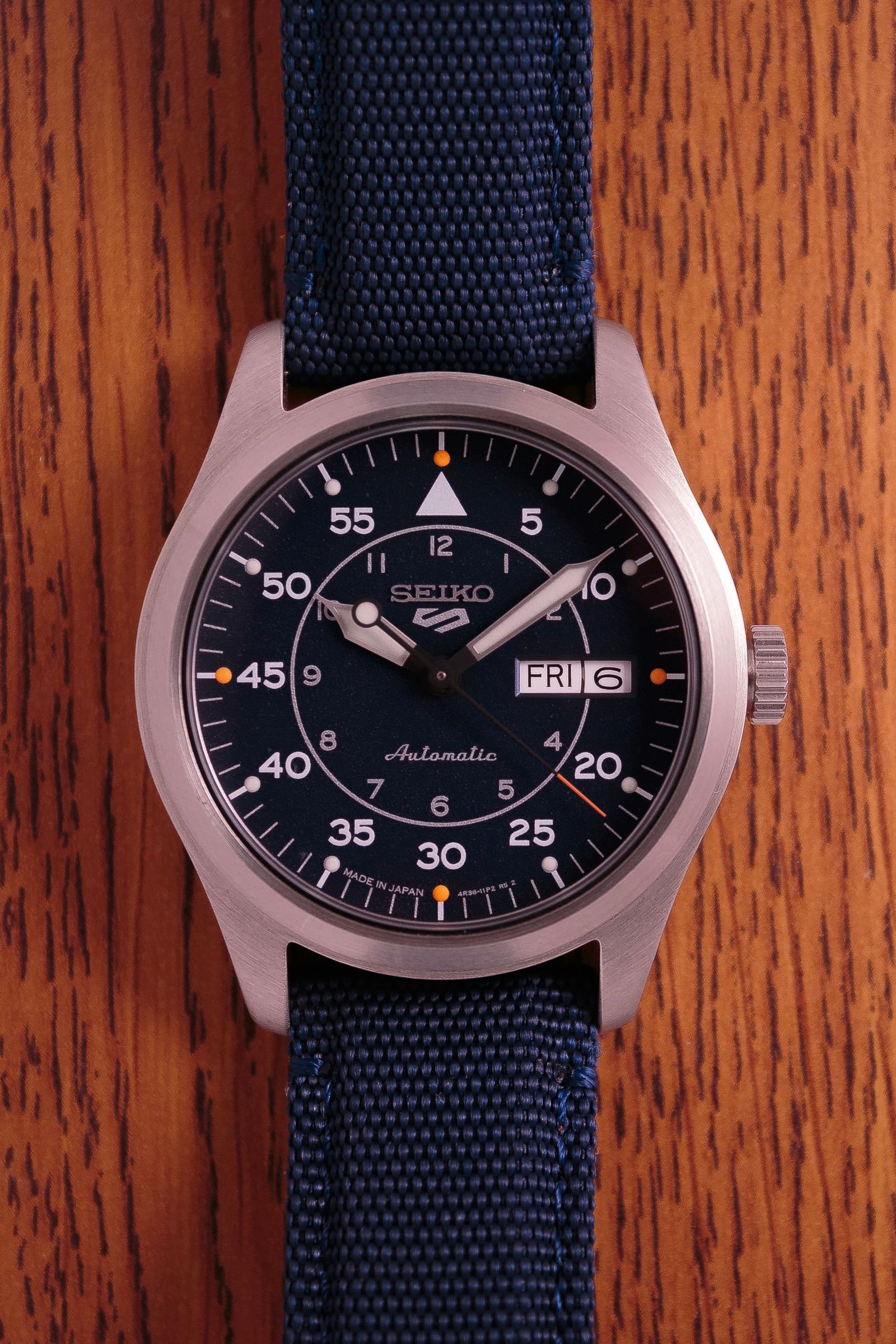
When an automatic watch stops at the same time every day, the repetition feels like a clue—and it is. The difficult part is deciding what the pattern actually measures. The watch may simply be exhausting its power reserve at roughly the same hour because it receives roughly the same amount of wrist movement each day. Alternatively, it may stop when a hand, wheel, or calendar component reaches a particular position.
Those two explanations require different tests. A low-energy watch follows elapsed time: fully wind it, and the stopping point should move much later. A mechanically obstructed watch often follows dial position: reset the hands, and it may stop again near the same displayed time even though the test began at a different hour.
This guide shows how to make that distinction without opening the case, shaking the watch aggressively, or guessing which internal part has failed. It also explains when the result is normal, when a winder can help, and when professional inspection is the only sensible next step.
First Confirm That the Watch Is Truly Stopping
Before diagnosing a movement, identify the running-seconds display. On many chronographs, the large central seconds hand belongs to the stopwatch and remains parked at 12 until the chronograph is started. Normal timekeeping continues on a smaller subdial. A power-reserve indicator, deadbeat display, or unusual dial layout can cause similar confusion, so check the manual for the exact reference.
If the true seconds hand has stopped, note the displayed hour and minute before restarting the watch. Also record when you last wound it, how long you wore it, and whether it was running when you removed it. One isolated stop is not a daily pattern. Three carefully recorded cycles are much more informative than a vague memory that it “always stops overnight.”
Check the crown as well. It should be fully pushed in or properly screwed down after setting. A crown left in the time-setting position intentionally stops the seconds on movements with hacking. Do not force a crown that will not seat normally.
Why Daily Habits Can Produce the Same Stopping Time
An automatic watch stores energy in its mainspring. A rotor turns as the wrist moves and transfers energy through the automatic-winding train. The movement then spends that energy continuously, whether the watch is being worn or resting on a bedside table.
Official guidance from Citizen notes that limited arm movement can leave an automatic mainspring insufficiently wound, even during daily wear. Seiko likewise explains that mechanical-watch performance depends on factors including wearing duration, arm movement, and the amount of wind. Rolex advises manually winding a stopped automatic before setting and wearing it rather than assuming a few minutes on the wrist has restored a useful reserve.
This creates a very ordinary repeating pattern. Imagine someone who puts on a nearly empty watch at 8 a.m., spends most of the workday at a keyboard, removes it at 7 p.m., and follows the same routine tomorrow. The rotor may add only enough energy to keep the movement alive until 3 or 4 a.m. The watch appears to stop at the same clock time, but no component is binding at that dial position. The wearer is simply making a similar daily energy deposit and withdrawal.
A loosely fitted bracelet can reduce winding efficiency because the watch moves differently on the wrist. So can a desk-based day, illness, reduced activity, or wearing the watch for only a few hours. None of these proves a fault. The controlled test is to start with a known, adequately wound state.
Run a Controlled Power-Reserve Test
- Find the correct manual. Confirm that the caliber permits manual winding and follow its stated direction and procedure.
- Wind slowly and gently. Use the manufacturer’s recommended number of turns. Do not force a hand-wound movement beyond its firm stop.
- Set a reference time. Compare the watch with a reliable clock and write down the test start time.
- Leave complications off. Do not run a chronograph or alarm unless the manual says the published reserve includes that use.
- Rest the watch safely. Keep it on a stable, dry surface away from speakers, magnetic clasps, vibration, and extreme temperatures.
- Record the stop. Note both the actual elapsed hours and the time shown on the dial.
The manufacturer’s stated power reserve is normally measured from a fully wound condition under controlled circumstances. Your result does not need to match the claim to the minute. If it falls dramatically short, repeat once to rule out an incomplete wind. A second clearly short result supports professional testing.
The key comparison is elapsed duration versus dial position. If a watch started at 8 a.m. stops 38 hours later at 10 p.m., then a second test started at 2 p.m. also runs about 38 hours but stops at 4 a.m., the pattern follows energy. If both tests stop with the hands close to 10 p.m., the pattern follows the display and deserves closer attention.
When the Same Dial Position Suggests Mechanical Binding
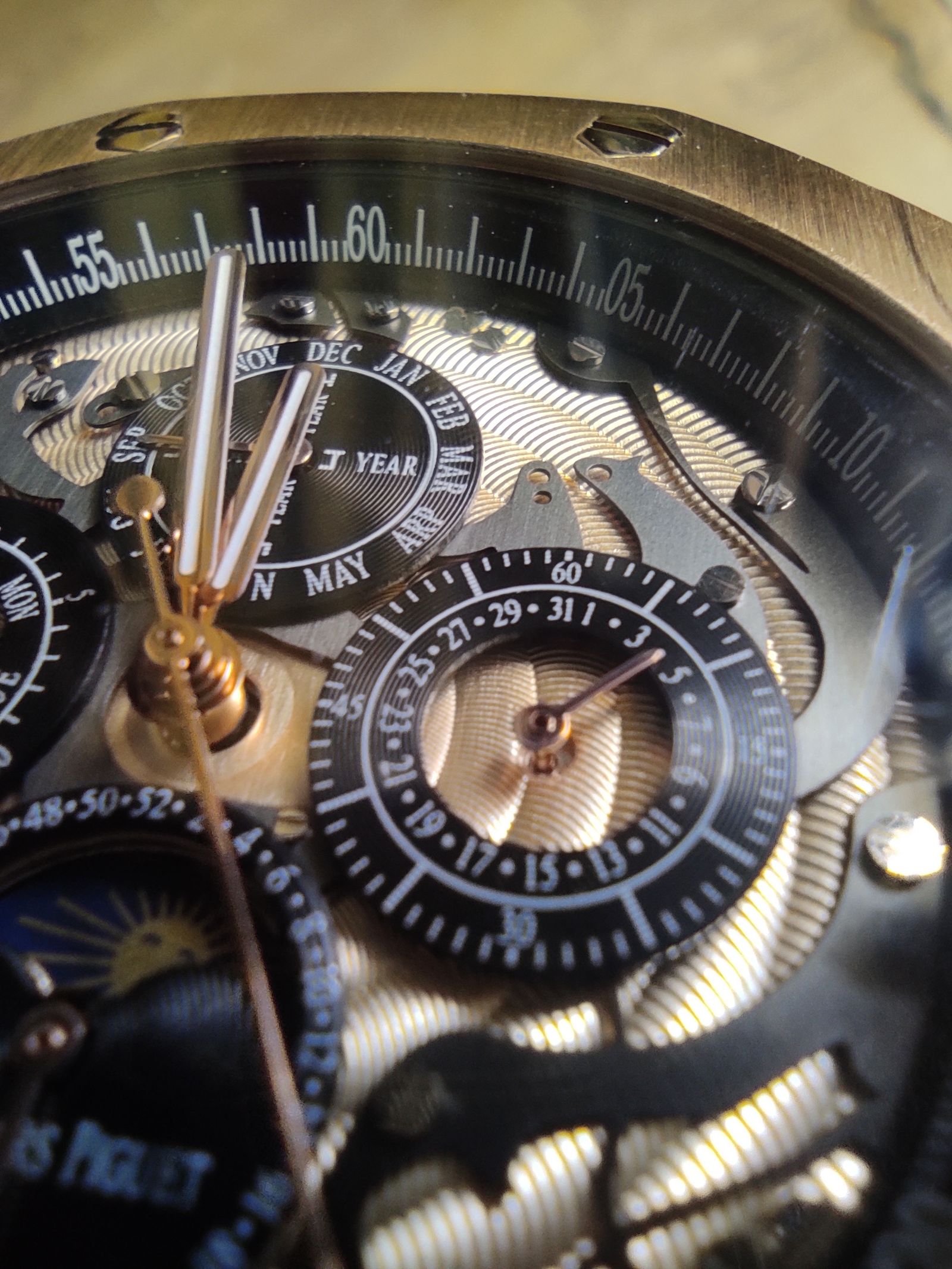
Hands touching each other
The hour, minute, and seconds hands occupy different heights but pass over one another. A bent or poorly fitted hand can touch another at a repeatable position. The watch may stop, hesitate, or restart after a light change in orientation. Contact may follow an impact, crystal replacement, dial work, or previous service.
Look across the dial in bright, indirect light without opening the case. Check whether the hand planes appear uneven and whether the symptom occurs when two hands overlap. Do not press the crystal or try to bend a hand through the crown. Clearances are small, and a seemingly minor adjustment can mark the dial or loosen the hand.
A hand rubbing the dial or crystal
A hand that sits too low can scrape an applied marker or the dial surface. One that sits too high can touch the underside of the crystal. The resistance may be continuous or limited to one area if the dial, crystal, or hand is not perfectly level. Fine circular marks on the dial or crystal can be evidence, but absence of a visible mark does not rule out contact.
Motion-work or gear-train damage
The motion works translate the movement’s rotation into the familiar hour and minute display. A damaged tooth, bent pivot, contamination, or excessive friction may recur once per wheel rotation. The apparent stop time can therefore remain remarkably consistent. Diagnosis requires disassembly and inspection; an owner cannot identify a damaged tooth from the outside.
Calendar resistance
If the stop happens near midnight, note whether the date or day has begun to change. Calendar mechanisms load progressively on many calibers, sometimes for several hours around midnight. A misadjusted, damaged, or partially engaged component can impose too much resistance. Never use the quick-set calendar inside the caliber’s restricted period unless the exact manual says it is safe.
Other Causes That Can Look Repeatable
Magnetism usually causes a mechanical watch to gain or lose time rather than stop at one exact dial position. Seiko explains that a magnetized hairspring can make balance oscillation unstable and that a mechanical watch may remain magnetized after the external source is removed. Keep the watch away from magnetic tablet covers, speakers, handbag clasps, and charging accessories during testing. A compass or phone app is not a definitive diagnostic tool; a watchmaker can check and demagnetize the movement properly.
Shock damage may reduce balance amplitude, displace a hand, damage a pivot, or disturb the automatic winding system. The watch can then run only while fully wound or in certain positions. If the pattern began immediately after a drop, do not continue repeated experiments merely to confirm it.
Old lubricant, contamination, wear, or a tired mainspring can also leave the movement with little torque margin. It may run on the wrist but stall after being placed crown-up, or it may stop as the calendar load rises. A qualified repairer can measure rate, amplitude, beat error, winding efficiency, and reserve in several positions instead of relying on a single symptom.
A Safe Diagnostic Checklist
- Confirm the actual running-seconds hand and the crown position.
- Record at least two stop events with actual time, dial time, and wear duration.
- Perform one controlled, manual-wind power-reserve test using the correct manual.
- Repeat the test from a substantially different displayed start time.
- Observe whether the stop coincides with overlapping hands or calendar change.
- Keep the watch away from known magnetic sources during the test.
- Stop testing if the crown feels gritty, the rotor sounds abnormal, or a hand visibly drags.
A short video of the dial just before and after the stop can be valuable. Include the model reference, caliber if known, recent service history, any impact or water exposure, and whether the symptom changes with a full wind. These observations give a watchmaker evidence without risking the movement.
Will a Watch Winder Solve It?
A winder can help only when insufficient wrist activity is the real cause. If a controlled reserve test is healthy and the watch stops overnight after sedentary days, a correctly configured winder may maintain a practical reserve. It should use the lowest effective turns-per-day setting and the direction recommended for the movement.
A winder cannot repair touching hands, damaged teeth, calendar binding, poor lubrication, or a weak automatic-winding system. It may mask a short reserve by adding energy every day, but it does not explain why the reserve is short. Test the watch first. If it stops at the same displayed time after an adequate manual wind, leave it off the winder and arrange service.
When to Stop Testing and Book Service
Book an inspection if the automatic watch stops at the same time every day after a correct full wind, if it stops near the same hand position in tests started at different times, or if the measured reserve is far below specification. Seek prompt service after water exposure, a hard impact, visible hand contact, a loose crown, or an abrupt change following earlier repair.
Do not open the case, add oil, blow compressed air near the crown, or shake the watch to force a restart. Opening a water-resistant case introduces dust and requires correct gasket inspection and pressure testing afterward. Repeatedly forcing a bound train can turn a small clearance problem into damaged teeth or a marked dial.
Ask the repairer to check manual and automatic winding efficiency, power reserve, balance amplitude, hand clearance, motion works, calendar engagement, and magnetism. The final remedy might be a simple hand-height correction, but it may also require full service. A diagnosis should come before promises about cost.
Frequently Asked Questions
Why does my automatic watch stop every night?
The most common reason is insufficient stored energy. Short wear time, limited arm movement, or starting the day with an almost empty mainspring can produce a repeatable overnight stop. Confirm with a properly controlled reserve test.
Why does my mechanical watch always stop at the same minute?
If tests begun at different displayed times still stop at the same minute or hand arrangement, suspect physical interference or recurring resistance in the motion works. A watchmaker should inspect it.
Can magnetism make a watch stop at the same time?
Magnetism more commonly changes rate and stability. It is worth testing for, especially after exposure to strong magnets, but an exact repeatable dial position more strongly suggests interference or a wheel-related fault.
Should I shake an automatic watch to restart it?
No aggressive shaking is needed. If the manual allows it, wind the crown slowly as directed. Shaking does not fix binding and can add shock to an already compromised movement.
Is stopping near midnight always a calendar fault?
No. A low reserve can expire at any time. However, repeated stopping as the day or date begins to change makes calendar resistance an important service clue.
Conclusion
When an automatic watch stops at the same time every day, focus on what is repeating. Similar daily activity can produce a similar exhaustion time, while a stop tied to the same dial position can indicate touching hands, calendar resistance, or a damaged part.
Confirm the correct seconds hand, wind the watch according to its manual, compare elapsed runtime with displayed stop time, and document the result. If adequate winding moves the stop later, the problem may be energy input. If the watch still stops at the same displayed position, avoid further stress and let a qualified watchmaker inspect it.