




























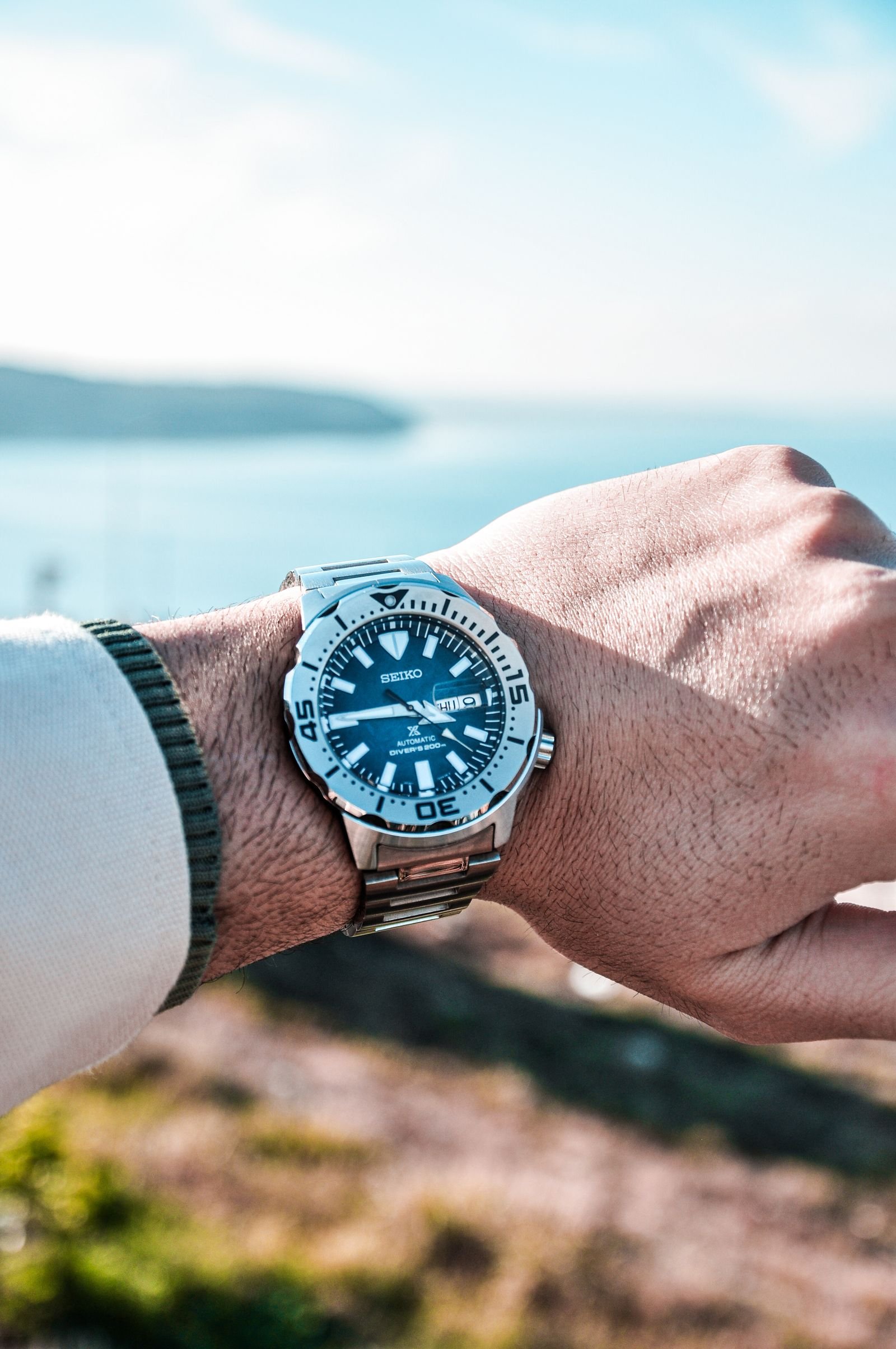
Learning how to spot a fake Longines HydroConquest is harder than memorizing one logo detail. The collection has existed in several sizes, colors, movements, bezel materials, and generations. A feature that is correct on a current 41 mm automatic may be wrong for an older quartz model—and vice versa.
The safest method is reference-first authentication. Identify the complete reference, find the matching manufacturer specification, and test whether the watch, bracelet, documents, and seller’s story agree with it. A suspicious font can start a conversation, but a chain of independent inconsistencies makes a much stronger case.
This guide focuses on checks a buyer can perform without opening the case. It also explains what serial and warranty information can prove, why water-resistance claims should never be tested casually, and when only Longines or a qualified watchmaker can provide a defensible conclusion.
Quick Answer: The Safest Way to Check a HydroConquest
Begin with the full reference number and compare it with the exact product page, catalog, or dated Longines documentation. Confirm the case diameter, dial color, movement type, bezel material, bracelet or strap, water-resistance specification, and generation-specific layout. Then compare the physical watch with sharp, straight-on photographs from that same reference.
Do not authenticate from a serial number alone. A plausible number can be copied, and online number lists are frequently incomplete or unreliable. Longines says its service department identifies watches using a unique serial number, while its warranty system uses reference and warranty information. Those are useful evidence points, but the number and the object still have to belong together.
For a purchase where the financial risk matters, make the transaction conditional on inspection by Longines, an approved service center, or an independent watchmaker experienced with the brand. Longines offers an expert certificate-of-authenticity service; that is fundamentally different from an informal photo opinion.
Step 1: Identify the Exact Reference and Generation
“Blue automatic HydroConquest” is not precise enough. Record every character shown on the warranty card, sales invoice, hang tag, or case documentation. Search that complete reference on Longines’ website and in credible archived catalogs. If a current page is unavailable, ask the seller for the original purchase date and obtain period-correct reference material.
For example, Longines currently describes reference L3.781.4.56.6 as a 41 mm automatic model with a stainless-steel case and ceramic bezel, a black sunray dial, 25,200 vibrations per hour, up to 72 hours of power reserve, a screw-in crown, sapphire crystal, 30-bar water resistance, and a steel bracelet with a double safety folding clasp. The related L3.780.4.56.6 is 39 mm. These two genuine references already show why visual similarity is not enough: a two-millimeter mismatch is meaningful when the seller claims one specific reference.
Older HydroConquest references may have different bezel inserts, dial layouts, case sizes, bracelet details, frequencies, or movements. Do not reject an older watch because it lacks a current-generation feature. Instead, ask whether every feature belongs to the same documented generation.
Build a Reference Sheet Before Comparing Photos
- Complete reference number and approximate production period
- Automatic or quartz movement
- Case diameter, thickness, and lug width when documented
- Dial color, date position, numeral layout, and hand style
- Ceramic or metal bezel insert and correct markings
- Bracelet or rubber-strap configuration and clasp type
- Case-back wording, crown type, and water-resistance rating
A listing that mixes the case of one variant, the dial description of another, and a card for a third deserves an explanation. It might be a careless listing, a service replacement, an aftermarket modification, or a counterfeit. None of those possibilities should be guessed away.
Step 2: Inspect the Dial, Hands, Date, and Bezel as a System
Use diffused light, a loupe if available, and high-resolution photographs taken perpendicular to the dial. Phone images shot at an angle distort spacing and can make genuine printing look uneven. Compare equivalent areas with official imagery for the exact reference.
Look for consistent printing weight, clean edges on the winged-hourglass logo, even minute-track spacing, centered luminous material, and hands that match the reference in length, shape, color, and finish. Applied markers should sit squarely and align with the minute track. The date should be centered in its aperture, although a date caught mid-change near midnight is not automatically defective or fake.
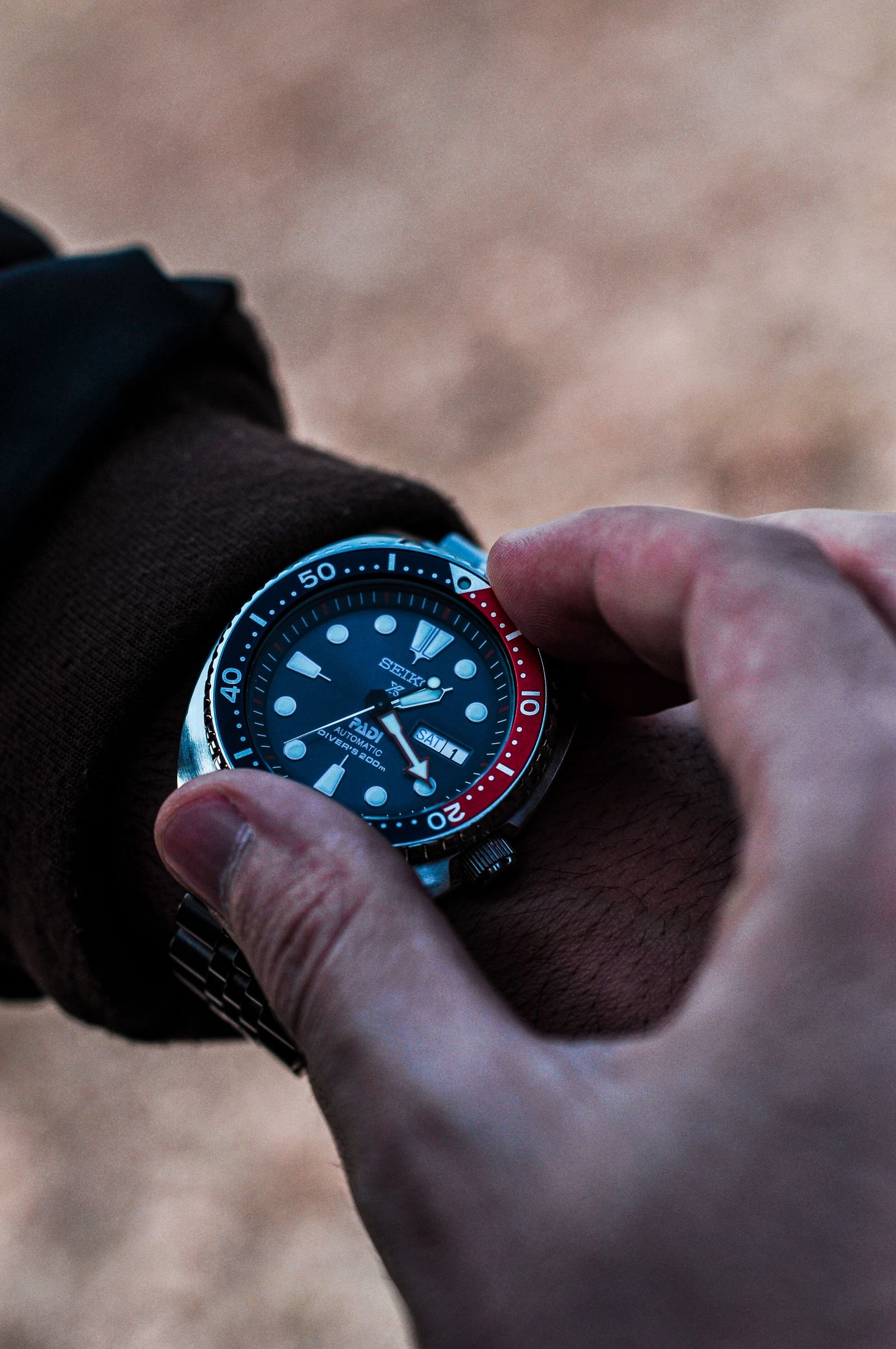
On the bezel, compare the numeral typeface, triangle, luminous pip, minute markings, color, gloss, and edge profile. Confirm that it rotates only in the expected direction for the specified dive model. Feel alone is weak evidence: wear, contamination, previous service, and manufacturing tolerances can change the click action. A convincing bezel paired with the wrong case or dial proves nothing.
Check the alignment of the bezel triangle, dial marker, and minute hand from directly above. A small alignment variation can occur on genuine mass-produced watches, so treat it as a condition or quality clue, not a verdict. Counterfeit authentication works best when several unrelated details disagree with the reference.
Step 3: Check the Case, Crown, Case Back, and Bracelet
Measure the case with suitable calipers only if you can avoid scratching it; otherwise ask a watchmaker. Compare diameter and lug width with the documented reference. Inspect the transitions between brushed and polished surfaces. Genuine finishing should be deliberate, but polishing during previous ownership can soften edges, so rounded geometry is not proof of a counterfeit by itself.
The crown should match the documented screw-in or push-pull design and carry the correct emblem for the reference. On a screw-down crown, threads should engage predictably without grinding or cross-threading. Never force it. A damaged crown or tube creates a water-ingress risk even when the watch is genuine.
Photograph the case back sharply enough to read every engraving. Compare the order, spelling, orientation, symbols, reference-related markings, and serial presentation with known genuine examples from the same generation. Counterfeits often combine plausible words with the wrong layout. However, shallow engraving, refinishing, or a replaced case back can complicate the picture; professional examination is still required.
Follow the bracelet from end link to clasp. Check whether the end links fit the case, whether the link construction matches the reference, and whether clasp engravings and safety components agree with official images. Mixed bracelets and aftermarket straps are common on legitimate used watches, so record them as non-original components rather than declaring the entire watch fake.
Step 4: Treat Serial Numbers and Papers as Evidence, Not Proof
Compare the serial number on the watch with the warranty card, invoice, service paperwork, and any seller-provided registration evidence. Photograph numbers privately and avoid publishing the complete serial online. A mismatch is a serious problem. A match is helpful, but counterfeiters can copy genuine numbers and imitate cards.
Longines states that a valid international warranty certificate must be dated, fully completed, and stamped or stickered by an official retailer, with the model and case or serial information. The brand also allows owners to register a watch using reference and warranty details. Registration can strengthen the paper trail, but it should not replace physical inspection.
Boxes, manuals, tags, and cards can be purchased separately. Check whether their design and dates make sense for the claimed sale period, but never let an impressive “full set” override contradictions in the watch. Conversely, missing papers reduce provenance and may affect value, yet they do not make an authentic older watch counterfeit.
Step 5: Verify the Movement Without Risky DIY Work
The movement is important, but owners should not open a dive watch merely to authenticate it. Removing the case back can damage the gasket, introduce dust, mark the case, and compromise water resistance. A professional should document the movement and pressure-test the case after closure when appropriate.
First establish whether the reference should be quartz or automatic. Observe the hand behavior, crown functions, date change, winding feel, and power reserve without forcing anything. Current automatic references may specify 25,200 vibrations per hour and up to 72 hours of reserve, but those figures must not be projected onto every generation.
A timegrapher reading can reveal beat frequency and performance, yet good timing does not authenticate a watch. A counterfeit movement may run well, while a genuine neglected movement may run poorly. The decisive inspection compares movement architecture, caliber markings, finishing, movement holder, case construction, and consistency with the reference.
If the seller refuses a non-destructive professional inspection, will not provide clear case-back photographs, or discourages verification until after the return period, treat that behavior as part of the risk assessment.
Seller and Listing Red Flags That Matter
- Reference avoidance: the listing uses only a collection name or shows a blurred reference.
- Borrowed photographs: reverse-image searches find the same images in unrelated listings.
- Inconsistent story: dates, dealer location, service history, and paperwork do not agree.
- Pressure tactics: the seller insists on irreversible payment or rushes the inspection.
- No return protection: authentication must occur after the buyer loses recourse.
- Implausible pricing: the discount is unexplained by condition, provenance, or market reality.
- Resistance to basic evidence: requests for the exact reference, serial match, clasp, crown, and case-back images are refused.
Seller quality does not authenticate the object, but transaction structure determines how safely you can resolve uncertainty. Prefer a traceable seller, written authenticity representation, protected payment, and an inspection window long enough for an expert appointment.
A Practical Pre-Purchase Authentication Workflow
- Save the listing, seller identity, price, and all original photographs.
- Obtain the complete reference and compare it with period-correct Longines specifications.
- Request straight-on dial, side, crown, case-back, clasp, end-link, and paperwork images.
- Check that dimensions, movement type, bezel, dial, bracelet, and engravings form one coherent configuration.
- Match serial and reference information across the watch and documents without posting the full serial publicly.
- Reverse-search listing photos and review seller history.
- Arrange inspection by Longines, an approved service center, or a qualified independent watchmaker.
- Use protected payment and keep the return window open until inspection is complete.
If the watch is intended for swimming or diving, request a current professional water-resistance test regardless of authenticity. “300 m” on a case back describes a design specification, not the present condition of aging gaskets or a previously opened case.
Frequently Asked Questions
Can I authenticate a Longines HydroConquest from the serial number?
No. A serial number is one part of the evidence and should match the documents, but a copied number can appear on a counterfeit. Longines or an experienced professional must assess whether the number, case, movement, and reference belong together.
Does a valid online warranty registration prove the watch is genuine?
It strengthens provenance, especially when the reference and warranty information match, but it is not a substitute for examining the physical watch. Registration data can be reused or presented misleadingly in a fraudulent listing.
Should every HydroConquest have a ceramic bezel and 72-hour reserve?
No. The collection includes different generations and both automatic and quartz models. Compare only with specifications for the exact reference and production period.
Is poor bezel alignment proof of a fake HydroConquest?
No. It is a useful inspection point but not decisive alone. Camera angle, bezel position, wear, service history, and production tolerances can affect what you see. Look for a pattern of independent inconsistencies.
Will Longines authenticate a used watch?
Longines advertises a certificate-of-authenticity service in which its watchmakers authenticate the timepiece. Availability, fees, shipping, and regional procedures should be confirmed directly with Longines.
Can I open the case back myself to inspect the movement?
Do not open it unless you have the correct tools and professional experience. A scratched case, contaminated movement, damaged gasket, or lost water resistance can cost more than an inspection.
Conclusion
The most reliable way to learn how to spot a fake Longines HydroConquest is to stop searching for a magic tell. Identify the exact reference, build a manufacturer-based specification sheet, and check whether every major component supports the same identity. Dial printing, bezel details, engravings, serials, documents, movement behavior, and seller history are useful because they create a combined evidence trail.
A home review can identify contradictions and help you reject a risky listing. It cannot always prove authenticity, especially when high-quality counterfeit parts or mixed genuine and aftermarket components are involved. For an important purchase, protected payment and a professional inspection remain the sensible final steps.