



























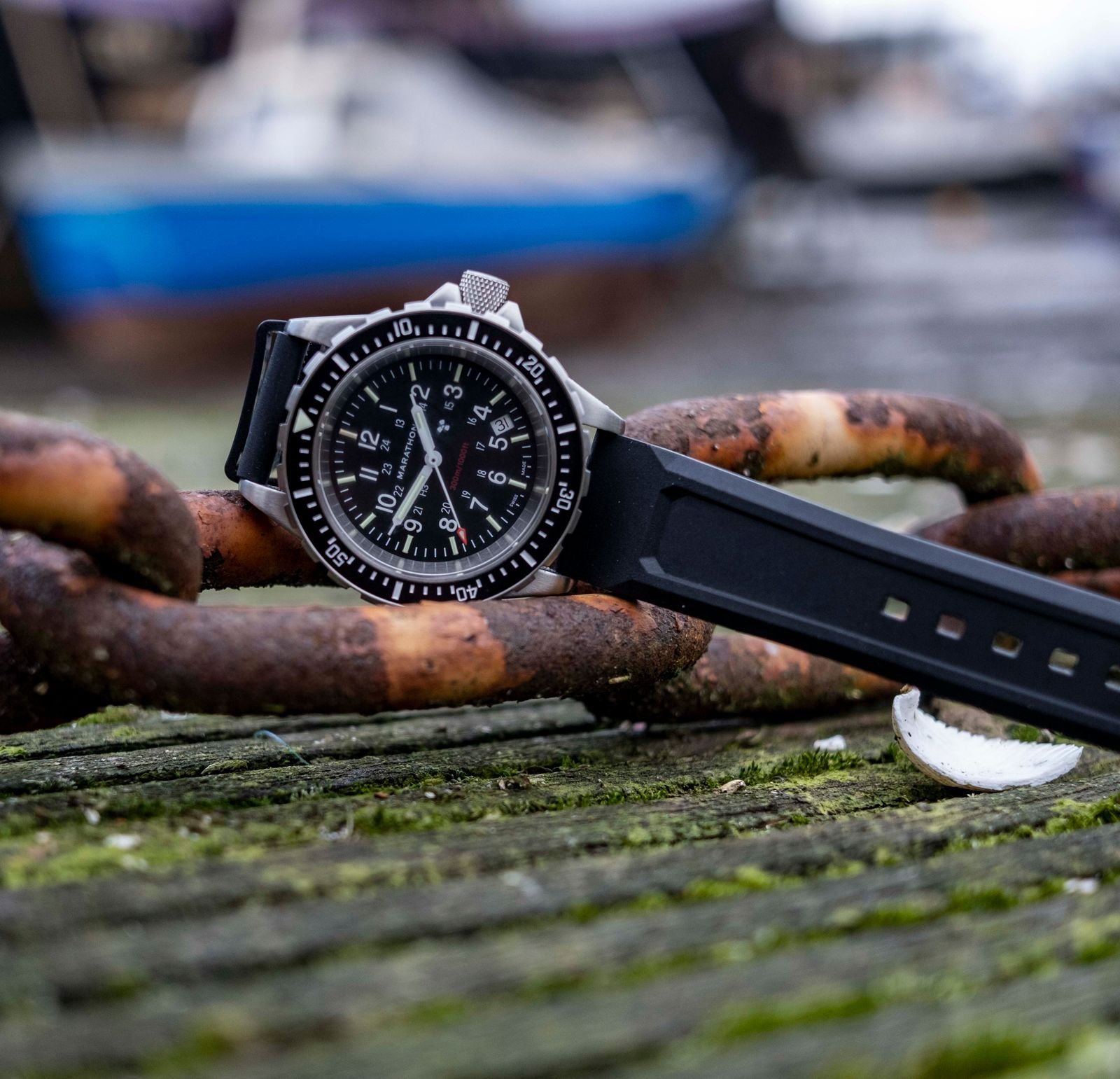
A mechanical watch that runs face-up but stops crown-up, crown-down, or face-down is giving you a useful diagnostic clue. Small changes in rate between positions are normal because gravity changes how the balance staff and escapement load their bearings. Coming to a complete stop in one repeatable orientation is not normal.
The distinction matters. A watch that simply runs out of power can stop in whatever position it happens to occupy. A watch that repeatedly stalls as soon as it is turned to one side may have low balance amplitude, excess friction, a damaged pivot or jewel, a hairspring contact, or another fault whose effect changes with gravity. You cannot identify the failed part from the symptom alone, but you can gather evidence safely without opening the case.
Quick Answer: Why Does a Mechanical Watch Stop in One Position?
The most common explanation is that the movement has too little energy margin. It may keep running in a favorable horizontal position, then lose enough balance amplitude to stop when held vertically. Old lubricant, dirt, wear, weak power delivery, an out-of-beat escapement, or a damaged balance component can all create that condition. A sharp difference between face-up and face-down can also point toward a balance pivot, cap jewel, endshake, or hairspring problem.
Before assuming damage, fully wind the watch according to its manual and repeat the test. Low reserve exaggerates positional behavior. If a properly wound watch still stops reliably in one orientation, arrange professional inspection rather than trying to regulate, demagnetize, shake, or open it yourself.
Normal Positional Variation Versus Position-Sensitive Stopping
Mechanical movements are not indifferent to gravity. Seiko explains that rate can vary with winding level, temperature, arm movement, and resting position. Manufacturers and timing departments therefore evaluate watches in several orientations rather than judging a movement from a single reading.
A modest rate difference is not the same as a stoppage. One position may gain a few seconds overnight while another loses a few. The balance continues oscillating and the hands keep advancing. Position-sensitive stopping means the seconds indication halts, hesitates repeatedly, or resumes only after the watch is turned or moved. That behavior suggests the movement is operating close to its minimum usable energy or that a component is contacting something in a particular orientation.
Also confirm that you are watching the actual running-seconds display. On many chronographs, the large central hand is the stopwatch hand and remains parked until the chronograph is started. The true seconds hand may be on a small subdial.
What Changes Inside the Watch When You Rotate It?
The balance wheel oscillates on a very fine staff supported by jeweled bearings. In horizontal positions, the end of a pivot mainly bears against an endstone. In vertical positions, more load shifts toward the side of the pivot and hole jewel. Friction, pivot condition, lubrication, endshake, balance poise, and hairspring geometry can therefore affect the motion differently from one position to another.
IWC describes positional timing as a multi-position process and notes that balance pivots must run in their bearings with minimal friction. Its watchmakers use timing machines to compare dial-up, dial-down, and four vertical positions. They also treat low amplitude as evidence that energy is being lost somewhere between the barrel and the balance.
A healthy movement is designed to tolerate these changing loads. It may change rate slightly, but it should not simply stop. When rotation causes a repeatable stall, gravity is often revealing an existing weakness rather than creating the fault.
Likely Causes of Stopping in One Orientation
Low Amplitude from Dirt, Old Oil, or General Wear
Amplitude describes the arc through which the balance swings. When friction rises or power delivery falls, that arc becomes smaller. A marginal watch may continue running face-up, where the balance encounters a favorable load, yet stall on its side. The problem can become more obvious late in the power reserve as mainspring torque declines.
Low amplitude is a measurement, not a complete diagnosis. A timing-machine number depends on the caliber, state of wind, lift angle, and position. It should be interpreted by someone who knows the movement rather than compared with a universal internet threshold.
Worn, Bent, or Damaged Balance Staff Pivots
The balance pivots are tiny and vulnerable to impact or wear. If one is bent, rounded, burred, or partly broken, the balance may sit differently when gravity loads the opposite side. The American Watchmakers-Clockmakers Institute lists worn or bent balance pivots, excessive side shake, damaged shock settings, and worn cap jewels among causes of positional errors.
A recent drop makes this category more plausible, especially if the symptom began immediately afterward. Do not keep flipping or shaking the watch to prove the point; repeated shocks add no useful information.
Dirty, Dry, Loose, or Damaged Jewels
Jewel bearings locate the pivots and reduce friction. Contamination, dried lubricant, a displaced cap jewel, a damaged shock setting, or incorrect clearance can change how freely a pivot moves. A face-up versus face-down difference can be especially informative because each orientation loads a different end of the balance staff.
Hairspring Contact or Distortion
The hairspring must expand and contract concentrically without touching the balance arms, regulator pins, bridge, center wheel, or neighboring coils. If it is out of flat or displaced, gravity can make contact appear only in a particular position. Magnetism can cause coils to interact and usually produces a large rate error, but it should not be assumed to be the sole cause of a complete positional stop.
Escapement Friction or Beat Error
The pallet fork and escape wheel must transmit regular impulses to the balance. Poor adjustment, rubbing, loose components, or excessive beat error can leave the oscillator reluctant to start or unable to keep going as torque falls. AWCI technical guidance lists loose pallet stones, a rubbing guard pin, misadjusted escapement parts, and balance-related contacts among possible sources of positional trouble.
Weak or Inconsistent Power Delivery
A tired or slipping mainspring, dirty barrel, worn wheel-train pivot, inefficient automatic winding system, or excessive train friction can starve the escapement. The orientation may appear to be the cause when it is simply the last load the weakened system cannot overcome. That is why every useful home test begins from a known winding state.
A Safe Position Test You Can Do at Home
This test is designed to document the symptom, not repair the watch.
- Check the manual. Confirm the correct crown position, winding direction, and whether the caliber supports hand winding. Unlock a screw-down crown correctly and never force it.
- Establish power. Wind the watch as the manufacturer directs. If no trustworthy instruction is available, avoid guessing an aggressive turn count; a watchmaker can test it safely.
- Set a reference. Synchronize the watch to a reliable clock and record the start time. Note whether the watch recently suffered an impact, moisture exposure, or a sudden rate change.
- Test one position at a time. Place it face-up for 30 to 60 minutes on a stable, padded surface, then repeat face-down, crown-up, crown-down, 12-up, and 6-up as the case and bracelet allow. Do not balance it where it can fall.
- Record behavior. Note whether it keeps running, hesitates, stops immediately, or stops only after a delay. Record the displayed time and the orientation.
- Confirm once. If one orientation causes a stop, return the watch to a position where it ran and repeat that single comparison. One repeat is enough; prolonged cycling offers little additional value.
Use observation rather than force. Do not tap the case, snap your wrist, spin an automatic rotor by shaking, open the caseback, move a regulator, or apply oil. These actions can damage the watch, contaminate the movement, and erase evidence a repairer could use.
How to Read the Result
- It stops in every position after a similar elapsed time: low reserve or a general power-delivery problem is more likely than a position-specific fault.
- It stops quickly only in vertical positions: low amplitude, pivot or jewel wear, escapement friction, or balance poise issues deserve investigation.
- It runs face-up but stops face-down, or the reverse: tell the watchmaker exactly which dial position fails; this can focus inspection on opposing balance pivots, jewels, clearances, or contact.
- It stops at the same displayed time in every orientation: hand contact, motion-work resistance, or calendar load may be more relevant than gravity.
- It began immediately after a drop: treat pivot, jewel, hand, rotor, or other impact damage as plausible and stop unnecessary testing.
- It improves after a full wind but returns at low reserve: the movement may have inadequate amplitude or power delivery even though it runs when torque is highest.
Can a Watch Winder Fix the Problem?
No. A winder can keep a healthy automatic movement supplied with energy, but it cannot repair friction, worn pivots, damaged jewels, hairspring contact, or an escapement fault. Continuous winding may mask a marginal watch because higher mainspring torque keeps it running longer. That delays diagnosis rather than curing the cause.
If the watch stops because it receives too little daily motion, a properly configured winder may help after the watch passes a reserve and multi-position check. If it stops immediately when turned crown-up despite a proper wind, adding turns per day is not the correct response.
What a Watchmaker Will Check
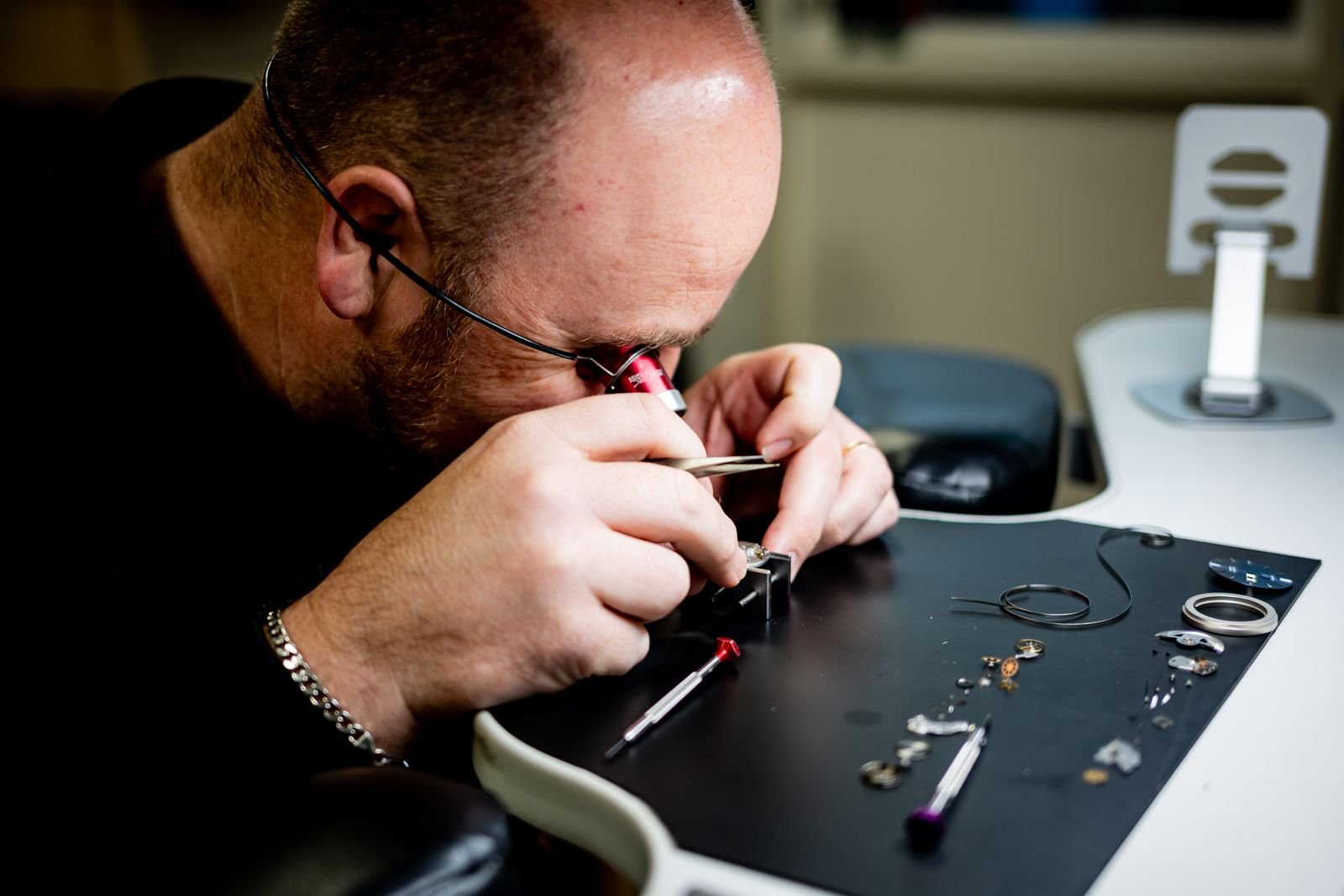
A useful diagnosis normally combines your symptom log with timing-machine measurements at known states of wind. The watchmaker may compare rate, amplitude, and beat error in multiple positions; examine balance pivots and jewels under magnification; check endshake and side shake; inspect hairspring flatness and clearance; test the wheel train and escapement; and verify mainspring and automatic-winding performance.
Service does not automatically mean replacing the entire movement. The appropriate repair depends on what inspection reveals and on parts availability. It may range from cleaning and lubrication to correcting a displaced component, replacing a damaged balance assembly, or performing a complete overhaul. Ask for a written estimate before work begins, particularly for vintage or high-value watches.
When to Stop Testing and Seek Service
Arrange prompt inspection if the watch stops in a repeatable position after proper winding, if the fault followed an impact, or if you also notice scraping, rattling, erratic seconds motion, a sharp accuracy change, a loose crown, or a rotor that seems to contact the case. Visible moisture or condensation is more urgent: keep the crown closed and seek service promptly rather than attempting to dry the watch yourself.
A vintage watch with uncertain service history should be treated gently even if it restarts. Old lubricant and worn pivots can allow intermittent running while continued use increases wear.
Frequently Asked Questions
Is it normal for a mechanical watch to run differently in different positions?
Small rate differences are normal because gravity changes how the oscillator and pivots behave. A healthy, adequately wound watch should not stop completely merely because it is turned face-down or placed on its side.
Why does my watch stop crown-up but run face-up?
The vertical position may impose more friction on a worn or poorly lubricated pivot, expose low amplitude, or allow a hairspring or escapement component to rub. Fully wind the watch according to its manual and confirm the pattern once before seeking service.
Does a position-sensitive stop always mean a broken balance staff?
No. A damaged pivot is one possibility, but old oil, dirt, low power delivery, jewel problems, hairspring contact, beat error, and escapement friction can produce similar symptoms. Inspection is required to identify the cause.
Can magnetism make a watch stop in one position?
Magnetism more often causes a mechanical watch to run very fast or erratically. It can disturb hairspring behavior, but a repeatable positional stop should not be diagnosed as magnetism without testing for other faults.
Should I keep wearing a watch that restarts when moved?
Repeated restarting does not make the symptom harmless. If adequate winding does not eliminate it, continued wear may worsen damage or wear. Record the failing position and have the movement checked.
Conclusion
A mechanical watch that stops in one position is not merely showing ordinary positional variation. First eliminate an empty mainspring with the correct winding procedure, then compare orientations carefully on a safe surface. A repeatable stop gives a watchmaker valuable evidence about energy loss, balance pivots, jewels, hairspring clearance, and escapement behavior. It does not justify opening or adjusting the movement at home.
The most helpful next step is a short, precise record: winding state, orientations tested, time to stop, whether movement restarts it, and any recent impact or moisture exposure. That information is far more useful than aggressive shaking or a guess at the failed part.
Related Reading
For a broader diagnosis, read why an automatic watch can stop while being worn. To understand normal rate changes that do not involve stopping, compare the best resting positions for a mechanical watch at night.