
Mechanical Watch Runs Differently on Wrist vs Off Wrist? Here Is Why

A mechanical watch can look impressively accurate on a bedside table and then gain or lose noticeable time when worn. The reverse also happens: a watch that drifts overnight may settle into a good daily average on the wrist. If your mechanical watch runs differently on wrist than it does off wrist, the result is not automatically evidence of a fault. Gravity, winding level, temperature, movement and shock all change between those two conditions.
The useful question is not whether the two readings match perfectly. It is whether the difference is repeatable, reasonable for the movement, and stable over several days. A controlled comparison can separate normal mechanical behavior from poor winding, magnetism, impact damage or a movement that needs service.
Why a Mechanical Watch Runs Differently on Wrist
A mechanical movement measures time with an oscillating balance wheel and hairspring. Unlike a quartz oscillator, this physical system responds subtly to gravity, friction, temperature and the torque supplied by the mainspring. Wearing the watch changes all of those variables at once.
Position changes the rate
On a table, the watch normally stays dial-up or dial-down. On the wrist, it continually moves through crown-up, crown-down, crown-left, crown-right and many intermediate angles. In vertical positions, the balance staff pivots contact their jewels differently than they do in horizontal positions. Gravity can also expose tiny imperfections in balance poise or hairspring centering.
Every position therefore has its own rate. A reading of plus two seconds per day dial-up does not predict the same result crown-down. The rate you observe while wearing the watch is a weighted average of all the positions your daily routine creates. This is the most common reason a mechanical watch runs differently on wrist without actually being defective.
The wrist changes the winding level
An automatic watch uses rotor motion to wind its mainspring. An active wearer may keep the movement in the stronger, more stable part of its power reserve. Someone who works at a keyboard, drives for long periods or wears the watch only a few hours may add much less energy than expected.
Mainspring torque gradually falls as the reserve is used. A well-designed, healthy movement should maintain useful accuracy across most of that range, but some rate variation is normal. A poorly wound watch may also show lower balance amplitude, making positional differences more obvious. This means the off-wrist test is only fair when the watch begins at a known winding level.
Body heat affects the oscillator
Metal components expand and contract with temperature. Modern hairspring alloys and silicon components reduce the effect, but they do not make every mechanical movement completely temperature independent. A watch worn close to the skin is usually warmer and more thermally stable than one left near a cold window, air conditioner or heating vent.
The difference is normally modest. A dramatic change of minutes per day should not be dismissed as body temperature. Still, temperature is one reason manufacturers tell owners to judge mechanical accuracy over multiple days of normal use rather than from a single short observation.
Motion can reveal a marginal fault
Normal wrist movement introduces small shocks. A healthy movement is designed to tolerate daily activity, but motion can expose low amplitude, excessive endshake, a damaged balance pivot, a loose component or a hairspring problem. If a watch keeps time while perfectly still but loses minutes only when gently moved, that pattern deserves professional inspection.
A recent hard impact is especially relevant. Do not repeatedly shake the watch to reproduce the problem. Note what happened, stop any aggressive testing and let a watchmaker examine it.
What Difference Is Normal?
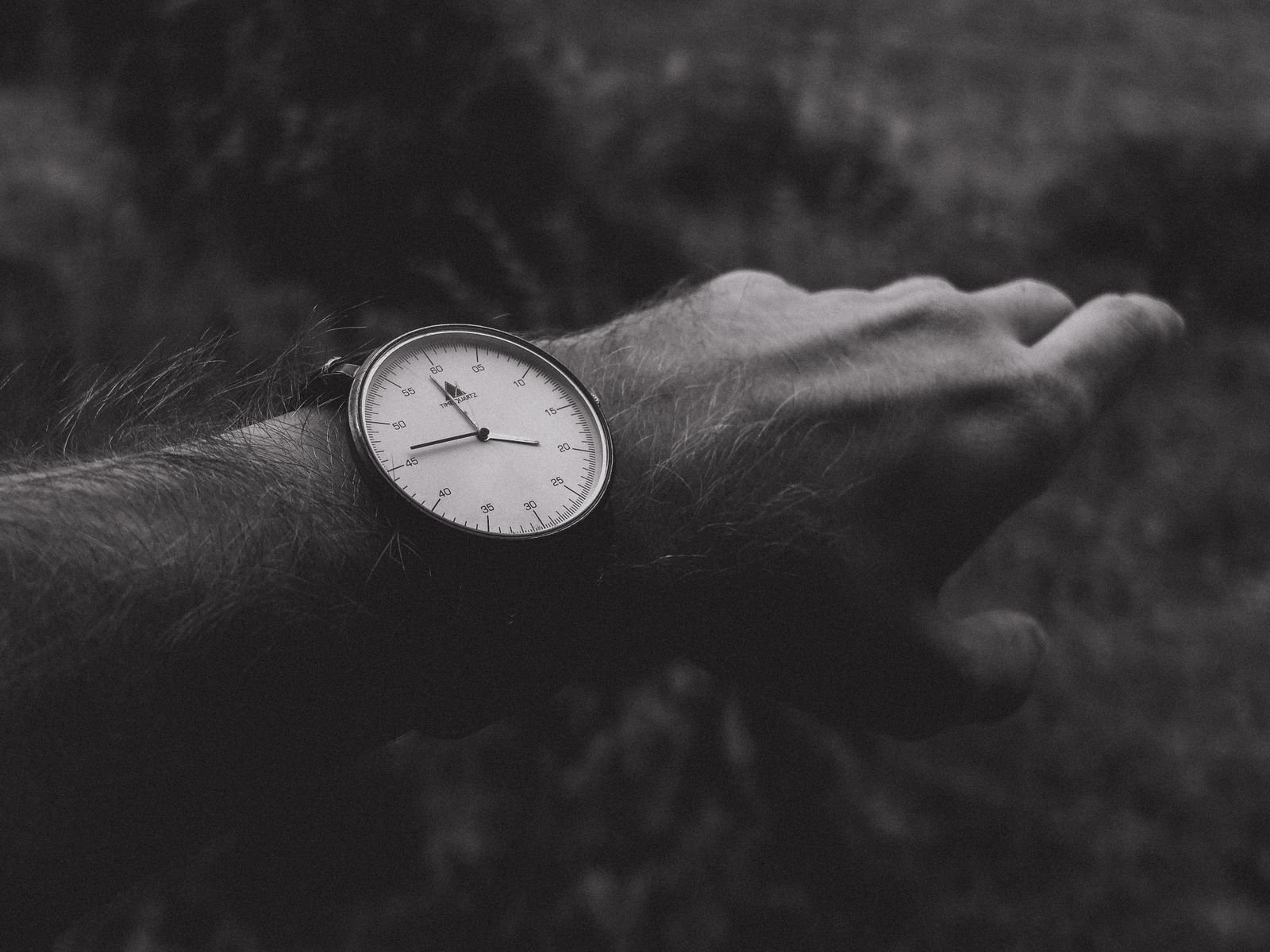
There is no universal number that applies to every mechanical watch. The correct comparison is the published accuracy range for the exact caliber, followed by the brand’s instructions for measuring it. Vintage movements, modern entry-level calibers and chronometer-certified watches can have very different expectations.
Grand Seiko, for example, explains that mechanical accuracy varies with winding, temperature and resting position. It recommends evaluating normal-use accuracy as an average over seven to ten days. That principle is useful even if your watch is from another brand: daily mechanical variation matters less than the repeatable multi-day average.
A difference of a few seconds between a horizontal resting result and an on-wrist daily result may be entirely normal. Larger positional spreads can also occur within a manufacturer’s overall tolerance. The following patterns are more informative than one isolated number:
- Small, repeatable difference: Usually normal positional behavior that can sometimes be improved by regulation.
- Good on wrist, different overnight: Often the result of one fixed resting position dominating several hours.
- Accurate when fully wound, erratic later: May point to insufficient winding, low amplitude or a service issue.
- Sudden change after impact: Treat as a possible mechanical fault, particularly if the watch also stops.
- Difference measured in minutes: Usually outside ordinary positional variation and worth prompt diagnosis.
How to Test Wrist and Resting Accuracy Properly
A casual glance at a phone clock can create false conclusions. The minute hand is hard to compare precisely, the reference may not have been synchronized, and the watch may have started with an unknown amount of power. Use a simple written test instead.
1. Identify the movement and its specification
Find the caliber in the manual, case documentation or manufacturer’s database. Record its stated daily accuracy and whether the figure describes a bare movement under controlled testing or real-world use. Certification claims and normal-use specifications are not always the same thing.
2. Start from a known wind
Follow the maker’s winding instructions. If the automatic movement supports hand-winding, give it the specified number of crown turns before testing. Do not assume a short, sedentary day fully wound it. If the manual warns against manual winding or gives a special procedure, follow that instruction rather than a generic number.
3. Synchronize to one reliable reference
Set the watch to a reference that displays seconds. Record the initial offset instead of forcing an exact zero if the movement does not hack. Use the same reference throughout the test and check at roughly the same time each day.
4. Measure normal wrist use for at least seven days
Wear the watch as you ordinarily would. Note approximate wear hours, activity level and the position used overnight. Record the total gain or loss every 24 hours. Avoid changing the resting position halfway through unless that change is the variable you intend to study.
5. Run a separate controlled rest test
Rewind and resynchronize the watch, then leave it undisturbed in one documented position, such as dial-up, for 24 hours. Repeat in another safe position on a different day. Keep the watch away from speakers, magnetic clasps, laptops, chargers and large temperature swings.
6. Compare averages, not the best reading
Add the daily gains or losses for each condition and divide by the number of days. A single unusually good result does not prove the movement is properly adjusted, and a single poor result does not prove damage. When a mechanical watch runs differently on wrist, the pattern across repeated tests is the evidence a watchmaker can use.
How a Watchmaker Diagnoses the Difference

A watchmaker normally begins with external checks and a timing machine, not immediate disassembly. Acoustic testing can measure rate, beat error and balance amplitude. Witschi describes these as core measurements for evaluating a mechanical movement, while also noting that an accurate amplitude calculation requires the movement’s correct lift angle.
The watch should be measured in several positions and at a documented state of wind. One dial-up snapshot is not enough to explain on-wrist behavior. The useful diagnostic clues include:
- Rate: The estimated number of seconds gained or lost per day in that test position.
- Amplitude: The angle through which the balance swings. Witschi notes that many modern, fully wound movements typically measure about 270 to 310 degrees horizontally, but caliber design and test conditions matter.
- Beat error: The timing difference between the balance’s two directions of swing.
- Positional spread: The difference between the fastest and slowest tested positions.
Healthy amplitude with a steady, similar offset across positions may call only for regulation. Weak amplitude, unstable traces or a very large positional spread can justify deeper inspection and service. Regulation changes rate; it does not clean dried lubricant, repair worn pivots or correct a damaged hairspring.
Safe Things You Can Do—and What to Avoid
Before arranging repair, confirm that the watch was adequately wound, repeat the measurement for a week and keep it away from obvious magnetic sources. You can also try a consistent overnight position to see how it affects the 24-hour average. Use a soft, stable surface where the watch cannot fall.
A watch winder may help maintain power in an automatic watch, but it is not a diagnostic cure. Use only a suitable turns-per-day and direction setting for the movement. If the watch remains inaccurate when properly wound, increasing winder turns indefinitely will not solve regulation or wear.
Avoid opening the case, moving a regulator, demagnetizing without a credible reason, or using phone timing apps as the sole basis for internal adjustment. Phone tools can be useful for trends, but microphone quality, background noise and an incorrect lift-angle assumption can make the displayed amplitude misleading.
When the Difference Needs Professional Attention
Book an inspection when the change is sudden, exceeds the caliber’s stated tolerance over a proper multi-day test, or is accompanied by stopping, scraping sounds, moisture, a difficult crown or a recent impact. A watch that loses or gains minutes when worn but appears normal while stationary should also be checked promptly.
Bring your log. Include winding method, daily wear time, overnight position, daily offsets and any impact or magnetic exposure. This information is far more useful than saying the watch is “sometimes slow.” It helps the watchmaker reproduce the condition and decide whether regulation, demagnetization or a full service is appropriate.
FAQ
Why is my automatic watch accurate off wrist but slow when worn?
Wrist positions, insufficient automatic winding or motion-sensitive faults can change the result. Fully wind it according to the manual, log normal use for seven to ten days and compare that average with a controlled resting test.
Can wrist movement make a mechanical watch run fast?
Normal movement changes position and winding level, either of which can alter the average rate. Extreme gain after a shock may indicate magnetism, hairspring interference or another fault and should not be treated as normal.
Should a mechanical watch be more accurate on a timegrapher?
A timegrapher reports a short measurement in a specific position. Actual wear averages many positions and changing conditions. The bench reading is diagnostic data, not a guarantee that the wrist result will be identical.
Can I correct overnight drift by changing the resting position?
Often, yes. If your watch consistently gains in one position and loses less in another, choosing the second position overnight can improve the 24-hour average. It compensates for positional rate; it does not repair an unhealthy movement.
Is a difference of one minute per day normal?
For most modern mechanical watches, a repeatable minute-per-day difference is well beyond normal expectations. Confirm the test with a full wind and reliable reference, then consult the manufacturer or a qualified watchmaker.
Conclusion
When a mechanical watch runs differently on wrist, the explanation is usually a combination of position, mainspring torque, temperature and daily motion. Small, stable differences are part of mechanical timekeeping. Sudden, large or erratic differences are diagnostic clues.
Start with a known wind, use one reference, record seven to ten days of normal wear and compare it with controlled resting positions. That simple discipline turns an impression into useful evidence—and makes it much easier to decide whether the watch needs nothing, a careful regulation or a full professional service.