
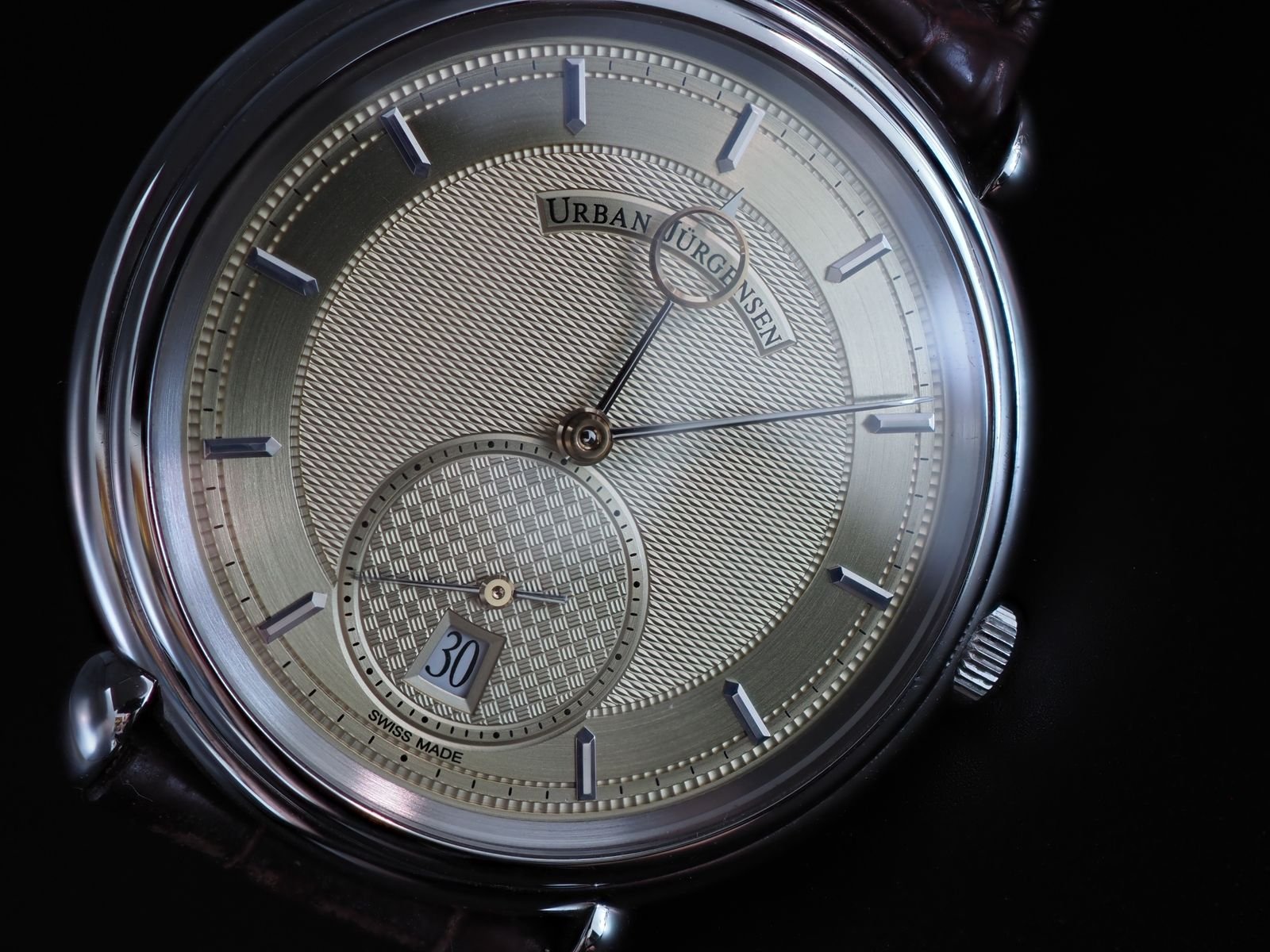
Dropping a mechanical watch produces a uniquely unpleasant sound. Even if the crystal is intact and the seconds hand is still moving, the impact may have changed something you cannot see: timing, hand clearance, rotor alignment, crown sealing, or the position of a tiny movement component.
The good news is that a dropped mechanical watch is not automatically ruined. Modern movements usually include shock-protection systems around the balance staff, and many robust cases tolerate ordinary knocks well. The less comforting truth is that shock resistance has limits. The outcome depends on the landing surface, height, impact angle, case construction, movement condition, and whether the watch struck the crown or crystal.
This guide explains how to inspect a dropped mechanical watch without making the damage worse, what changes to monitor, and when a professional examination is the sensible choice.
First Response: What to Do Immediately After the Drop
Pick up the watch carefully and resist the urge to shake it beside your ear. Shaking can move a loosened screw or broken fragment through the movement. If a hand, marker, or piece of crystal has come loose, continued motion may scratch the dial or jam the gear train.
Place the watch dial-up on a clean, soft cloth in good light. Note the time and whether the seconds hand is moving. Then inspect the exterior before operating the crown or pushers.
- Look for broken or chipped crystal. Fine cracks may begin at the edge under the bezel. Do not press on a damaged crystal, and keep the watch away from water and dust.
- Check the crown and pushers. A crown that sits at an angle, has an enlarged gap, or no longer screws down normally may have a bent stem or damaged tube.
- Inspect the caseback and bezel. Look for a new gap, displaced bezel, or dent near a sealing surface.
- Examine the hands and dial furniture. Confirm that the hands appear parallel and that no applied marker, date-window frame, or luminous element is loose.
- Check the bracelet or strap attachment. A distorted spring bar, bent lug, or cracked strap can cause a second drop.
If you see broken glass, a detached hand or marker, moisture, a badly bent crown, or a caseback that has shifted, stop the watch if your model allows this by gently pulling the crown to the time-setting position. Do not force the crown. Put the watch in a clean container and arrange service.
Why a Mechanical Watch Can Keep Running Yet Still Need Attention
A mechanical movement divides stored mainspring energy into controlled steps. The balance wheel oscillates, the escapement releases the gear train, and the hands display the result. An impact can disturb one part without stopping the entire chain.
Shock protection such as Incabloc, KIF, Diashock, Paraflex, or similar systems allows a balance jewel to move slightly under impact and return toward its working position. That protects the delicate balance pivot from many everyday knocks. It does not make the whole watch immune to damage. Hands can shift, rotor bearings can develop play, screws can loosen, dial feet can fail, and a case or crown impact can compromise water resistance.
Seiko notes that mechanical-watch accuracy is influenced by shock as well as temperature, position, magnetism, and winding state. Citizen and Casio likewise caution that dropping a watch or subjecting it to a strong impact can cause malfunction. The practical lesson is simple: “still ticking” is encouraging, but it is not a complete diagnosis.
A Safe At-Home Inspection Checklist
1. Observe the hands through a full cycle
Watch the seconds hand for at least one minute. It should not touch the crystal, minute hand, applied markers, or dial. Then, only if the crown looks normal and the crystal is secure, advance the time slowly through 12 hours. Stop if you feel unusual resistance or see the hands contact each other.
Check that the date changes once and that the hands remain aligned. Avoid using the quick-set date if the displayed time is near the movement’s date-change period. A drop is not the moment to add avoidable load to the calendar mechanism.
2. Listen without shaking
Move the watch gently from dial-up to a slight angle. A normal automatic rotor may be audible, especially in movements with unidirectional winding, but a new scraping sound, metallic rattle, or sensation of the rotor striking the caseback deserves attention. Compare it with your memory of the watch before the drop rather than with another model.
3. Check winding and crown operation cautiously
If the crown is straight and undamaged, a few slow winding turns can reveal a problem. Normal feel varies by movement, so focus on a clear change: grinding, skipping, binding, or a crown that pulls out farther than before. Stop immediately if resistance rises sharply. Do not repeatedly screw down a crown that now engages crookedly; damaged threads are expensive to restore.
4. Measure basic timekeeping
Set the watch against a reliable reference and record the difference after 24 hours while wearing it normally. Repeat for two or three days if there are no other warning signs. Use the same reference and roughly the same routine. A phone app can help with timestamps, but it is not a substitute for a watchmaker’s timegrapher.
A sudden, persistent change from the watch’s established rate matters more than a universal number. A watch that changes from plus three seconds per day to plus 25 after a fall has given you useful evidence, even if it continues to run. Large variation between days, intermittent stopping, or a much shorter power reserve can also indicate a problem.
5. Treat water resistance as unverified
Do not swim, shower, or rinse a dropped mechanical watch until its seals have been assessed if the case, crown, crystal, or bezel took a meaningful hit. OMEGA’s care guidance specifically notes that an accidental shock to the crown can affect water resistance and recommends periodic professional testing. A pressure test is quick compared with repairing a water-damaged movement.
Warning Signs That Mean Stop Wearing the Watch
Some symptoms justify immediate professional inspection rather than home monitoring:
- The crystal is cracked, chipped, lifted, or visibly loose.
- There is condensation, fogging, or a droplet under the crystal.
- A hand, hour marker, date-window component, or dial element has moved.
- The seconds hand stops at a repeatable point or touches another component.
- The crown is bent, wobbly, difficult to turn, or no longer screws down correctly.
- The movement has stopped despite adequate winding.
- The watch starts and stops as its position changes.
- You hear a new scrape, knock, or loose metallic rattle.
- Timekeeping changed dramatically and remains unstable.
- The rotor feels as though it is contacting the caseback.
Do not open the caseback to look for the fault. Besides introducing dust and moisture, opening a watch without the correct tools can scratch the case, damage a gasket, and complicate a warranty or insurance claim. Brand service guidance generally directs owners to authorized or qualified service providers for technical diagnosis.
What a Watchmaker Will Test
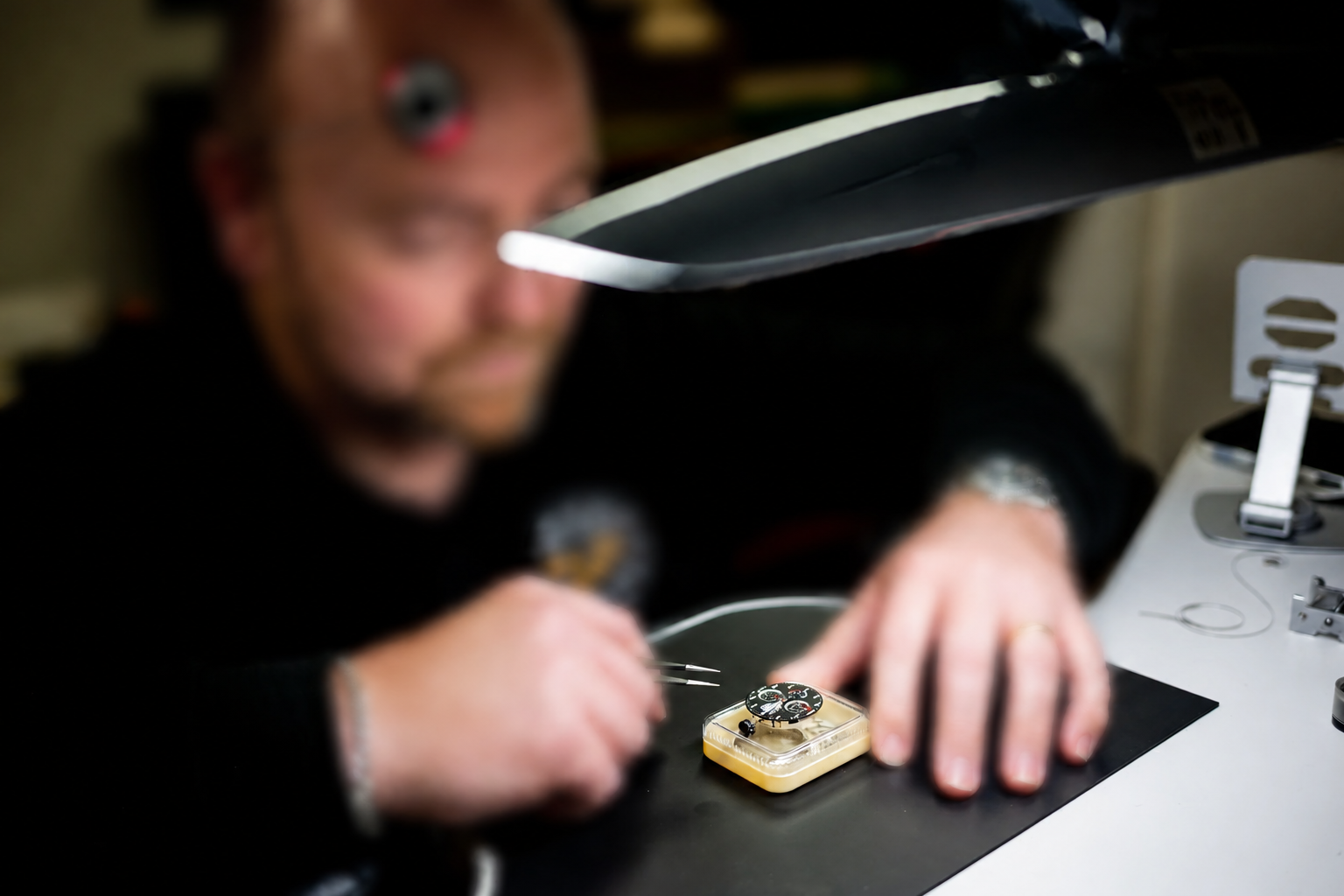
A sensible post-impact assessment begins with the exterior. The watchmaker checks the crystal, crown, tube, pushers, bezel, caseback, lugs, spring bars, and bracelet. They may then test the watch on a timegrapher in several positions. Rate, amplitude, and beat error together provide a better picture than daily gain or loss alone.
Low or erratic amplitude may suggest excess friction, power-delivery trouble, or an escapement problem. A new beat error can point toward disturbance around the balance system. These readings do not identify every damaged part by themselves, but they help the technician decide whether the case must be opened.
For an automatic watch, the winding system and rotor clearance should be checked. Complications require functional testing: calendar change, chronograph start-stop-reset, GMT adjustment, moonphase, and any model-specific mechanism. If water resistance matters, request dry and/or wet pressure testing appropriate to the watch and the service center’s procedure.
An inspection does not always lead to a complete overhaul. If the watch passes timing, function, and pressure tests, the recommendation may simply be continued observation. Conversely, a movement fault may require disassembly even when the exterior shows only a small dent.
Does the Landing Surface or Drop Height Matter?
Yes, but there is no reliable “safe height.” Carpet over wood, thick fabric, and other compliant surfaces absorb more energy than tile, stone, or concrete. A short fall onto a hard edge can be worse than a longer fall onto a forgiving surface. The point of impact also matters: a direct strike to the crown creates a different risk from a flat caseback landing.
The watch’s mass, strap, and bracelet affect the event too. An open metal bracelet can whip or concentrate force, while a strap may soften or redirect the landing. Vintage watches deserve extra caution because older shock systems, aged dial material, previous repairs, corrosion, and tired seals can reduce resilience.
Do not intentionally reproduce the drop to test the watch. Shock-resistance standards and manufacturer testing use controlled equipment; a household fall is uncontrolled and cannot be evaluated from height alone.
Insurance, Warranty, and Documentation
Photograph the watch, the impact mark, and the surface where it landed before polishing or cleaning anything. Write down the approximate height, time of the incident, immediate symptoms, and previous timing performance. This record helps a watchmaker and may support an insurance claim.
Accidental impact is commonly treated differently from a manufacturing defect. For example, Rolex states that its guarantee excludes damage affecting functionality that results from accident or mishandling. Check the wording of your brand warranty and any separate jewelry or household policy before authorizing costly work. Ask for a written estimate and request that replaced parts be handled according to your preferences and the service center’s policy.
Frequently Asked Questions
My mechanical watch fell but still runs. Is it probably fine?
It may be fine, especially after a modest fall onto a soft surface, but continued ticking is not proof that timing, hand clearance, automatic winding, or water resistance is unchanged. Inspect it, monitor its rate, and seek testing if anything differs from before.
Should I stop the watch after dropping it?
Stop it if glass or dial parts are loose, the hands contact something, you hear scraping or rattling, or the watch behaves abnormally. If it looks and sounds normal, gentle observation is reasonable. Never force a damaged crown merely to stop the seconds.
Can a drop make a mechanical watch run fast?
Yes. Shock can alter balance behavior or move components, producing a sudden rate change. Magnetism can also cause fast running, so a watchmaker may check both possibilities rather than assuming the drop caused a single specific fault.
Can a dropped watch remain water-resistant?
Possibly, but you cannot confirm that visually. An impact to the crown, crystal, bezel, or case can affect sealing. Keep the watch dry until it passes an appropriate pressure test if the drop was significant.
How much does a post-drop inspection cost?
Pricing varies by location, brand, complication, and required tests. A basic timing and pressure assessment may be modest, while movement repair, crystal replacement, case work, or factory service can cost substantially more. Request an estimate before work begins.
Conclusion
After dropping a mechanical watch, begin with restraint: do not shake it, force the crown, expose it to water, or keep wearing it despite new noises. Inspect the exterior, check hand clearance, document the event, and compare timekeeping with the watch’s established performance.
Modern shock protection makes many mechanical watches tougher than their delicate construction suggests, but it protects only part of the movement and cannot guarantee that seals, hands, crown, rotor, or dial survived unchanged. If the watch shows a cracked crystal, loose component, crown damage, unstable running, unusual sound, or major rate change, stop using it and arrange a professional inspection. Catching a small post-impact problem early is usually safer than waiting for it to become a larger repair.