
How to Spot a Fake Omega Aqua Terra: A Reference-First Authentication Guide
The Omega Seamaster Aqua Terra looks simple, which makes it deceptively difficult to authenticate. Its clean dial and fixed bezel leave fewer obvious components to inspect than a dive watch, while the collection has changed repeatedly since its 2002 debut. A genuine detail on one generation can be wrong on another. That is why a useful guide to how to spot a fake Omega Aqua Terra must begin with the exact reference, not a generic checklist.
Modern counterfeits can reproduce a teak-pattern dial, display caseback and convincing paperwork. Photographs alone may reveal inconsistencies, but they cannot prove authenticity. The safest process combines reference research, seller checks, close external inspection and, for a valuable purchase, examination by an experienced watchmaker or Omega-authorized service point.
Start With the Exact Aqua Terra Reference
“Aqua Terra” describes a large family rather than one fixed design. Case sizes, date positions, dial textures, bracelet shapes, movement families and printed wording vary by year and reference. Older examples may use vertical teak lines and a date at three o’clock. Many newer models use horizontal lines and a date at six. Some current black-dial models use a glossy lacquered surface rather than the familiar teak texture.
Before judging the watch, obtain its complete reference number and compare it with an authoritative listing for that exact model. Match the following as a set:
- case diameter, metal and caseback style;
- dial color, texture, date location and minute track;
- hand shape, index design and luminous layout;
- bracelet or strap reference and clasp construction;
- movement caliber and stated power reserve;
- water-resistance and certification wording.
Omega’s own material illustrates why this matters. Its current black-dial Aqua Terra family includes 41, 38 and 34 mm versions. Omega identifies caliber 8900 for the 41 mm models and caliber 8800 for the 38 and 34 mm models, with design differences among the sizes. An otherwise plausible 38 mm watch displaying a movement or dial configuration belonging to the 41 mm version is therefore a major warning sign.
Inspect the Dial as a Complete System
The dial is where many buyers begin, but one allegedly “wrong” letter is weak evidence without a reference-matched comparison. Inspect the entire dial under soft light and moderate magnification. Genuine high-end finishing should look deliberate: applied markers sit squarely, polished facets remain crisp, printing is clean, and luminous material is contained within its intended boundaries.
Check the teak pattern and date aperture
On references with a teak-inspired dial, compare the direction, spacing and termination of the grooves with official photographs of the exact reference. The lines should interact correctly with the logo, indexes, minute track and date opening. Do not apply the popular rule that “all real Aqua Terras have horizontal grooves.” Earlier generations commonly used vertical lines, and some legitimate variants have no teak pattern.
Study the date window from directly above. Its frame, bevel, position and proportions should match the reference. The numeral should sit sensibly centered rather than riding high or low. A wrong font is suspicious, but a replacement date wheel or poor camera angle can also mislead, so treat it as one item in a larger evidence set.
Examine logos, text and applied components
Compare the Omega symbol, “OMEGA” wordmark, Seamaster script and certification text with high-resolution reference images. Look for uneven baselines, crowded characters, fuzzy edges and inconsistent spacing. The applied logo should be properly aligned and cleanly finished. Watchfinder’s comparison of genuine and counterfeit Seamasters highlights the broader distinction: genuine hands, markers, printing and dial finishing tend to be smoother and more precise, while fakes often reveal rough machining or uneven application under magnification.
Misalignment is evidence, not a verdict. A tilted photograph can make perfectly placed markers look crooked, and an authentic watch may have been damaged or refinished. Request a sharp, straight-on dial image with the hands moved away from important text and the date window.
Compare the Case, Crown, Crystal and Bracelet
A strong counterfeit may look acceptable from the front but lose accuracy across the case profile. Compare the bezel width, lug shape, crown size, case thickness and transition between brushed and polished surfaces. Omega cases generally use controlled edges and consistent finishing; soft geometry can indicate a crude copy, although heavy polishing on a genuine used watch can produce similar symptoms.
Inspect the sapphire crystal and its relationship to the bezel. Excessive distortion, a poorly seated crystal or visibly rough edge finishing deserves attention. Check that the crown operates normally through winding, time-setting and any independent hour-hand function specified for the caliber. Do not force a stiff crown, and never test water resistance by immersing an unverified watch.
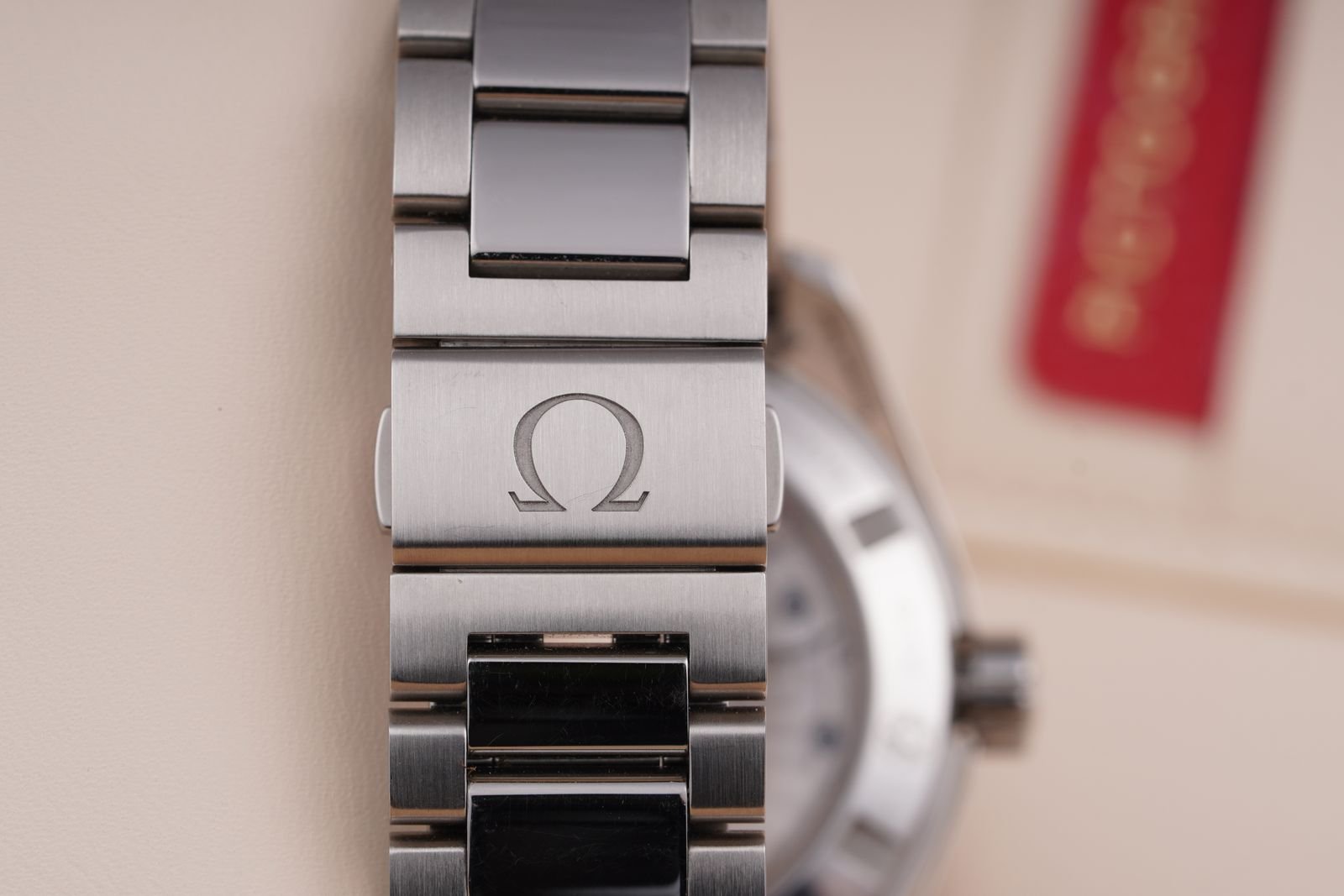
The bracelet should match the exact reference or be openly disclosed as a replacement. Examine link shape, end-link fit, screw or pin construction, clasp engraving and the quality of brushing and polishing. A genuine watch can wear an aftermarket strap, and a genuine bracelet can be fitted to a counterfeit head, so bracelet quality cannot authenticate the complete watch on its own.
Use the Movement and Caseback Carefully
A display back is valuable evidence because caliber architecture is difficult to reproduce perfectly, but modern replica movements can imitate bridges, rotor decoration and jewel placement. Compare the visible movement with official imagery for the stated caliber. Look at bridge outlines, screw locations, jewel positions, balance location, finishing pattern and the exact wording on the rotor and bridges.
Caliber function matters too. A reference equipped with Omega caliber 8900 should behave like that caliber, including its time-zone hour adjustment. A movement that only imitates the appearance but lacks the specified crown functions is suspect. Conversely, do not open the case yourself to search for clues. Improper opening can damage seals, scratch the case and compromise water resistance.
“Master Chronometer” is more than decorative dial text. METAS states that the certification applies to the complete watch and covers chronometric performance, water resistance, magnetic resistance and power reserve, with the manufacturer’s testing independently monitored by METAS. A fake can print the words, so the label is not proof; it tells you which claims and caliber configuration the exact watch should support.
Check Serial Numbers and Papers—Without Trusting Them Alone
Record the watch’s serial number exactly as engraved and compare it across the watch, warranty card, sales documents and any service records. The engraving should be clean and located where expected for the reference. A mismatch, altered digits or a number appearing on unrelated online listings is a serious red flag.
A serial number that looks valid does not establish authenticity. Counterfeiters copy numbers from genuine watches, sometimes repeating the same number on many examples. Gray & Sons specifically warns that reused Omega serials occur in the counterfeit market. Ask an Omega boutique, authorized dealer or qualified specialist what they can verify for that reference; access to brand records and the conclusions they can provide may vary.
Boxes and cards should be treated as supporting provenance, not as a certificate that overrides the watch. Packaging changes over time, papers can be forged, and genuine accessories can be paired with a fake or assembled watch. Check whether dates, dealer information, reference and serial are internally consistent, then evaluate the physical watch independently.
Evaluate the Seller and Transaction
Authentication begins before the watch arrives. A reputable seller should provide clear, original photographs of the exact item, disclose replaced or refinished parts, state a return period and permit independent inspection. Search the seller’s history outside its own website and confirm that payment protection applies to authenticity disputes.
Request these images before paying:
- a straight-on dial photo in neutral light;
- both case sides, crown and all four lugs;
- caseback and a legible serial area;
- bracelet end links, clasp exterior and interior;
- the movement through the display back;
- cards and receipts with private customer details redacted;
- a current timestamp photo showing the seller possesses the watch.
Reverse-search listing images and search the visible serial number. Refusal to provide basic evidence, pressure to pay quickly, cryptocurrency-only terms, a price dramatically below the market and a story that changes under questioning all raise risk. Chrono24’s authentication language also makes an important distinction: authenticity and originality are related but not identical. A genuine watch can contain disclosed replacement parts, so ask exactly what “authentic” means in the seller’s policy.
A Practical Aqua Terra Authentication Checklist
Use this sequence rather than hunting for one magic tell:
- Identify: Confirm the full reference, approximate production period and correct caliber.
- Compare: Match size, dial, date, caseback, bracelet and movement against official material for that reference.
- Inspect: Review alignment, printing, finishing, engravings and crown functions with good photographs.
- Reconcile: Check the serial, cards, invoice and service history for consistent information.
- Assess the seller: Confirm reputation, return rights and protected payment.
- Escalate: Arrange independent examination before the return window closes.
A specialist can examine the watch under magnification, verify movement architecture, identify refinished or aftermarket components and pressure-test it safely when appropriate. Ask for a written conclusion that distinguishes counterfeit, genuine with replacement parts, and fully original. Those are not the same outcome.
Common Authentication Mistakes
- Using one generation as the standard: Aqua Terra design details have changed significantly.
- Assuming a smooth seconds hand proves authenticity: Both genuine and counterfeit mechanical watches tick several times per second.
- Relying on weight: Reference, bracelet sizing and materials change the measurement, and good fakes can be close.
- Trusting papers more than the watch: Cards and serials can be copied or mismatched.
- Calling every variation fake: Service parts, polishing and legitimate production changes require expert context.
- Opening or water-testing at home: These actions can damage the watch and weaken your return position.
FAQ
Can I authenticate an Omega Aqua Terra from photos?
Photos can expose mismatched details and obvious counterfeits, but they cannot prove the movement, serial history, internal parts or water resistance. Use photographs for screening, then obtain hands-on professional inspection.
Does every genuine Aqua Terra have a teak dial?
No. Teak direction and execution vary by generation, and legitimate references exist with other dial finishes. Compare only with the exact reference and production period.
Does a valid Omega serial number prove the watch is real?
No. Counterfeiters can copy a real serial number. The number must be consistent with the reference, paperwork, movement and physical construction, and it should not appear on unrelated watches.
Is a Master Chronometer card enough to authenticate it?
No. Certification documents and cards can be copied. Master Chronometer status defines expected testing and performance, but authentication still requires checking the actual watch and its provenance.
What is the safest way to buy a used Aqua Terra?
Choose a seller with a documented authentication process, protected payment, accurate condition disclosure and a meaningful return window. Have the watch independently inspected before that window expires.
Conclusion
Learning how to spot a fake Omega Aqua Terra is less about memorizing a crooked logo and more about building a consistent identity for the watch. Reference, size, dial, movement, functions, serial and paperwork should all describe the same model and period.
Use seller photographs to reject clear mismatches, but do not let a convincing dial or genuine-looking card create false certainty. For a purchase of meaningful value, the best final step is an independent, hands-on inspection backed by a return policy. That combination protects you not only from outright counterfeits, but also from undisclosed replacement parts and assembled watches.