



























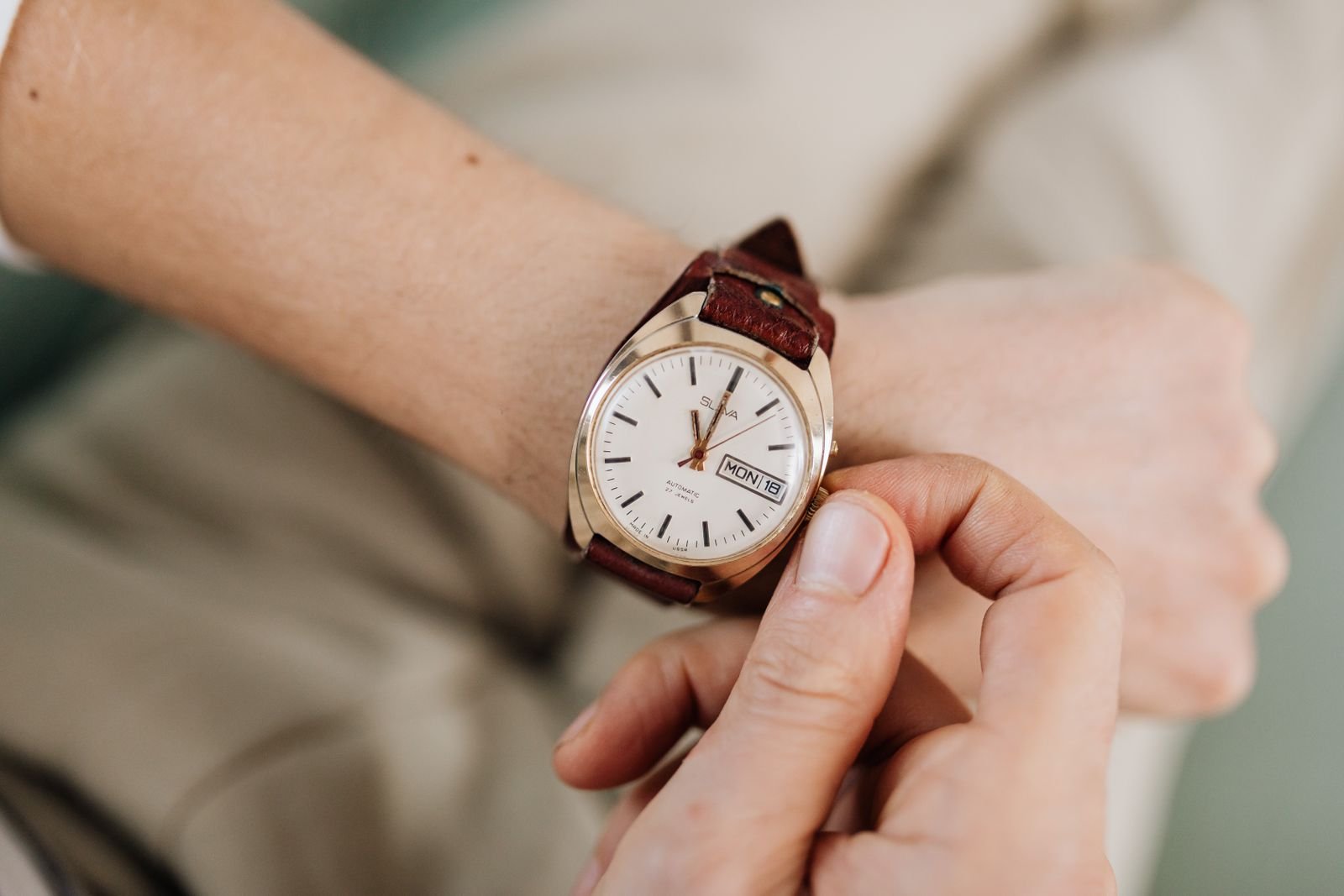
You turn the crown of an automatic watch and feel the case vibrate. Through the display back, the rotor jerks or races around as though the crown were powering it directly. Owners often call this behavior “helicoptering” or “rotor spin.” A small movement of the rotor is not automatically a fault, but strong, repeatable rotation caused by hand-winding deserves attention.
In a healthy automatic movement, the rotor winds the mainspring through an automatic winding train. Manual winding sends power from the crown toward the mainspring by another route. The mechanisms meet, but clutches, reversing wheels, pawls, or related components are designed to control how torque passes through the system. When that isolation function binds, hand-winding torque can travel backward into the rotor.
This guide explains how to distinguish harmless movement from a meaningful symptom, what commonly causes an automatic watch rotor to spin when winding, which checks are safe at home, and when to stop using the crown. It is an owner’s diagnostic guide, not a movement-repair tutorial: opening a watch can damage components, compromise water resistance, and void warranty coverage.
Is Any Rotor Movement During Hand-Winding Normal?
First separate rotor movement caused by gravity from rotor movement driven by the crown. A rotor is an eccentric weight, so it naturally seeks a lower position when the watch is tilted. If you pick up the watch, rotate it to view the display back, or shift your wrist while winding, the rotor may swing independently. That is normal.
Some movement designs can also show a brief twitch or limited reaction during slow hand-winding without indicating an urgent defect. Construction varies widely. A bidirectional Swiss automatic mechanism does not behave exactly like a unidirectional pawl system, and neither should be judged by a rule written for a different caliber.
The more concerning pattern is easy to describe: the watch is held steadily, each turn of the crown makes the rotor move, and faster crown rotation makes the rotor whirl faster. The case may buzz in the hand. The crown may feel unusually heavy, uneven, or gritty. The symptom may appear after years of normal use or after the watch has sat unused for a long period.
- Usually harmless: the rotor swings because the watch changes angle, then settles under gravity.
- Worth monitoring: an occasional small twitch occurs, but the crown remains smooth and the behavior is not repeatable.
- Service sign: the crown repeatedly drives the rotor through large arcs or full rotations, especially with resistance, vibration, noise, or a recent change.
Why the Rotor Can Spin When You Wind the Crown
Automatic movements must convert irregular rotor motion into controlled winding of the barrel. Many widely used calibers employ reversing wheels in the automatic module. ETA’s technical listing for the 2824-2, for example, identifies it as a bidirectional self-winding movement, while its technical communication illustrates the automatic winding components. Other calibers use pawls, clutches, reduction wheels, or different arrangements to achieve the same broad goal.
During manual winding, the system should allow the crown to wind the barrel without forcing the owner to accelerate the relatively heavy rotor. If a reversing element becomes sticky or seized, torque can backfeed through the automatic works. The rotor then becomes an unintended load on the hand-winding train. Watch-industry writer Masayuki Hirota describes loss or deterioration of lubrication in the automatic winding mechanism as a common reason this happens, particularly in general-purpose movements that use reversers or in watches left unused for long periods.
Several conditions can produce similar symptoms:
- Dried, migrated, or contaminated lubricant: tiny clutching surfaces no longer release as intended.
- A sticking or damaged reversing wheel: the component binds in a direction where it should slip or disengage.
- Wear elsewhere in the automatic train: a reduction wheel, pawl, spring, bearing, or pivot may contribute, depending on the caliber.
- Incorrect prior service: too much lubricant, the wrong lubricant, contamination, or damaged parts can alter the mechanism’s behavior.
The visible symptom cannot identify the exact failed part. Even on movements famous for reversing-wheel issues, diagnosis requires the caliber, service history, and inspection under magnification. A watchmaker may check endshake, freedom of the automatic train, wear debris, lubrication condition, and whether winding torque reaches the barrel correctly.

Safe Checks You Can Perform Without Opening the Watch
Do not keep winding aggressively to “test” the fault. A spinning rotor adds inertia and load to parts that were not intended to be driven this way. Instead, make a short observation that gives a watchmaker useful information.
- Confirm the crown position. If the watch has a screw-down crown, unscrew it fully without pulling it into a setting position. Consult the manual if the positions are unclear.
- Stabilize the case. Hold the watch at a consistent angle over a soft surface. Do not repeatedly flip it while interpreting rotor movement.
- Turn the crown slowly for only a few rotations. Note whether the rotor merely twitches or follows the crown through large, repeated arcs.
- Notice feel and sound. Stop if resistance rises sharply, the case vibrates, or you hear scraping, grinding, or clicking that was not present before.
- Record a short video. Film the crown and display back together if possible. A clear recording can help a service center understand an intermittent symptom.
- Check the history. Note when the watch was last serviced, whether it suffered a knock, whether the behavior appeared suddenly, and whether power reserve has also declined.
Do not test by spinning the rotor with a tool, removing the caseback, adding oil, or flooding the mechanism with cleaner. Automatic reversers contain delicate internal surfaces and may have very specific lubrication requirements. An improvised fix can spread contamination through the movement and turn a localized repair into a full service.
Can You Keep Wearing the Watch?
If the rotor moved once while the watch was being tilted and manual winding still feels normal, observe rather than panic. If strong rotor spin is repeatable, stop hand-winding it. Continued crown winding can impose extra load on the keyless works, winding gears, rotor bearing, and automatic module. The watch may continue to keep time, but that does not prove the winding system is healthy.
For a valuable, water-resistant, or warranty-covered watch, the safest course is to stop experimenting and contact the manufacturer or an authorized service center. Preserve the receipt, warranty card, serial details, and video. Do not let an unauthorized person open a watch if doing so could compromise warranty coverage.
An independent watchmaker can be appropriate for an out-of-warranty watch with a common, serviceable caliber. Ask whether the workshop has experience with the specific movement, can pressure-test the case after closure, and will document replaced parts. A proper repair may involve cleaning and lubricating the automatic works, replacing a reverser or related wheel, or performing a complete movement service if aged lubricant and wear are widespread.
How a Watchmaker Diagnoses the Problem
A technician begins by reproducing the symptom and identifying the exact caliber. The caseback view alone is rarely enough. After opening the case in a controlled environment, the watchmaker can inspect the rotor bearing and automatic bridge, test the freedom and one-way action of the winding components, and look for wear or contamination.
The barrel’s state also matters. An automatic mainspring normally uses a slipping bridle to limit overwinding when fully charged. That function is separate from a rotor being driven by the crown. Likewise, a watch that winds on the wrist but helicopter-spins during manual winding may still have a defective automatic component. Good timekeeping today does not rule out progressive wear.
Repair scope should follow evidence. Replacing a known faulty automatic-module component may be sufficient on a recently serviced movement. An older watch with dried oils, reduced amplitude, poor power reserve, and no documented service history may justify a complete overhaul. After reassembly, the watch should be tested for winding efficiency, power reserve, rate, amplitude, and water resistance where applicable.
How to Reduce the Chance of a Repeat Problem
- Wind with slow, controlled crown turns rather than rapid flicks.
- Stop when the action suddenly feels different; do not force a resistant crown.
- Follow the manufacturer’s operating and service guidance for the exact reference.
- Keep the crown secured after setting or winding, particularly on water-resistant watches.
- Use qualified service providers and insist on appropriate post-service water-resistance testing.
- Do not assume a watch winder will repair a weak or defective automatic winding system.
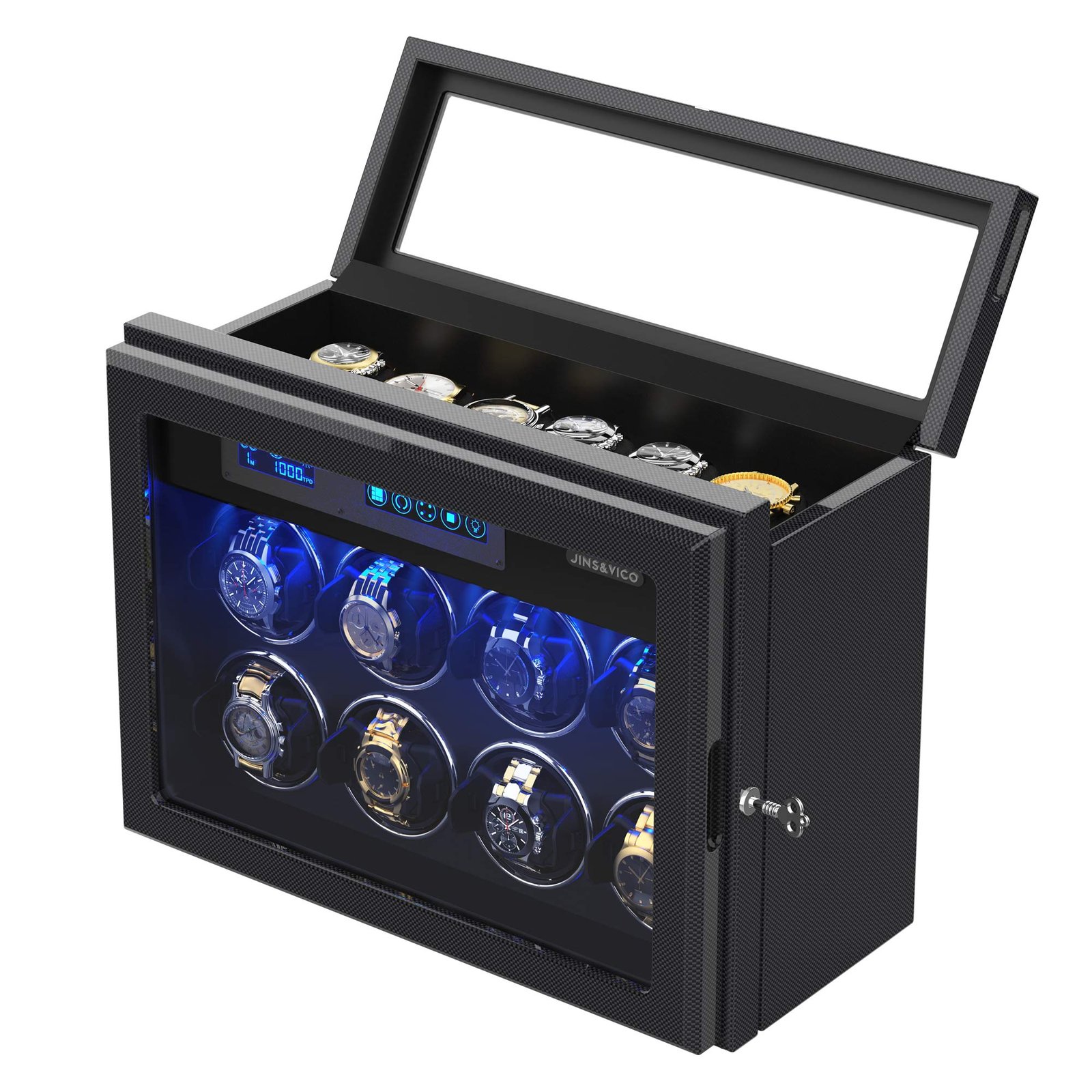
A watch winder changes how the rotor is moved; it does not clean a sticky reverser, replace a damaged wheel, or restore deteriorated lubricant. If the watch shows abnormal vibration, noise, or poor winding efficiency, diagnose the cause before putting it into continuous rotation.
Frequently Asked Questions
Why does my automatic watch vibrate when I hand-wind it?
The vibration may come from the rotor being driven by torque feeding backward through the automatic winding mechanism. If crown rotation repeatedly makes the rotor spin, especially with a stiff crown, stop winding and arrange an inspection.
Is a spinning rotor always caused by reversing wheels?
No. Sticky or damaged reversing wheels are common in movements that use them, but automatic systems differ. Pawls, reduction gears, bearings, springs, lubrication problems, or prior service errors can create similar symptoms.
Can I fix rotor helicoptering by adding oil?
No safe owner-level oiling procedure exists. Opening the case introduces dust and moisture risks, while the wrong lubricant or quantity can worsen the fault and compromise water resistance.
Will the watch still run if the rotor spins during hand-winding?
It may. The timekeeping train can continue running even when part of the winding system is defective. Continued operation does not make repeated helicoptering normal.
Should I use a watch winder instead of the crown?
A winder is not a repair. Have the winding system checked first. Wrist motion or a winder may hide the manual-winding symptom while the underlying condition remains.
Conclusion
An automatic watch rotor that shifts as the case tilts is doing its job. A rotor that repeatedly races around because you turn the crown is different. When strong rotation comes with resistance, vibration, noise, or a recent change, stop hand-winding and seek professional diagnosis.
Document the behavior, identify the caliber and service history, preserve any warranty, and avoid amateur lubrication. A qualified watchmaker can determine whether the watch needs a targeted automatic-module repair or a complete service. Catching the symptom early is far cheaper than forcing a reluctant mechanism until additional parts are damaged.