
The IWC Portugieser looks simple at first glance: a large, open dial, slim hands, crisp numerals, and restrained decoration. That apparent simplicity makes it tempting to authenticate one from a few photographs. It also makes small inconsistencies easy to overlook. Counterfeiters can imitate the broad visual formula, while genuine watches may have replacement straps, polished cases, or service parts that complicate a quick judgment.
A reliable check therefore asks a different question from “Does it look real?” The useful question is whether the dial, case, movement, reference, serial number, documents, and seller’s story all agree. This guide explains how to spot a fake IWC Portugieser without treating any single clue as proof. It is designed for pre-owned buyers comparing a watch against the exact reference they intend to purchase.
Start With the Exact IWC Reference, Not the Family Name
“Portugieser” describes a collection, not one fixed specification. The family includes three-hand watches, chronographs, perpetual calendars, tourbillons, and other complications produced across different generations. Dial printing, case dimensions, display backs, movements, subdial layouts, and clasp styles can all change between references. A feature that is correct on one Portugieser can be wrong on another.
Ask the seller for the complete reference and clear photographs of the dial, case back, case sides, crown, buckle or clasp, movement if accessible, and accompanying papers. Then compare the watch with IWC’s product archive, current product page, instruction manual, or a reputable catalog entry for that exact reference and production period. Do not rely on a generic image search, where photographs of different generations are often mixed together.
For example, a modern Portugieser Chronograph using IWC’s 69000-family architecture should not be judged by the movement or case-back layout of an older version powered by a different caliber. Even within a familiar two-register design, details such as the printed track, date display, case thickness, caliber designation, or visible bridge geometry may vary. Correct authentication begins by establishing what the watch is supposed to be.
Inspect the Dial as a Complete System
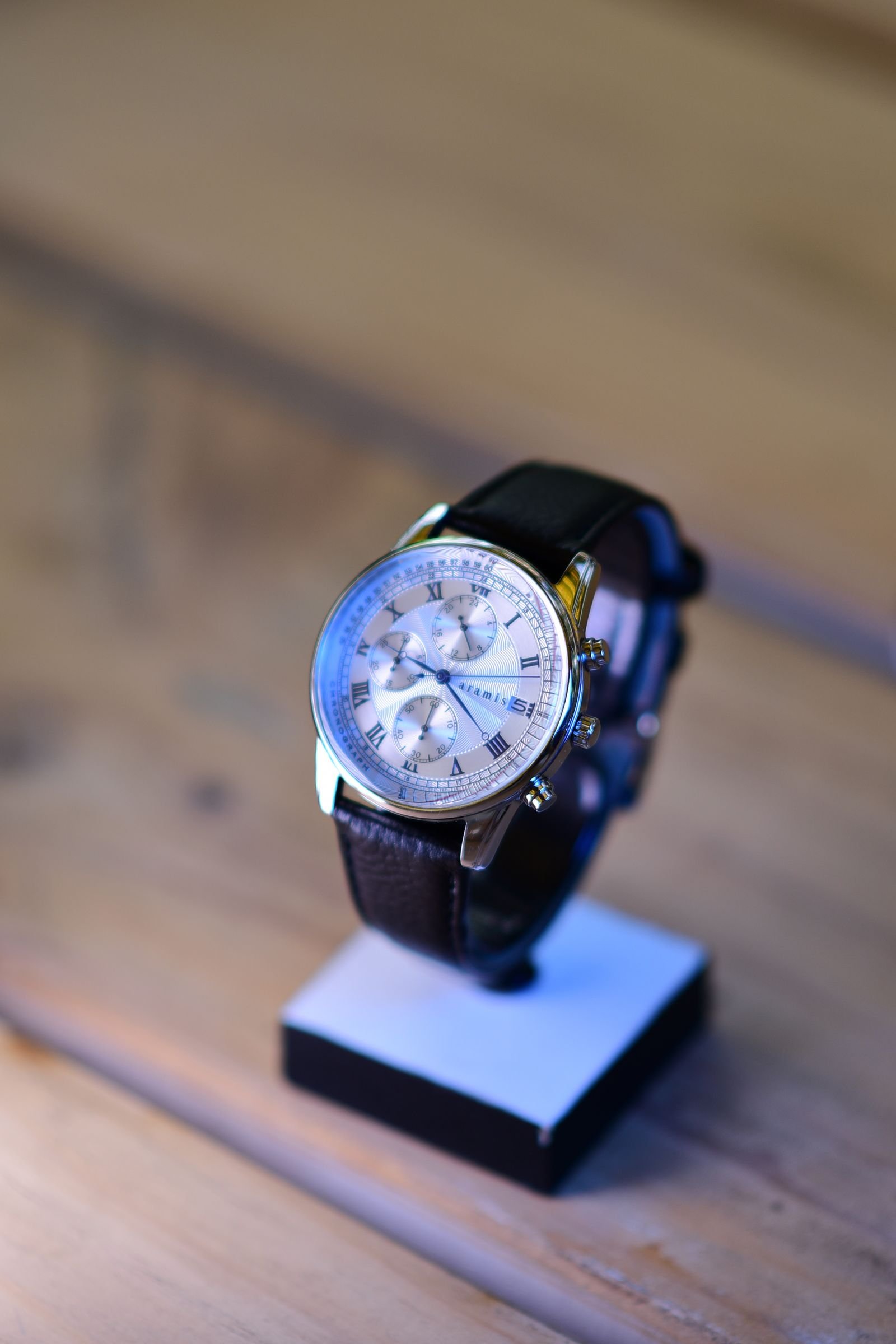
The dial is usually the most photographed part of a listing, but it should be evaluated as a system rather than a collection of isolated logos. Compare numeral shape, printing weight, subdial position, minute-track spacing, hand length, and the relationship between every element. On a well-made dial, those proportions look deliberate under magnification. Counterfeits often reproduce the overall appearance while missing the geometry.
Typography and printing
Use a sharp, straight-on image. Look for clean edges, consistent ink coverage, correct letter spacing, and alignment with the dial’s centerline. The brand signature should match verified examples of the same reference, not merely another IWC model. Blurred letters, uneven baselines, crowded wording, or inconsistent numeral forms deserve investigation. Compression artifacts in a seller’s photo can mimic poor printing, so request an original high-resolution file before reaching a conclusion.
Hands, tracks, and subdials
Check whether the minute hand reaches the intended scale and whether chronograph hands align precisely at zero after a reset. Compare the subdial diameter and location with official reference images. A counterfeit movement may force registers into slightly different positions, which in turn changes the spacing around numerals and text. That mismatch can be more informative than a convincing logo.
Also examine the dial finish under angled light. Genuine examples may use specific sunburst, lacquered, or textured finishes depending on the reference. A flat finish is not automatically fake, and a reflective finish is not automatically genuine; it must match the documented configuration. The same rule applies to dial color. Lighting and white balance can alter blue, silver, and gold tones dramatically.
Check Case Geometry, Engravings, and Controls
A counterfeit case can look plausible from the front while revealing problems along its sides and back. Request profile photographs that show lug shape, bezel thickness, case-band curvature, crown, pushers, and the transition between polished and brushed surfaces. Compare measurements with the exact reference. A small discrepancy may result from an inaccurate seller measurement, but a combination of wrong diameter, thickness, lug form, and pusher placement is a serious warning.
Engravings should be assessed for content and execution. The reference and serial information must be in the expected location and style for that generation. Characters should appear intentionally cut, with consistent depth and spacing. However, a neat engraving or a serial number that follows the expected format does not prove authenticity. Numbers can be copied from genuine watches, and counterfeit documents can repeat them.
Operate the watch only with the seller’s permission and never force a control. The crown should wind and set the watch in a manner consistent with the movement. Chronograph pushers should start, stop, and reset the mechanism cleanly. A hand that jumps, creeps, or resets off zero can indicate a service problem rather than a counterfeit, but the behavior belongs in the overall assessment. Functionality and authenticity are related checks, not interchangeable ones.
Why the Movement Matters Most
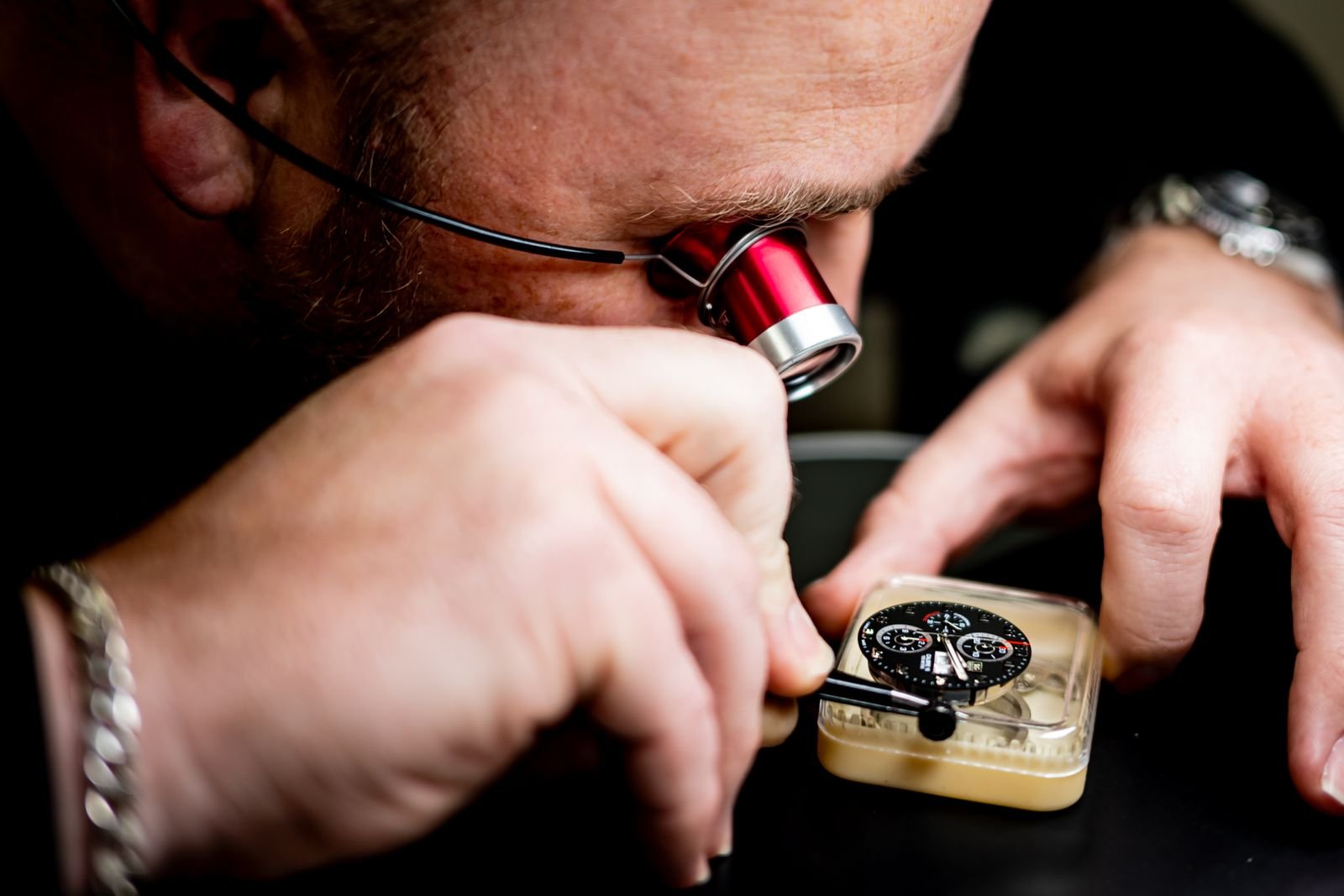
High-quality replicas have made dial-only authentication increasingly unreliable. The movement can expose incorrect subdial spacing, the wrong winding system, decorative plates hiding an unrelated caliber, or finishing inconsistent with the claimed reference. A transparent case back helps, but an image through the crystal may still conceal important details. A solid back must be opened by a qualified professional with the correct tools.
Compare the caliber architecture—not just an engraved name—with reliable images and technical documentation. Look at bridge shapes, screw locations, jewel placement, rotor design, regulator arrangement, and the routing of chronograph components. Decorative engraving can be applied to an inexpensive movement, while the underlying construction remains wrong. On a modern Portugieser Chronograph claiming an IWC-manufactured caliber, the visible mechanism must match the specified caliber family.
Do not open the case yourself unless you are trained and authorized to do so. Slipping tools can scar the case, damage seals, introduce dust, or compromise water resistance. An independent watchmaker familiar with IWC can inspect the movement, check functions, test timing, and identify non-original components. For an expensive purchase, that inspection is a sensible transaction cost.
Match Serial Number, Reference, Papers, and Service History
IWC states that the individual serial number is engraved on the case back, and its official authenticity process examines the reference, case, and movement. Treat the serial number as one link in a chain. It should match the papers where appropriate, be consistent with the watch’s claimed period, and show no evidence of alteration. A valid-looking number alone cannot establish that the rest of the watch is genuine.
Box and papers add context but are not a substitute for examining the watch. Verify that the reference, serial information, retailer details, and dates form a coherent record. Look for mismatched fonts, missing fields, suspiciously fresh documents accompanying an older watch, or a card that describes a different dial or case material. At the same time, remember that a genuine watch can legitimately be sold without its original packaging.
Service invoices are often more informative than a box because they can connect the watch to an authorized service history. Ask whether the case has been polished, whether the dial or hands were replaced, and whether movement parts were changed. Genuine service replacements do not make a watch counterfeit, but they may affect originality and value. The listing should describe those facts accurately.
Evaluate the Seller and Transaction, Not Just the Watch
A convincing watch offered in a risky transaction is still a risky purchase. Research the seller’s trading history, physical address, return terms, and experience with comparable IWC watches. Reverse-search listing photographs when practical and ask for a new photograph showing the watch at a requested time setting beside a dated note. This helps establish that the seller controls the item, though it does not authenticate it.
Use a payment method with meaningful buyer protection and write the reference, serial number, condition, included accessories, and return rights into the invoice. Avoid pressure to pay outside a protected marketplace. Be cautious when the price is far below comparable examples, especially if the explanation is urgency, inheritance, or lack of knowledge. A discount may reflect condition or missing accessories, but it should have a credible reason.
Professional certification programs can reduce risk when they include a physical inspection, movement and functionality checks, serial-number theft screening, and verification of the stated scope of delivery. Read the program’s definition of authenticity and its remedy if a watch fails. Certification standards differ, and no marketplace badge should prevent you from reviewing the terms.
A Pre-Purchase IWC Portugieser Authentication Checklist
- Identify the exact reference and generation. Record the case material, dimensions, dial, caliber, case-back type, and expected functions.
- Collect original photographs. Obtain straight-on dial, profile, case-back, crown, buckle, serial, papers, and movement images where safely possible.
- Compare proportions. Check numeral forms, hand lengths, tracks, subdial positions, date placement, lug shape, crown, and pusher geometry.
- Reconcile every number. Reference and serial details should agree with the watch, papers, invoice, and seller’s description.
- Test functions. Confirm winding, setting, date operation, power reserve, and chronograph behavior as applicable.
- Inspect the movement professionally. Verify architecture, caliber, condition, and originality without damaging the case or seals.
- Check ownership risk. Use available stolen-watch database checks and obtain a written declaration of lawful ownership.
- Protect the transaction. Preserve the listing, photographs, messages, invoice, payment record, and inspection window.
Red Flags That Justify Walking Away
- The seller refuses clear photographs of identifying details or sends images from another listing.
- The claimed reference does not match the dial layout, case material, dimensions, or movement.
- Subdial spacing or hand lengths differ visibly from verified examples of the exact reference.
- The serial number appears altered, is repeated across unrelated online listings, or conflicts with the papers.
- A decorative plate or rotor hides a movement whose architecture does not match the specified caliber.
- The seller will not allow independent inspection during a documented return period.
- The price is unusually low and the seller insists on an irreversible payment method.
One anomaly may have an innocent explanation. Several independent inconsistencies are more meaningful. If the seller cannot resolve them with evidence, walking away is cheaper than trying to prove authenticity after the return window closes.
Frequently Asked Questions
Can I authenticate an IWC Portugieser from photos?
Photos can identify obvious discrepancies and help decide whether to continue, but they cannot reliably confirm the movement, internal components, or provenance. Use them as a screening tool, followed by a physical inspection for a high-value purchase.
Does a matching IWC serial number prove the watch is genuine?
No. A serial number can be copied or paired with incorrect components. It should match the papers and reference, but the case, dial, movement, and history must also be examined.
Are box and papers enough to authenticate a Portugieser?
No. Packaging and documents can be replaced, mixed, or counterfeited. They strengthen provenance only when their details agree with a watch that passes physical and movement inspection.
Who can issue an official IWC Certificate of Authenticity?
IWC says only the manufacturer can issue its official Certificate of Authenticity. The watch must undergo a thorough examination by specialists in Schaffhausen, arranged through IWC channels.
Can a genuine IWC contain replacement parts?
Yes. Authorized service parts may be genuine but different from those originally fitted. That distinction affects collectability and value, so ask for service records and have the components described in writing.
Conclusion
Learning how to spot a fake IWC Portugieser is less about memorizing one logo or engraving and more about testing consistency. Establish the exact reference, compare the dial and case as complete designs, reconcile the numbers and documents, and have the movement inspected by someone who knows the caliber. Combine that technical work with a protected transaction and a credible seller. When the evidence aligns, confidence becomes reasonable; when the story depends on excuses, keep looking.