
How to Spot a Fake Panerai Luminor: A Reference-First Authentication Guide
A Panerai Luminor looks simple at first glance: a large cushion-shaped case, an uncluttered dial, bold luminous numerals, and the unmistakable crown-protecting bridge. That apparent simplicity is exactly why authentication can be deceptive. A counterfeit only has to imitate a small number of highly visible features to look persuasive in a seller’s photographs. Meanwhile, genuine Luminor references vary by year, case material, dial construction, movement, caseback, water-resistance rating, and even the wording or placement of engravings.
The safest way to spot a fake Panerai Luminor is therefore not to memorize one universal “tell.” Start by identifying the exact PAM reference, build a specification sheet from official information, and compare the watch against that reference as a complete object. Dial, case, movement, numbers, paperwork, and seller history must tell the same story. This guide explains how to do that without treating a serial-number lookup or a convincing crown guard as proof on its own.
Start With the Exact PAM Reference, Not the Brand Name
Panerai authentication is reference-specific. “Luminor Marina” describes a family, not one fixed configuration. Two authentic models can have different case sizes, date displays, casebacks, movements, dial colors, straps, and depth ratings. Comparing a watch to random Luminor photographs can make a correct part look suspicious—or allow a wrong part to pass.
Ask the seller for the full PAM number and clear, unedited photographs of the dial, both case sides, crown guard, lugs, caseback, buckle, warranty card, and movement if the reference has a display back. Then create a reference profile from Panerai’s own product or movement pages, archived catalogs, and reliable period documentation. Record at least:
- case diameter and material;
- dial color, layout, and whether it uses sandwich or printed construction;
- hands, date window, seconds subdial, and other complications;
- caseback type and expected engraving layout;
- caliber, winding type, frequency, jewel count, and power reserve;
- stated water resistance and original strap or buckle specification.
For example, Panerai associates the 44 mm PAM01312 with its automatic P.9010 family. The official P.9010 specification lists small seconds, date, stop seconds, 28,800 vibrations per hour, 31 jewels, twin barrels, and a three-day power reserve. If a watch offered as a PAM01312 has a visibly different movement architecture, the wrong function layout, or specifications that belong to another PAM, that inconsistency matters more than a minor variation in lume color.
Be careful with web images. Retailer listings sometimes reuse stock photography, and genuine watches may have received service replacements. A replacement strap is common and usually easy to disclose; a dial, case, or movement that does not match the claimed reference needs a documented explanation.
Inspect the Luminor Dial as a System
High-quality counterfeits can reproduce the words “Luminor Marina,” broad hands, and luminous hour markers. Instead of hunting for one imperfect letter, inspect relationships: alignment, spacing, depth, finish, and whether every element belongs to the stated reference.
Dial construction and typography
Many Luminor models use a sandwich dial, with apertures in an upper plate revealing luminous material beneath. Others use different constructions, so sandwich construction is not universal proof. On a model that should have it, look for clean, consistent cutout edges and even depth around the numerals and markers. Under magnification, printing should be sharp and appropriately weighted, but remember that lighting, compression, and aggressive phone sharpening can distort edges.
Compare the position of the logo, model text, “Swiss Made” wording, seconds track, date window, and numerals to a confirmed example of the same PAM and production era. A date aperture that is fractionally misplaced can indicate the wrong movement or dial, but only a reference-matched comparison makes that observation meaningful.
Hands, lume, and date
Check hand shape, length, finish, and clearance. The minute hand should reach the intended track, the small-seconds hand should be centered, and the date should sit squarely in its window. Lume should appear evenly applied, but color alone is unreliable. Genuine luminous material changes with age, exposure, service work, and the compound used for that production period. Counterfeiters can also tune lume color convincingly.
A practical test is to expose the dial briefly to the same light source and photograph it immediately, then again after several minutes. Uneven plots, contamination, or a dramatic mismatch between hands and dial deserve investigation. They do not independently prove a fake because genuine service hands and aging can also produce differences.
Examine the Case and Crown-Protecting Bridge
The crown guard is the Luminor’s signature, so it deserves close inspection—but it is not a magic authenticity test. Confirm that the shape, finish, engraving, pin arrangement, and orientation match the exact reference. The lever should move deliberately, close cleanly, and press the crown as designed. Rough machining, excessive sideways play, a crooked bridge, or a lever that fails to seat are warning signs.
Do not force the lever or repeatedly operate it on an unknown watch. Dirt, worn components, poor adjustment, or previous damage can make a genuine mechanism feel wrong. Conversely, a replica can have a smooth lever. Treat the mechanism as one data point within the full inspection.
Continue around the case. Look for consistent transitions between brushed and polished surfaces, symmetrical lugs, clean screw heads, and engraving with uniform depth. Compare case thickness and diameter with official specifications using a suitable caliper only if you can do so without scratching the watch. Weight can support a material check, but straps and buckles change the total, and counterfeit cases can be weighted deliberately.
Never test authenticity by immersing the watch. The water-resistance figure in a catalog describes a correctly assembled and tested watch, not the present condition of an unknown used example. Only a controlled pressure test can establish current resistance, and even that confirms sealing—not authenticity.
Make the Numbers and Documents Agree
A convincing set should have identifiers that are internally consistent and appropriate for its era. Photograph every caseback marking clearly. Depending on the reference and year, you may encounter the PAM reference, individual identification number, case or production markings, material and water-resistance information, and limited-production numbering. Their presence alone proves little because numbers can be copied from a genuine watch.
Check whether the identifiers agree with the warranty card, invoice, service papers, and seller’s stated history. Repeated numbers visible on unrelated listings are a serious concern. A valid-looking number that returns the correct model is useful, but it may simply be a cloned number. It does not establish that the physical watch carrying it is genuine.
Panerai states that each product bears an individual identification number. For watches purchased from October 2023 onward, the brand’s Digital Passport provides certified watch information and can be transferred through PAM.Guard. Ask the seller to demonstrate access and initiate the proper ownership-transfer process. Inspect the live account flow rather than accepting screenshots or a copied QR image.
The Digital Passport strengthens provenance, but the physical watch still needs inspection. A genuine card, box, receipt, strap, or account record can be paired with a different watch. Older authentic watches may also predate the passport system, so its absence is not automatically suspicious.
Check the Movement Without Taking Unnecessary Risks
The movement is often decisive because its architecture must match the claimed caliber and functions. Through an exhibition back, compare bridge shapes, rotor geometry, jewel positions, screws, finishing, and engraving with official imagery for that caliber. Do not judge only by decorative text: imitation engravings can disguise a generic movement, while legitimate movement revisions may differ slightly.
Functional behavior can reveal mismatches. Verify the winding type, seconds display, date operation, hacking behavior, and power-reserve claim against the reference sheet. A movement that produces the expected dial layout may still be technically wrong, so an experienced watchmaker should inspect its construction rather than relying on a superficial photo comparison.
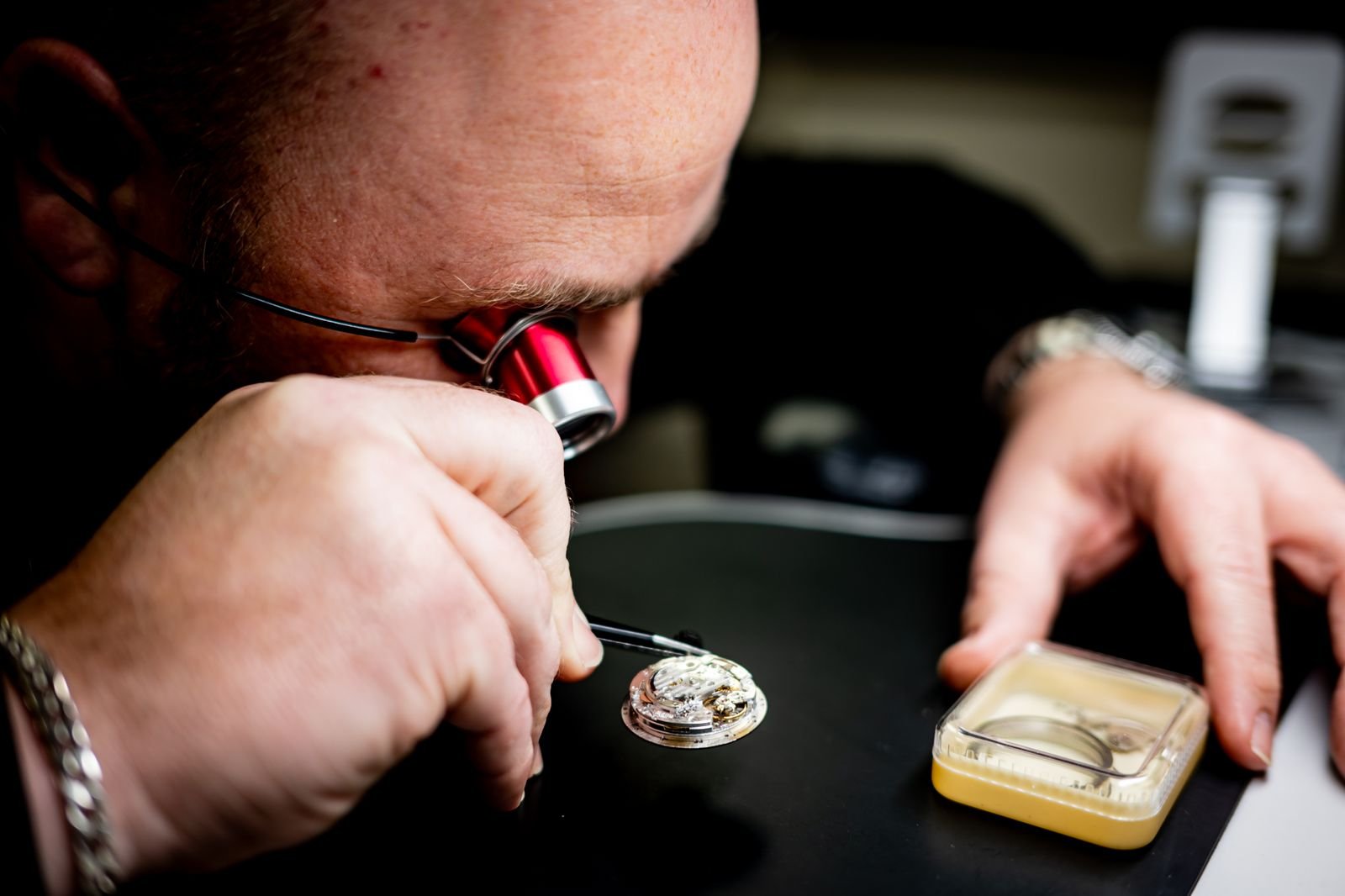
Do not open a caseback yourself unless you have the tools and training. Slipping tools can damage the case, compromise seals, or erase return options. Before authorizing inspection, obtain the seller’s written agreement that opening by a qualified professional will not void the return policy.
Use a Safer Pre-Purchase Authentication Process
Good authentication includes the transaction, not just the watch. A seller who refuses basic evidence, pressures you to pay irreversibly, or will not permit independent inspection creates risk even when the photographs look plausible.
- Identify the reference. Obtain the complete PAM number and build an official specification profile.
- Request original evidence. Ask for a current timestamp photo and a short continuous video showing the watch, identifiers, crown lever, winding, hand-setting, and documents.
- Compare every component. Dial, hands, case, caseback, movement, buckle, and functions should be correct for the reference and era.
- Verify provenance. Review invoices and service records, demonstrate PAM.Guard or Digital Passport access where applicable, and check lost-or-stolen databases available to you.
- Use an expert and protected payment. Arrange an inspection by Panerai, an authorized dealer, or an independent watchmaker experienced with the brand. Keep a written authenticity condition and a sufficient return window.
Panerai’s official FAQ says only the manufacture can issue its official certificate of authenticity. The process involves submitting the watch through a boutique, authorized dealer, or available shipping service for examination. Terms, pricing, and timing can vary by region, so confirm current details directly. For a high-value or ambiguous purchase, this is stronger evidence than an informal online opinion.
Common Mistakes When Trying to Spot a Fake Panerai Luminor
- Trusting a serial lookup alone: counterfeiters can copy genuine identifiers.
- Assuming every genuine Luminor has a sandwich dial: construction varies by reference.
- Using lume color as a verdict: age, camera settings, service parts, and charging conditions alter appearance.
- Comparing different PAM references: legitimate differences then look like defects.
- Equating box and papers with authenticity: accessories can be genuine, replaced, or forged independently.
- Opening or water-testing the watch casually: both can create damage and complicate a return.
- Ignoring “frankenwatches”: a watch may combine genuine and non-genuine parts and still fail a strict authenticity standard.
FAQ
Can I authenticate a Panerai Luminor from photos?
Photos can identify inconsistencies and help reject an obvious counterfeit, but they usually cannot prove authenticity. Sophisticated replicas, cloned numbers, undisclosed service parts, and mixed-component watches require physical and sometimes internal inspection.
Does a valid Panerai serial number mean the watch is genuine?
No. A matching result is useful supporting evidence, but a counterfeit can carry a number copied from a genuine watch. The identifier, physical specifications, movement, documentation, and ownership history must agree.
Does every Panerai Luminor have a Digital Passport?
No. Panerai says the Digital Passport accompanies watches purchased from October 2023 onward. Older genuine watches can predate the program. For an eligible watch, verify the live passport and transfer process rather than relying on screenshots.
Is a loose crown guard lever proof of a fake?
No. Poor fit can be a warning sign, but wear, damage, dirt, or adjustment issues may affect a genuine watch. A smooth lever also does not prove authenticity.
Who can definitively authenticate a Panerai?
Panerai states that only its manufacture can issue an official Panerai certificate of authenticity. A brand-experienced independent watchmaker can provide valuable pre-purchase screening, but that opinion is not the manufacturer’s certificate.
Conclusion
The most reliable way to spot a fake Panerai Luminor is to replace shortcut thinking with reference-level consistency. Establish exactly what the PAM should be, inspect the dial and crown guard in context, reconcile every identifier and document, and confirm that the movement and functions belong together. Digital records and serial checks can strengthen the case, but neither substitutes for examining the physical watch.
If the price is substantial or one detail remains unexplained, make the purchase conditional on professional authentication. Walking away from an uncertain watch is cheaper than trying to prove its story after the return period has closed.